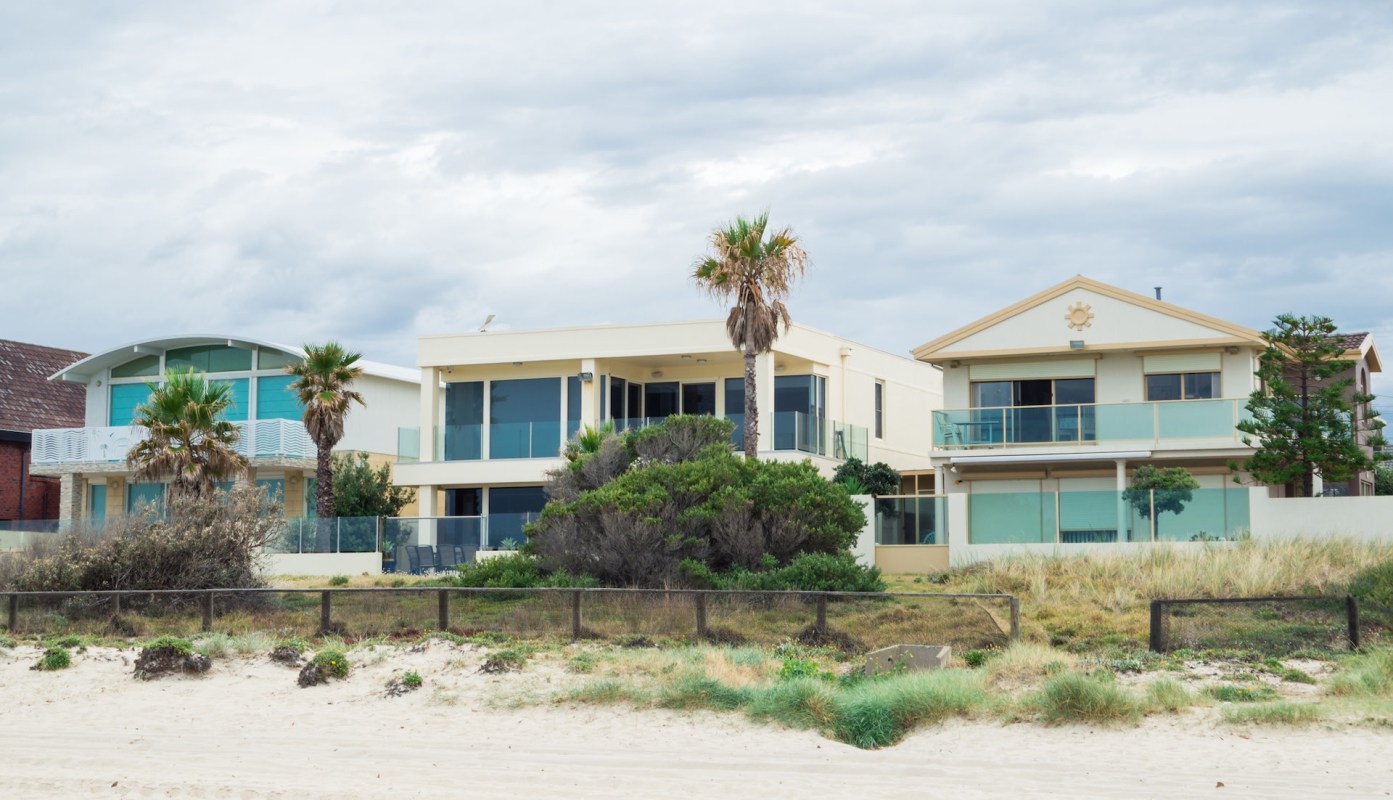
One Australian property owner determined that a seawall was the solution to stop coastal erosion, but experts said the preventative measure may make things worse for the people next door.
What's happening?
An unauthorized seawall is being built along a beachfront property south of Melbourne, Australia, in an effort to shield the area from landslides, according to the Australian Broadcasting Corporation.
While the motivation behind the seawall is understandable, David Kennedy, a geomorphologist at the University of Melbourne, said the addition of a seawall will only increase erosion rates for neighboring properties and that such things must be done with proper, broader planning.
"We've got to slow down development and look at what we value about the beach," Kennedy said.
Warming temperatures have slowly impacted sea levels and put homeowners living along Australia's coast at risk. Even more, many home insurance policies don't cover "actions of the sea." Some local leaders have delivered sand and installed bags of rocks to address erosion challenges, but residents want a more permanent fix, per ABC.
Why is coastal erosion important?
Coastal erosion causes roughly $500 million annually in coastal property loss in the United States, according to the U.S. Climate Resilience Toolkit. Erosion is anticipated to become even more of a threat for coastal communities as sea levels rise around the world.
Almost 30% of Americans live in coastal areas prone to flooding and shoreline erosion impacted by sea level rise, per the National Oceanic and Atmospheric Administration. Data showed that the global average sea level in 2023 rose nearly 4 inches over 30 years — a new record high.
Warming temperatures, which are primarily driven by human activities, contribute to the rising sea levels. The burning of fossil fuels produces heat-trapping pollution that increases Earth's air and ocean temperatures. The changes in weather patterns have caused extreme weather events to become more intense and happen more frequently, per NASA.
What's being done about coastal erosion?
Scientists and engineers have developed innovative approaches to mitigate coastal erosion. Residents of coastal communities are also making an effort to protect their neighborhoods. Many communities have invested in coastal restoration projects to return land to its undeveloped state and invite wildlife back into the area, per Seaside Sustainability.
Transitioning to renewable energy and living a more sustainable lifestyle can help lower the amount of heat-trapping pollution emitted into the atmosphere, which will ultimately mitigate sea level rise. Taking the time to explore critical climate issues can help consumers determine the changes they can make to lower their carbon footprint.
TCD Picks » Upway Spotlight
💡Upway makes it easy to find discounts of up to 60% on premium e-bike brands





|
Do you think your city has good air quality? Click your choice to see results and speak your mind. |
 Definitely 🥰
Join our free newsletter for good news and useful tips, and don't miss this cool list of easy ways to help yourself while helping the planet.
Cool Picks