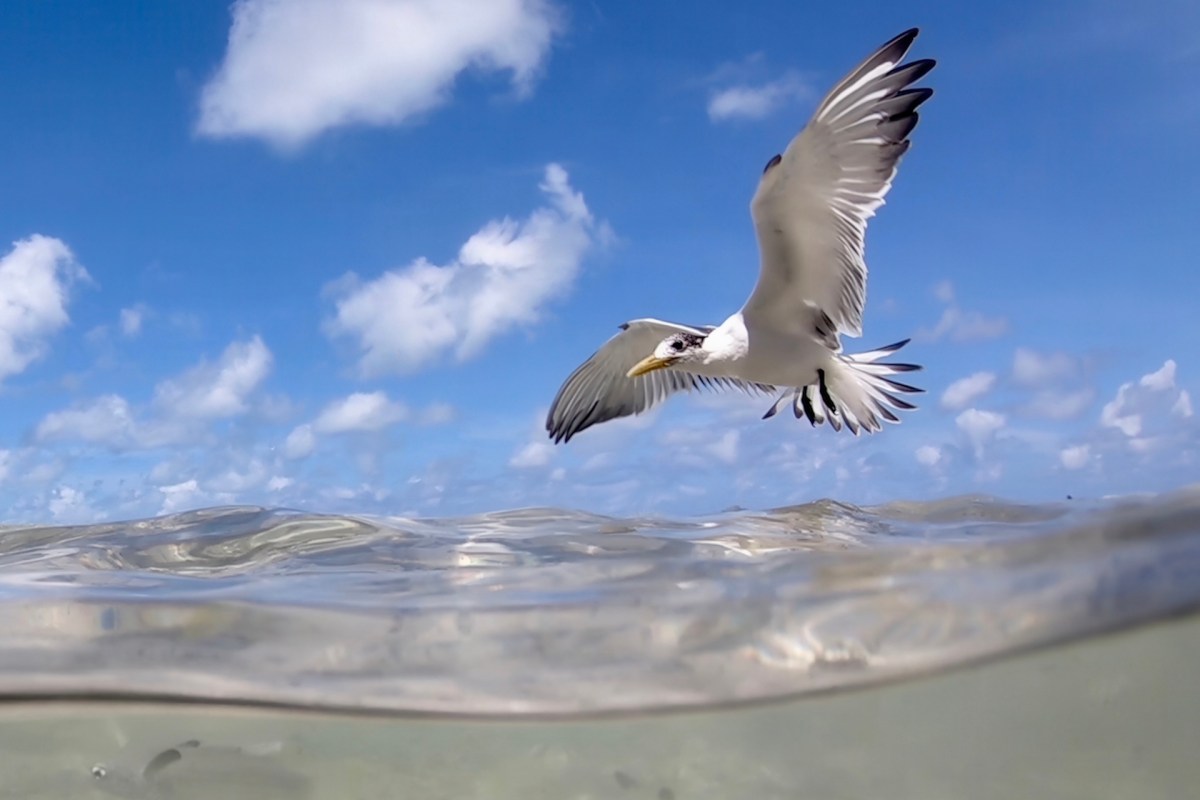
A study from Japan inadvertently discovered just how much frequent defecation by a large sea bird contributes to the ocean's ecosystem.
Audubon reported that the research, published in Current Biology, was intended to study the take-off and flight habits of the streaked shearwater. The team fixed cameras onto the bellies of 15 shearwaters and captured hours of footage.
When they analyzed the video feed, they discovered they had a perfect view of the bird's incessant pooping. After viewing 36 hours of this quite literal s***show, they found the birds defecate every four to 10 minutes while in flight and expel the rough equivalent of their entire bodyweight over the course of a day.
"After I collected the data and watched the videos, I found they poop quite a lot more than I expected," lead researcher Leo Uesaka explained.
The waste from seabirds, often called guano, is nutrient-dense and really quite bueno for the health of the ocean. Rich in nitrogen and phosphorus, guano is an excellent fertilizer for plants and fueled an agricultural boom in the 1800s, according to the Smithsonian.
At sea, guano is equally effective at cycling crucial nutrients. As Mongabay notes, guano can even reverse the damage done to bleached coral.
TCD Picks » Quince Spotlight
💡These best-sellers from Quince deliver affordable, sustainable luxury for all




However, the research also cited a potential risk concerning vectors for disease; however, there is currently no research into the spread of avian flu among seabird colonies. The bird's efficacy in spreading nutrients could also be harmed by plastic pollution and the lingering effects of the Fukushima disaster.
The streaked shearwater is found throughout the eastern Pacific, from Sakhalin to the east coast of Australia. One recently appeared near the Delaware Bay, marking the first sighting of its kind.
They are classified as near-threatened by the IUCN Red List and face disruptions to their food supply and predation by invasive small mammals.
The story underscored the vital role seabirds play in the ocean's ecosystem and the importance of protecting them.
In addition to raising awareness of the issues and disseminating new information, another effective way to support seabirds is to help prevent plastic and other pollutants from entering the ocean.

Join our free newsletter for good news and useful tips, and don't miss this cool list of easy ways to help yourself while helping the planet.