


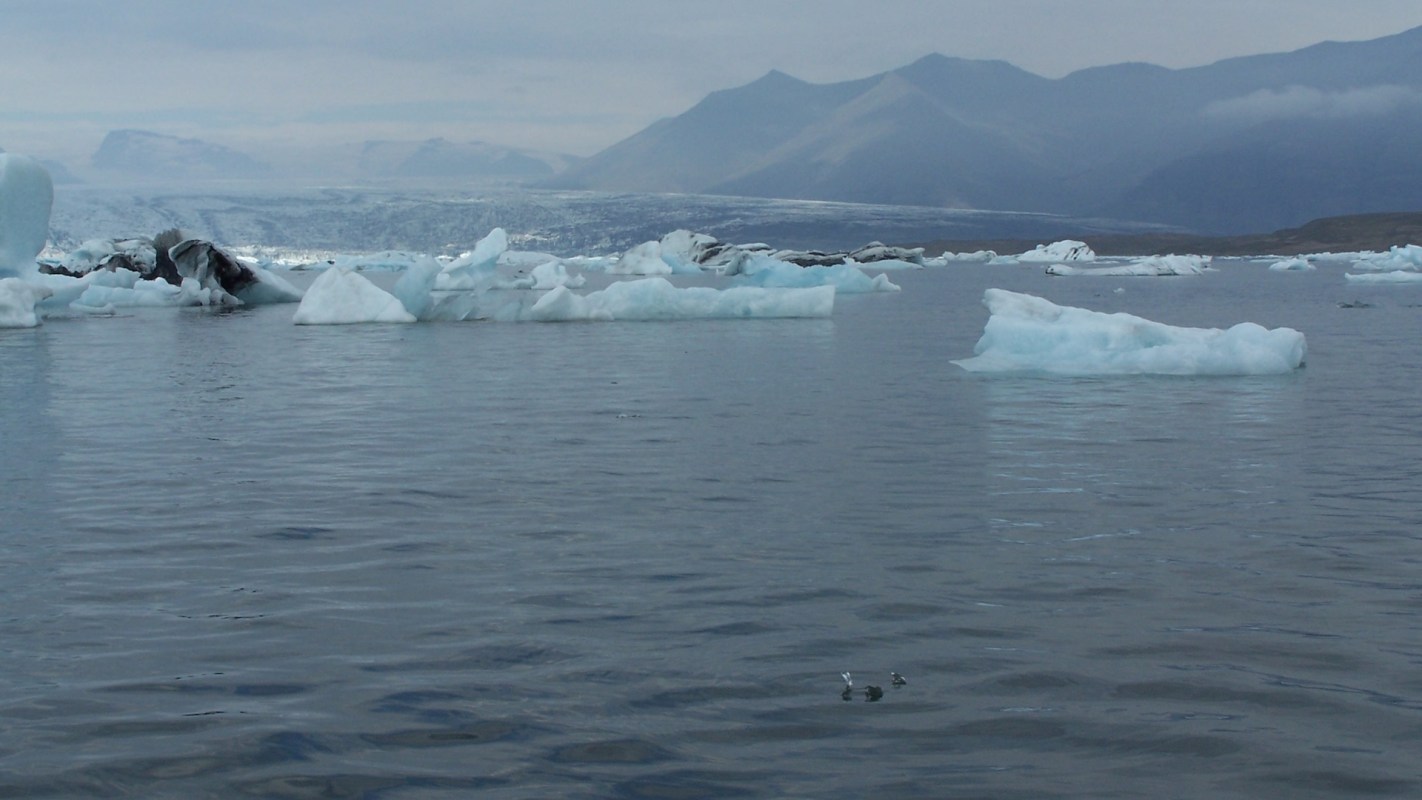
A 30-year-old forecast of sea-level rise has proved to be remarkably accurate, according to a Tulane University geologist. What is even more amazing is that the forecast three decades ago was done without the benefits of cutting-edge computer models in use today.
The 1996 Intergovernmental Panel on Climate Change assessment report projected 8 centimeters (3.15 inches) of sea-level rise over 30 years. A team of scientists that evaluated the IPCC projections found the forecasts were nearly spot-on.
"With an acceleration of global sea-level rise during the satellite altimetry era (since 1993) firmly established, it is now appropriate to examine sea-level projections made around the onset of this time period," explained the authors of the assessment. "Here we show that the midrange projection from the Second Assessment Report of the IPCC (1995/1996) was strikingly close to what transpired over the next 30 years, with the magnitude of sea-level rise underestimated by only ∼1 cm."
Tulane University geology professor Torbjörn Törnqvist was one of the authors of the study that concluded the harmful carbon pollution of heat-trapping gases in Earth's atmosphere has aligned closely with the IPCC's middle-of-the-road scenarios.
"I find it hard to think of any other form of evidence that is more compelling to demonstrate that this is happening. It has been happening for a long time, and we know why, and we understand it, and we can make credible projections," Tulane University geology professor Torbjörn Törnqvist told Yale Climate Connections.
Our overheating planet is causing the global mean sea level to rise in two ways. "First, glaciers and ice sheets worldwide are melting and adding water to the ocean," explained the National Oceanic and Atmospheric Administration. "Second, the volume of the ocean is expanding as the water warms."
Nearly a third of the U.S. population lives in coastal areas that are vulnerable to the impacts of rising sea levels, like erosion, flooding, and other storm-related hazards. Storm surges from hurricanes can penetrate even farther inland as a result of higher background water levels, making them more destructive than ever.
Worsening king tides are another consequence of rising sea levels that might not be as dangerous as supercharged storm surges, but can be costly and disruptive to those impacted. King tides are simply exceptionally high tides. Higher seas are allowing king tides to move farther inland, causing more widespread flooding and erosion.
"Relatively smaller coastal floods that do not involve storms — often referred to as "nuisance" flooding by NOAA or "sunny day" flooding — have sharply increased in the last 10 years across the U.S.," said researchers with the nonprofit Climate Central. "Even in the absence of overwhelming property damage, these recurring floods still close coastal roads, overwhelm drainage systems, and damage coastal infrastructure."
The good news from the evaluation of the 1996 IPCC sea-level rise forecasts is that climate modeling is continually improving. The promise of powerful artificial intelligence technology, along with advances in satellite imagery, should make future forecasts even more accurate.
TCD Picks » Quince Spotlight
💡These best-sellers from Quince deliver affordable, sustainable luxury for all




"Such multidecadal evaluations of past climate projections, as presented here for sea-level change, offer useful tests of past climate forecasts, and highlight the essential importance of continued climate monitoring," Törnqvist's evaluation said of the IPCC 1996 projections.
|
How worried are you about rising ocean levels? Click your choice to see results and speak your mind. |
 Very 😰
Get TCD's free newsletters for easy tips to save more, waste less, and make smarter choices — and earn up to $5,000 toward clean upgrades in TCD's exclusive Rewards Club.
Cool Picks






