


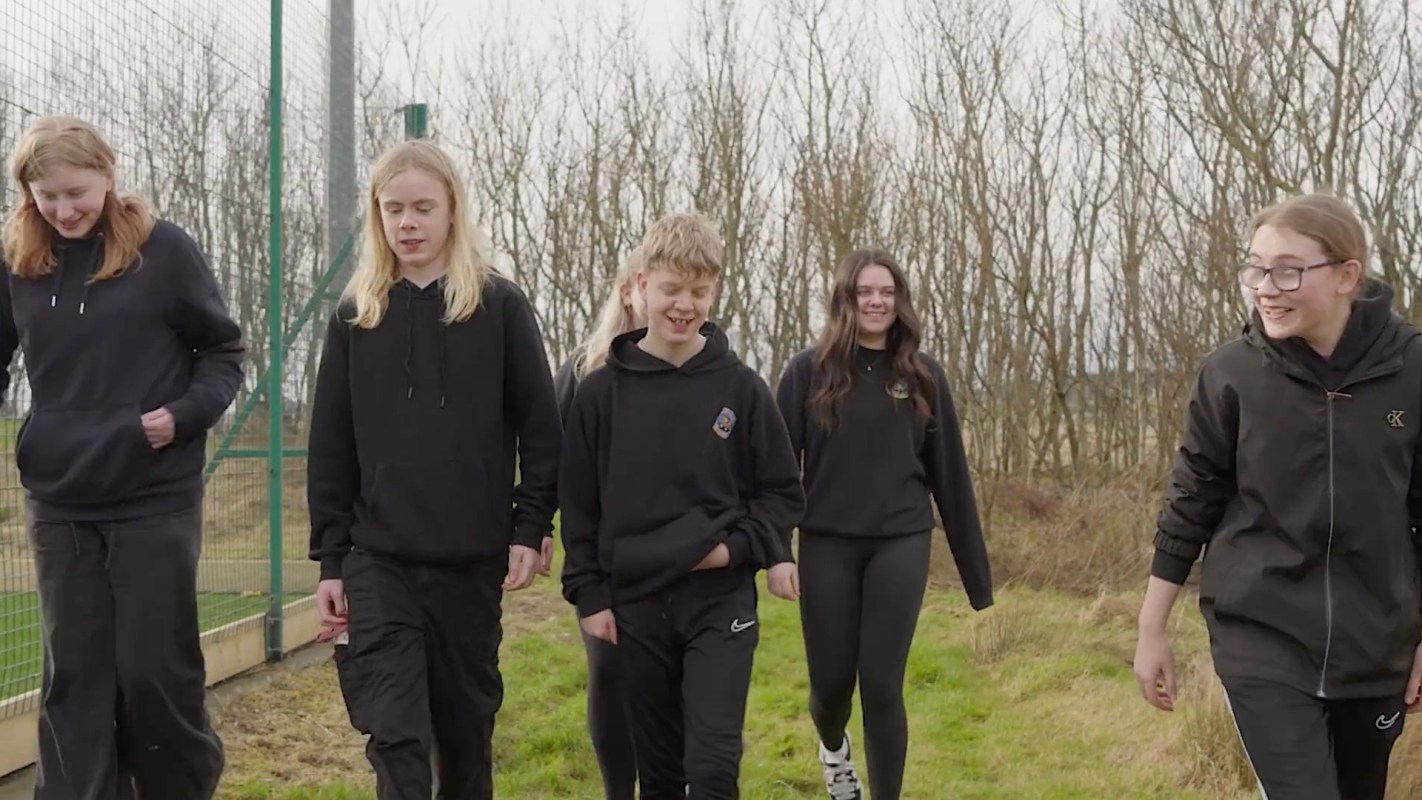
On a rewilding estate near Loch Ness, students from two Highland schools are helping shape Healthy Young Minds, a mental health program built around time outdoors.
The effort offers a community-focused example of how restored landscapes can support wildlife and locals at the same time.
Here's what to know
Healthy Young Minds — an early-intervention mental health research program for students ages 11 to 14 — brought pupils from Farr High School and Kinlochleven High School to Trees for Life's rewilding center at Dundreggan in Glenmoriston, where they joined researchers for a field visit.
The Herald said the project is a collaboration between the University of South Wales, the University of the Highlands and Islands, and Dundee University, looking at whether time outdoors can strengthen wellbeing, help young people through difficult periods, and support mental health in remote and rural communities.
Their time at Dundreggan combined outdoor activities with idea-sharing. Students tried a guided rewilding walk, pond dipping, tree identification, bannock bread making, and traditional fire lighting. In workshops run by Ewen's Room — a Highland mental health charity — they also proposed activities they believed could help wellbeing, including camping, hill walking, wild swimming, beach combing, natural crafts, sports, and family activities.
Dr. Sara Bradley, senior research fellow at the University of South Wales, said, "Our project is enabling young people to come up with their own ideas on how nature can support their health and wellbeing," The Herald reported.
TCD Picks » Quince Spotlight
💡These best-sellers from Quince deliver affordable, sustainable luxury for all




Why is this important?
Rewilding projects are often framed around habitat restoration, biodiversity, and carbon storage. This program is also focusing on the direct benefits of stronger, healthier communities.
For young people in rural areas, that can be especially important. While remote places can offer extraordinary access to the outdoors, they can also bring isolation and fewer nearby services. A program that helps students build outdoor routines and stronger social ties could have a meaningful effect on daily life.
The Herald reported that the program also introduced students to five ways to wellbeing: building connections with others, learning skills, giving back, staying physically active, and noticing the small things around them. Outdoor experiences can fold several of those into the same moment through shared activity, movement, and observation.
Early responses from students have been encouraging, saying nature is important to their mental health, that they are spending more time outside, and that they think more about other people after taking part.
What's being done?
A central part of the program is co-creation, with students helping design the activities instead of adults simply deciding on their behalf. Their suggestions are then reviewed by other young people and by specialists in green health and youth mental health before any final choices are made.
That approach tends to make support feel more relevant and easier to sustain. Activities such as outdoor cafés, fire-building, board games, or family-focused events chosen by the participants may feel more accessible than one-size-fits-all interventions, particularly for teens.
Trees for Life's role also shows how conservation spaces can function as community assets. Rewilding centers are not just educational destinations but can also become places where people build confidence, relationships, and healthier habits.
The Herald said the Healthy Young Minds team is preparing two papers for academic journals and seeking additional funding in hopes the model could expand if results continue to show promise.
Franny Schlicke, Trees for Life's visitor experience and operations supervisor at Dundreggan, said, "This research project highlights why everyone should have the opportunity to get out into nature, to enjoy its health and wellbeing benefits, and see for themselves why it needs protecting and restoring," per The Herald.

Get TCD's free newsletters for easy tips, smart advice, and a chance to earn $5,000 toward home upgrades. To see more stories like this one, change your Google preferences here.







