


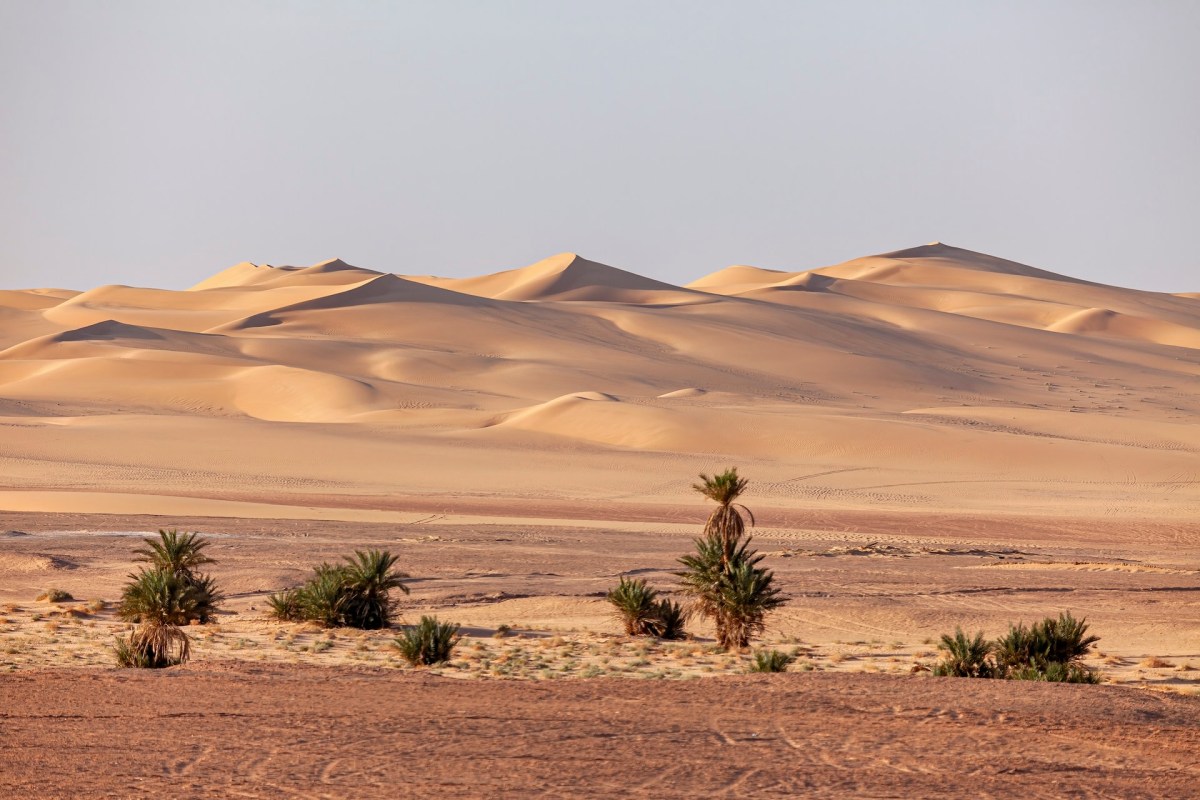
Decades after its demise in the wild, a resilient herbivore has bounced back and could form the vanguard in the battle to curb the Sahara Desert's expansion.
The BBC reported on the continuing conservation success story that is the scimitar-horned oryx's remarkable comeback. Desert nomads sustainably hunted them for centuries, but their hides, horns, and tasty flesh led to overhunting with modern equipment, and their wild population was wiped out. However, thanks to international cooperation and captive breeding programs, the oryx have been successfully reintroduced into the wild.
Rewilding a species is a tough ask. It requires addressing the issues that led to a species' disappearance in the first place. Even then, there's no guarantee of success.
One of the earliest oryx reintroductions happened in 1985. Ten oryx from Marwell and Edinburgh Zoo were released in the Bou-Hedma National Park in Tunisia. "It could have gone horribly wrong, but they've been there ever since," said Tania Gilbert, a conservation scientist at Marwell Wildlife.
It's not a huge surprise, given how incredibly resilient and uniquely suited to the desert they are. Oryx get all of their moisture from grazing, so they can go years without drinking water, and their almost absurdly high internal temperature (116°F) allows them to tolerate temperatures few animals can stand, per the Smithsonian.
As they feed and move on, they spread seeds and much-needed nutrients to the desert's edge through their waste. Seeds dispersed through dung are 250 times more likely to germinate. Oryx are also an important part of the food web as prey. It's hoped that the oryx's revival will help contain the expansion of the Sahara Desert.
Since 1920, the Sahara Desert has grown by 10%. According to Earth.Org, it grows by an average of 48 kilometers (approximately 30 miles) every year. About a third of that expansion is driven by human activity, and its long-term implications are considerable. Food insecurity, water scarcity, and biodiversity loss will all result from an expanded Sahara.
Oryx alone won't solve the problem, but they can be part of the solution. Their short-term prospects are promising, but to sustain the species' growth, a combination of raising awareness and working with local communities is needed.
John Newby described the progress as "the tip of the iceberg" and told the BBC: "The other nine-tenths of the iceberg is hidden under the water — and that's going to depend on human behaviour and the ability of people to accommodate wildlife within their lives and livelihoods."
|
Do you think America does a good job of protecting its natural beauty? Click your choice to see results and speak your mind. |
 Definitely 👍
Get TCD's free newsletters for easy tips to save more, waste less, and make smarter choices — and earn up to $5,000 toward clean upgrades in TCD's exclusive Rewards Club.
TCD Picks » Quince Spotlight
💡These best-sellers from Quince deliver affordable, sustainable luxury for all




Cool Picks




