


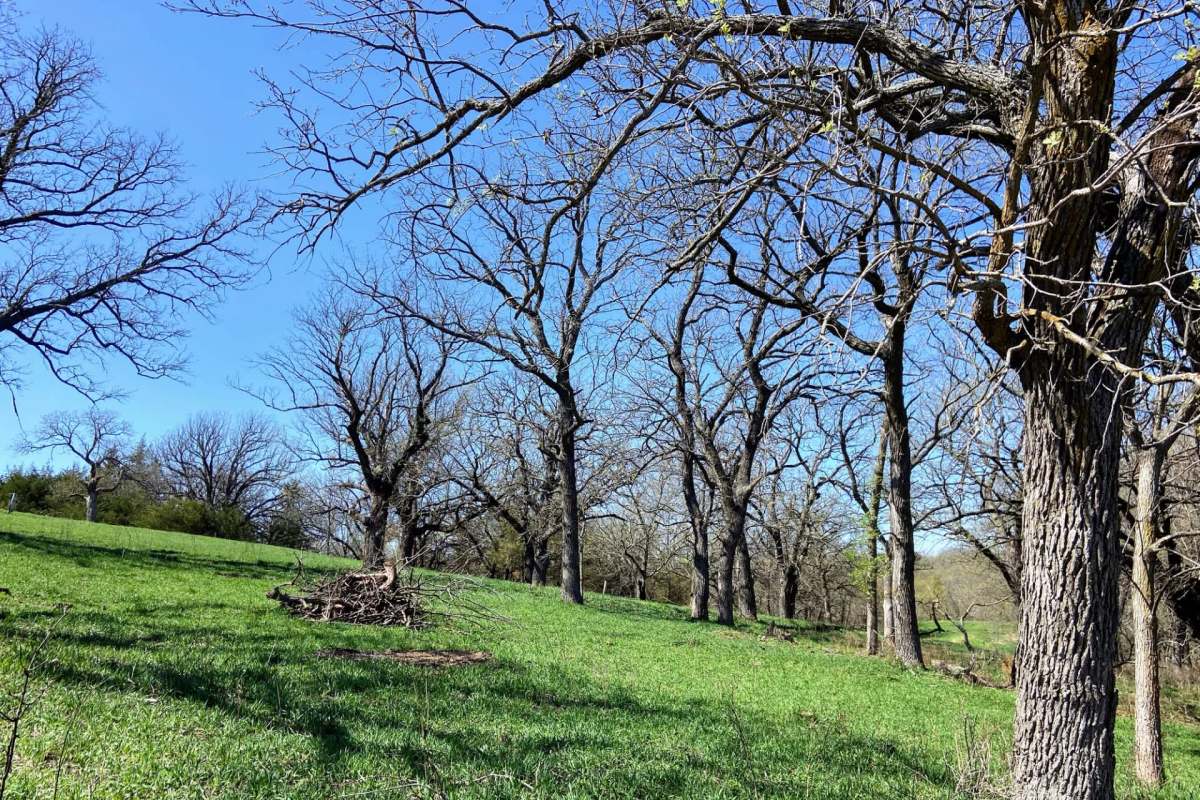
Officials across the Midwest are scrambling to save mighty bur oak trees that are rapidly dying from a drought-driven disease.
What's happening?
For years, states like Nebraska have been suffering from increased drought conditions. Those conditions are having devastating effects on some of the region's most well-known trees.
Harvest Public Media reported on the plight of bur oaks, a species that has been so sturdy for centuries that it has earned the nickname "King of the Great Plains native hardwoods."
But Nebraska officials started noticing the trees dying off in 2023.
"It brought some concern, but we weren't sure what was going on," Nebraska Game and Parks horticulturist Noah Sundberg told Harvest Public Media. "We thought the oaks could pull out of it."
Instead, the problem became worse, and officials were eventually able to pinpoint the culprit: hypoxylon canker, a fungus that is fatal to drought-stricken trees, particularly oaks. There is no cure for it, and the fungus eventually cuts off water and nutrients, killing the tree.
TCD Picks » Quince Spotlight
💡These best-sellers from Quince deliver affordable, sustainable luxury for all




Nebraska officials say certain parks have lost up to 70% of their bur oak canopy.
Why are droughts concerning?
Droughts can have devastating consequences on an ecosystem. They can be fatal to plants, trees, and wildlife, can bring agriculture to a halt, and can dry up valuable water sources.
And as the planet gets warmer, droughts are only expected to become worse.
The pollution caused by burning dirty fuels traps heat within our atmosphere, causing the planet to become hotter. In fact, the 10 warmest years in recorded history have all occurred within the past decade.
|
Should the government be allowed to restrict how much water we use? Click your choice to see results and speak your mind. |
 Definitely 💯
 And with that heat comes an increase in extreme weather, including droughts. The problem is becoming so commonplace that experts now believe three-quarters of the world's population will be affected by drought by the year 2050.
What's being done to save our trees?
For help, Nebraska officials turned to some of their counterparts in states such as Mississippi, Missouri, and Illinois, which have also suffered from severe drought conditions and have also lost swaths of oak trees to hypoxylon canker.
The answers were consistent. As droughts become more common, states need to respond by planting more drought-resistant trees, which are designed to better handle a warmer, drier planet.
"I'm doing a lot of experiments now with the Japanese maples," Rob Schreiner, head of the Nebraska City tree board, told Harvest Public Media. "We're having really good luck with those. They've come out with some new hybrid elms, which so far have been out for quite a while and doing well.
"They've built a better tree, basically. They've gotten rid of some of the bad characteristics, and they seem to be doing really well."

Join our free newsletter for good news and useful tips, and don't miss this cool list of easy ways to help yourself while helping the planet.







