


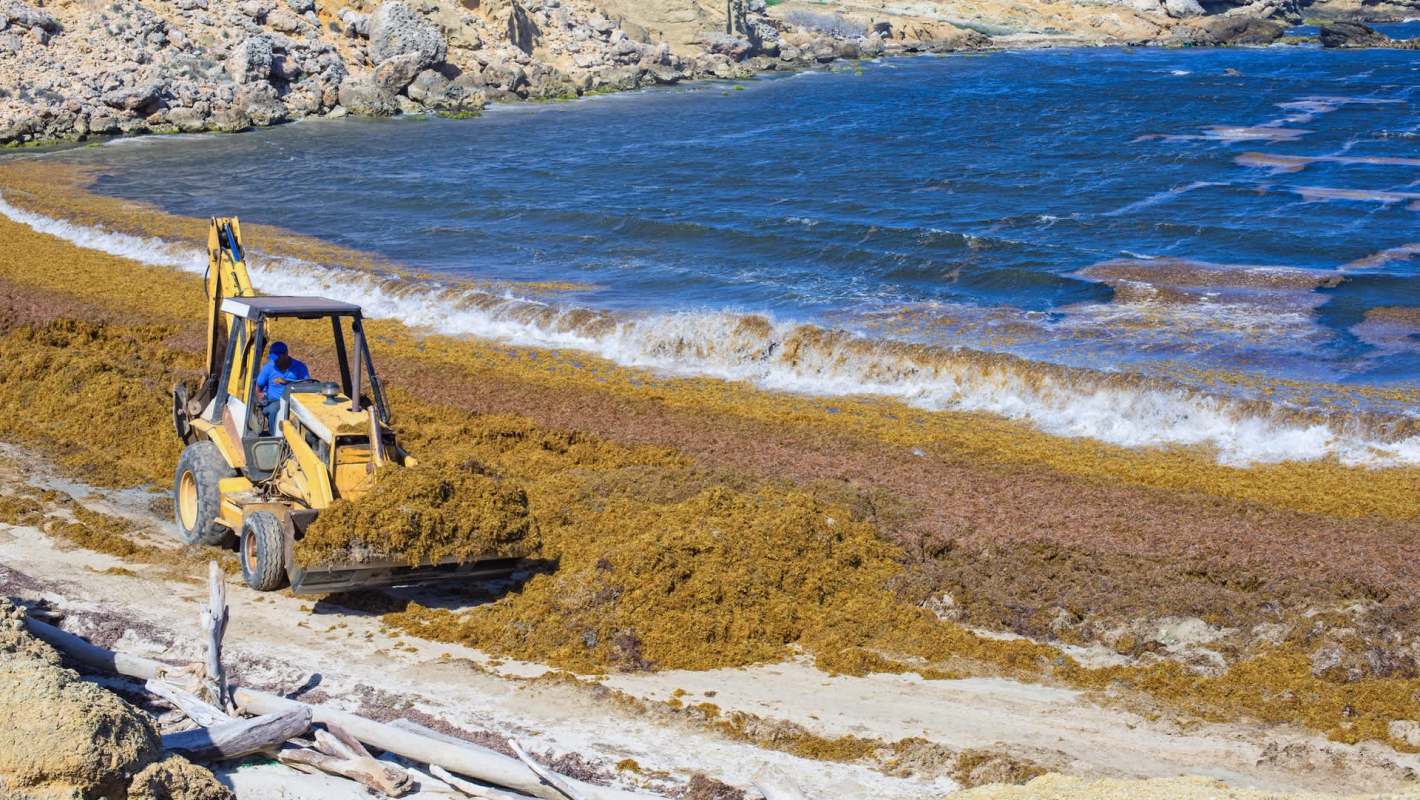
A fast-growing blanket of sargassum prompted Galveston, Texas, tourism officials to deploy heavy equipment just days before Memorial Day weekend, with crews racing to keep public beaches accessible during one of the busiest travel periods of the year.
With the holiday approaching, workers Tuesday began moving the seaweed away from the waterline to clear space along the shoreline and improve beach access.
The Galveston Park Board of Trustees initiated mechanical cleanup after recent accumulation reached levels that trigger intervention on public beaches, according to the Galveston County Daily News.
Crews used heavy machinery in seven areas spanning East Beach to 75th Street on the island's West End. The most continuous cleanup zone runs from 61st Street to 75th Street, where sargassum had piled up along the water's edge.
The park board follows specific guidelines to determine when mechanical removal is necessary. Cleanup begins when seaweed reaches an average height of 2.5 feet with a width of 10 feet or more or an average height of 1.5 feet with a width of 20 feet or more.
On Tuesday, crews were seen pushing the seaweed into containment areas west of 61st Street to clear walking space ahead of the weekend surge.
TCD Picks » Quince Spotlight
💡These best-sellers from Quince deliver affordable, sustainable luxury for all




The timing is critical. Memorial Day marks the unofficial start of summer tourism for many Gulf Coast destinations, and heavy sargassum buildup can change how usable and inviting beaches feel for visitors planning short holiday trips.
For Galveston, that has both practical and economic implications. Beach conditions often play a major role in tourism activity, and officials typically act once accumulation begins to interfere with public access and recreation.
Sargassum itself is a naturally occurring seaweed, but large seasonal influxes can overwhelm coastal areas when it washes ashore in dense mats. These events have become increasingly common, creating ongoing management challenges for shoreline communities.
What may look like a simple nuisance can become a recurring coastal operations issue, especially during peak visitation periods when access, aesthetics, and safety all matter at once.
Rather than clearing every stretch of shoreline, crews focused on high-traffic public areas where accumulation met removal criteria and where visitor use was expected to be heaviest over the weekend.
That threshold-based system allows the park board to decide when to deploy heavy equipment instead of responding to every minor buildup along the coast.
In this case, measurements showed the sargassum had reached levels significant enough to require action.
For beachgoers, officials recommend checking conditions before heading out, as some sections may remain more affected than others while cleanup continues. Planning ahead could help visitors avoid the most congested or problematic areas.

Get TCD's free newsletters for easy tips, smart advice, and a chance to earn $5,000 toward home upgrades. To see more stories like this one, change your Google preferences here.







