


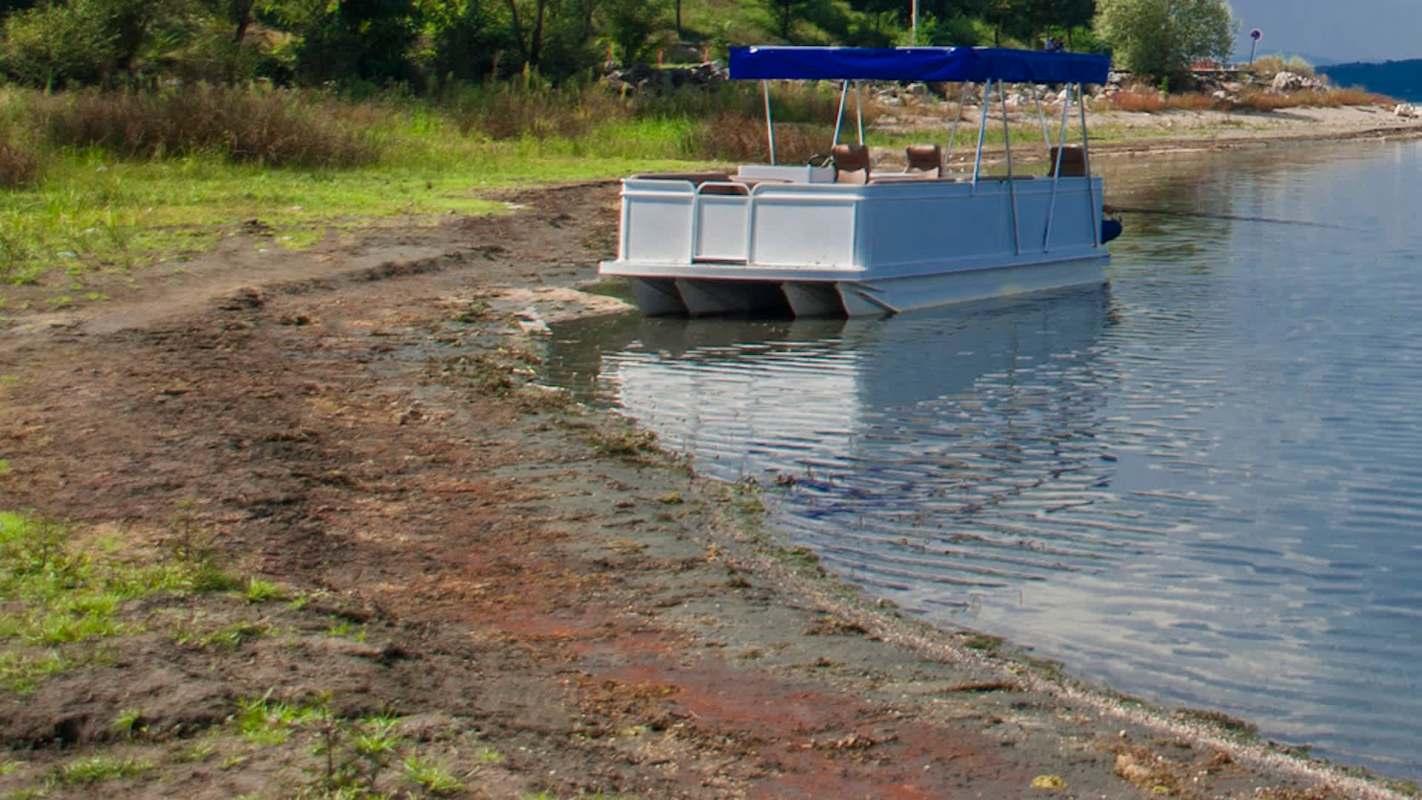
One of Turkey's most important lakes has recently hit record-low levels, prompting one expert to sound the alarm.
What's happening?
As reported by the Daily Sabah, Sapanca Lake, a vital water source for the northwest region in Turkey, hit record lows in late 2025.
With water levels around 28.5 meters (93.5 feet), the lake was well below its optimal depth; experts warned it shouldn't fall below 31 meters (102 feet).
The record-setting low water levels have been exacerbated by a prolonged drought affecting the country.
According to Professor Meriç Albay of Istanbul University's Faculty of Aquatic Sciences, increased water demand from urbanization and the agricultural industry has also contributed to the lake's declining levels.
Between 1997 and 2022, Sapanca Lake typically had monthly water levels ranging from 29.33 to 32.64 meters (96 to 107 feet).
However, as global temperatures continue to rise and climate patterns are disrupted, the region may become increasingly vulnerable to prolonged droughts.
Why are low water levels for Sapanca Lake concerning?
Albay explained that construction projects across the region have also significantly affected groundwater reserves and streams that directly feed Sapanca Lake.
In recent years, this has left the vital water source severely weakened.
"If alternative water sources are not developed for Kocaeli and Sakarya and population growth continues at this pace, the lake will inevitably disappear," Albay said. "Sapanca Lake supplies drinking water to Adapazarı and Kocaeli. It cannot withstand this level of pressure."
TCD Picks » Quince Spotlight
💡These best-sellers from Quince deliver affordable, sustainable luxury for all




|
How often do you worry about the quality of your drinking water? Click your choice to see results and speak your mind. |
 Never 👎
 As noted by Albay, the lake has approximately 120 million cubic meters of usable water available to the surrounding communities.
But with 100 million cubic meters of that water supply allocated to the nearby province of Sakarya and the city of Izmit alone, water resources may soon become scarce.
What's being done about Sapanca Lake's water levels?
"We are paying last year's bill this year, and we will pay this year's bill next year," Albay explained.
"Unless we experience extraordinary snowfall, which appears unlikely, the situation will worsen. Reducing water withdrawal is the only viable solution. Even with strong rainfall, we could recover at most 20% of the loss."
For now, Albay suggested that water conservation remained the most effective tool to combat the dwindling water levels in Sapanca Lake.
He noted that as levels continue to decrease, pollutants have a greater impact on water quality. Over time, this could greatly affect the remaining water supply.
"If water discharge through the Çark Stream is not halted and the lake is not allowed to re-oxygenate and recover, the damage will be irreversible," added Albay. "Two major cities now face the risk of water shortages. The area must be declared a first-degree protected site."

Get TCD's free newsletters for easy tips to save more, waste less, and make smarter choices — and earn up to $5,000 toward clean upgrades in TCD's exclusive Rewards Club.
Cool Picks






