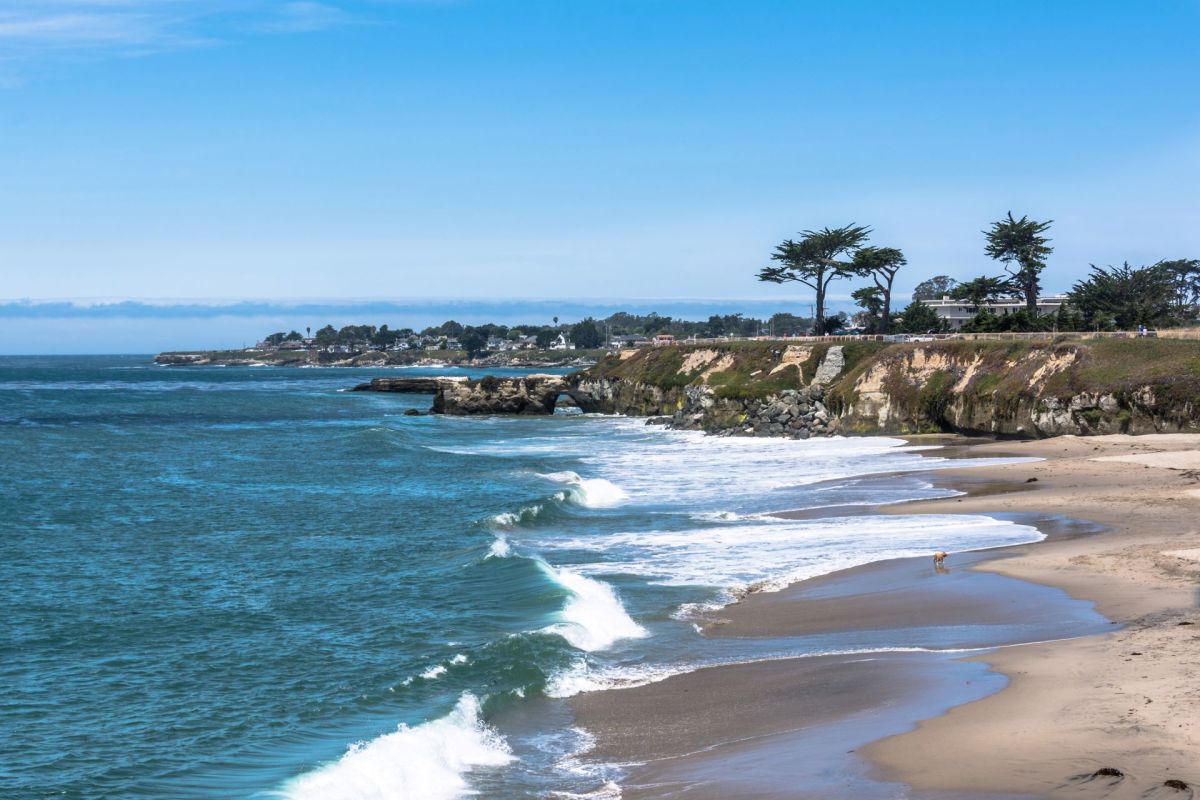
California's coastal city of Santa Cruz has been a tourism hotspot for decades — but its iconic shoreline is facing a new threat to its multimillion-dollar surfing economy.
What's happening?
The nonprofit Save the Waves Coalition estimates that Santa Cruz's waves generate nearly $200 million in economic benefits, resulting in over 780,000 surf visits to the area annually.
"One of the biggest draws to people visiting here and staying here, even though with sales and rent going up a lot, is surfing in the ocean," professional surfer Shaun Burns told ABC7 News.
However, rising sea levels could undermine this "surfonomics" boon. Save the Waves Coalition experts used oceanographic datasets and surf break characterization to predict how sea-level rise would impact Santa Cruz's surfability, barring adaptation measures.
They found that all 31 of Santa Cruz's surf breaks will lose quality, resulting in fewer hours of surfable conditions and fewer breaks. Just one foot of sea-level rise could wipe out $12.7 million in recreational value.
Why is this important?
Visitors pay for more than just surfing services when they vacation in Santa Cruz. They also support restaurants, hotels, coffee shops, and other small businesses.
TCD Picks » Quince Spotlight
💡These best-sellers from Quince deliver affordable, sustainable luxury for all




The more the sea levels rise, the more Santa Cruz could suffer.
Santa Cruz isn't the only coastal community wary of losing its lifeblood and dealing with more dangerous storm surges due to higher sea levels, which have risen by eight to nine inches on average globally since 1880, according to the National Oceanic and Atmospheric Administration.
On the East Coast, for example, New Jersey is experiencing a rise in sea levels twice as fast as the global average, which is increasing the frequency of flooding events.
What can be done about this?
Human activities, particularly the burning of coal, oil, and gas, are making global temperatures rise at an unprecedented rate, far more quickly than they do during Earth's natural cycles, caused mostly by variations in orbit, according to NASA.
|
How concerned are you about the plastic waste in our oceans? Click your choice to see results and speak your mind. |
 Extremely 😫
 In turn, melting glaciers and thermal expansion (an increase in water volume due to warmer ocean temperatures) are causing sea levels to rise.
If you're interested in reducing your environmental impact, EnergySage saves consumers up to $10,000 on solar installations on average. Pairing solar — a renewable, non-polluting energy — with battery storage can keep you online during weather-related grid outages.
Meanwhile, California coastal communities are working to mitigate the impacts of rising seas.
Santa Cruz is conducting a vulnerability assessment to identify potential risks and formulate adaptation strategies. In Pacifica, plans to build an artificial reef are gaining momentum, per ABC7.
"It is a big lift, but I really think it's our only serious option for the, the near term, you know, I feel with sea rise eventually we probably will have to do some managed retreat. But I think this buys a lot of time," surfer Tom Kendall said of the artificial reef plan for Pacifica.

Join our free newsletter for good news and useful tips, and don't miss this cool list of easy ways to help yourself while helping the planet.