


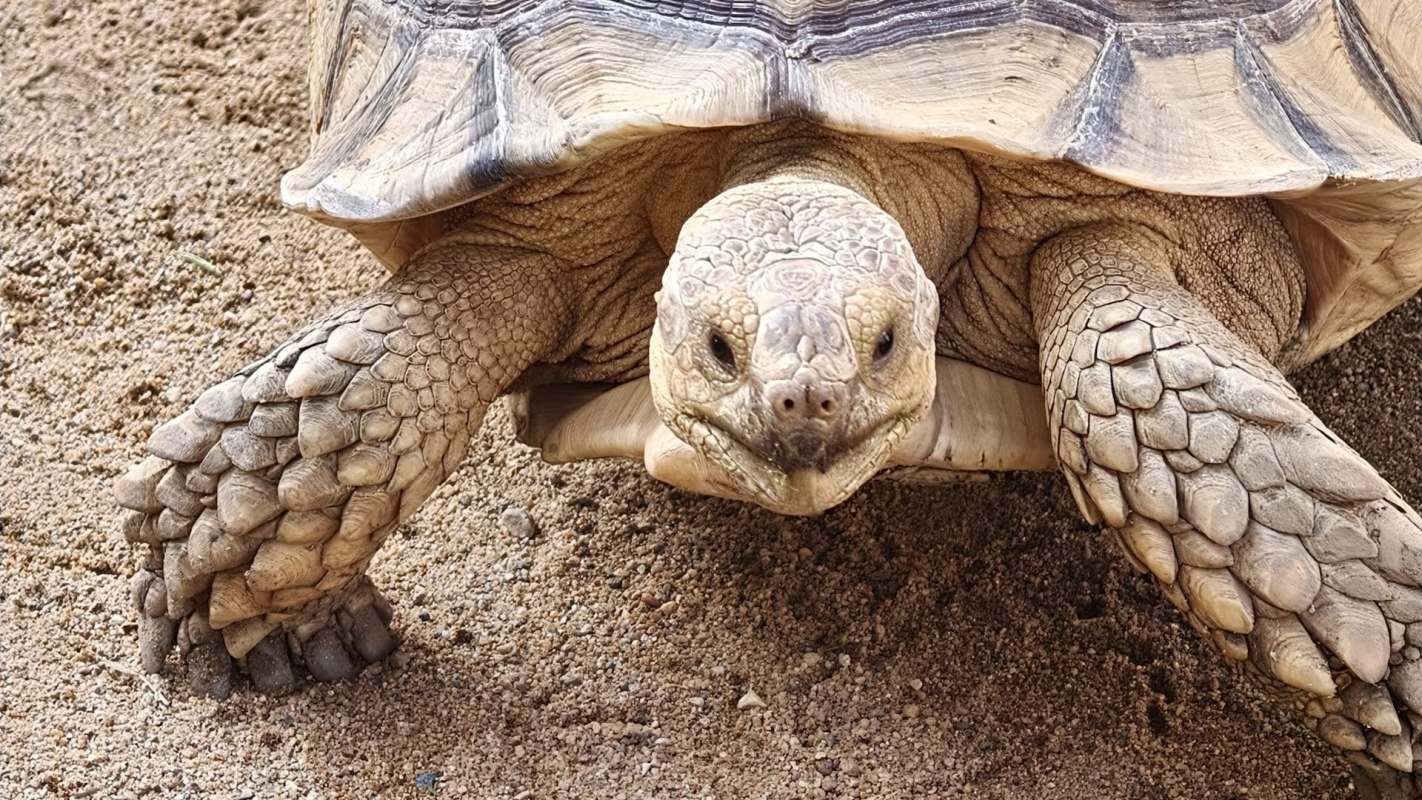
A conservation story is giving people a rare dose of hope about the Sahara. Five hundred tortoises were released into a severely degraded part of the desert, and within five years, satellite imagery showed green patches in areas that had been mostly sand.
The story centers on African spurred tortoises, a native species also known as Centrochelys sulcata, the Indian Defence Review reported. In 2021, researchers placed 500 of them in a degraded area on the Sahara's southern fringe, where baked, crusted soil had prevented rain from soaking in, leaving seeds with almost no chance to sprout.
"The tortoises did not plant anything," IDR said. "They dug."
These large reptiles burrow deep underground to escape brutal daytime heat and cold desert nights. Their digging breaks up the hard surface crust, creating channels for rainwater to enter the soil instead of running off the surface.
That small physical change appears to have set off a chain reaction. The shift helped moisture remain underground, gave dormant seeds a chance to sprout, and later appeared from space as scattered green growth near the tortoises' activity.
In a region where land degradation threatens food security, grazing, and rural livelihoods, healthier soil can make a real difference for nearby communities.
TCD Picks » Quince Spotlight
💡These best-sellers from Quince deliver affordable, sustainable luxury for all




The tortoises are what ecologists call "ecosystem engineers," species that physically alter their surroundings in ways that help other life. Once burrows loosen the soil, insects and microorganisms move in, plants begin to take hold, and birds and small animals can follow.
Conservation and climate resilience often go hand in hand. Protecting native wildlife can help landscapes retain water, reduce erosion, and recover naturally, much like other nature-based solutions in rewilding projects and low-tech land restoration efforts in dry regions.
Researchers and conservation groups are excited, but also cautious. A 2017 ecological review described the African spurred tortoise as a species with "great ecosystem engineering potential," while IUCN reports have shown high survival rates for some reintroduced groups in Senegal, according to IDR.
Despite the encouraging results, experts stress that this is "neither a magic bullet nor a universal solution." Rainfall, grazing pressure, and ongoing land management still matter. The same tortoise that helps damaged land is also endangered, with habitat loss, climate stress, hunting, and the pet trade driving declines across its range.

Get TCD's free newsletters for easy tips, smart advice, and a chance to earn $5,000 toward home upgrades. To see more stories like this one, change your Google preferences here.







