


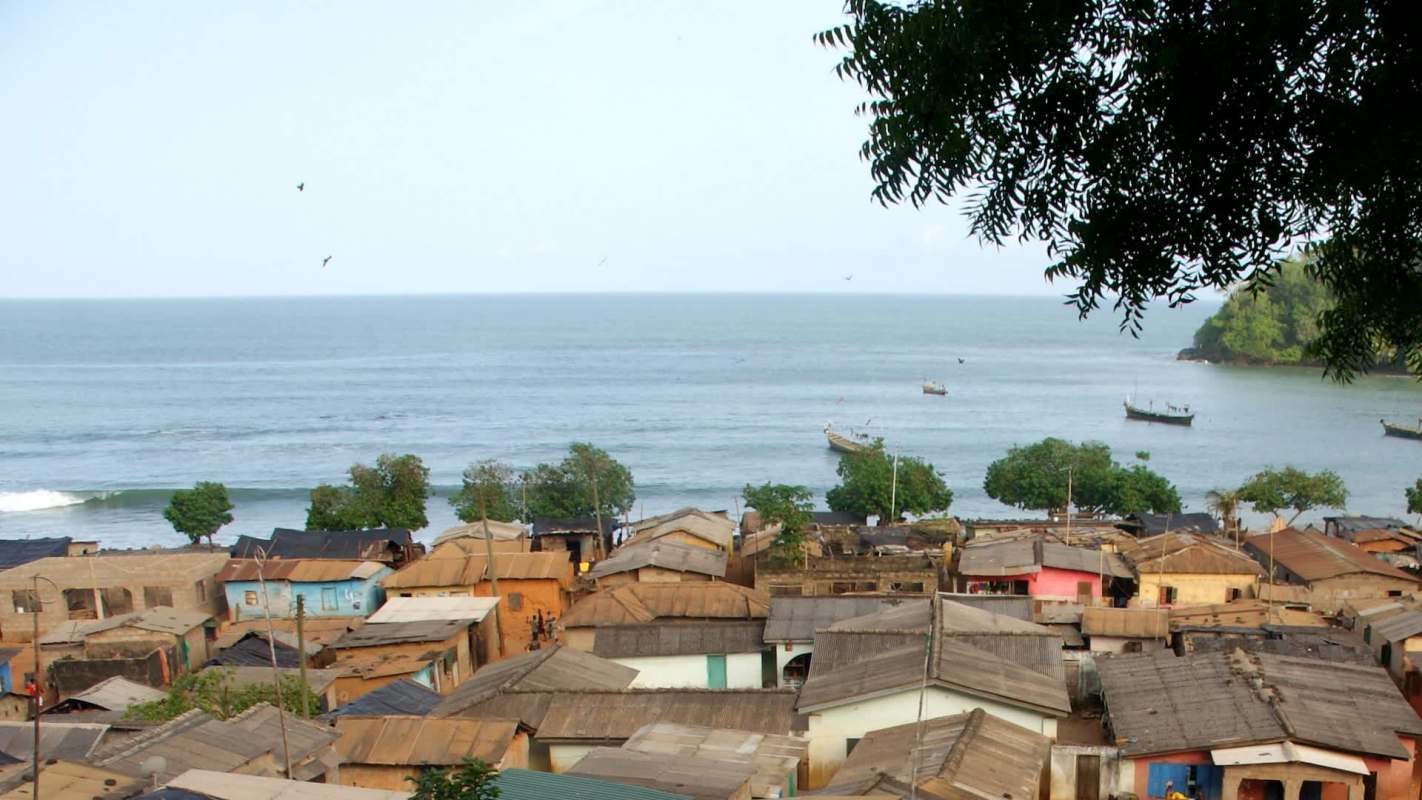
The African coast is under threat from rising seas, and a certain weather event significantly exacerbated the situation.
What's happening?
From 2009 to 2024, the sea level around the continent rose 73%, mostly because of the 2023-24 El Niño, according to a study explained by Phys.org. The warming trend accounted for 2.3 centimeters (0.9 inch) of global sea level rise in that two-year span, or "19% of the total increase observed over the 32-year satellite record since 1993," the outlet stated.
The largest impact came around Africa, in the western Indian Ocean and eastern central Atlantic Ocean. The researchers used satellite data, computer models, and statistical methods to analyze sea level rise and found that over 70% of the increase was the result of stored ocean heat, which was almost four times greater than usual during the El Niño.
While sea levels have been climbing for decades in Africa and around the world because of rising global temperatures, the problem is accelerating. The rate of 0.06 inches per year during much of the 20th century more than doubled to 0.14 inches per year from 2006 to 2015, according to Climate.gov.
The paper stated that the African sea level shifted markedly in 2009, when rise spiked from 2.7 millimeters (0.11 inches) per year to 4.7 mm (0.18 in) per year. The 2023-24 El Niño in particular was responsible for 27 mm (1.06 in) of rise, an effect 41% greater than the previous El Niño benchmark of 19.2 mm (0.76 in) in 1997-98. A typical rise is 10 to 20 mm (0.39 to 0.79 in), the authors said.
Why is this important?
"Africa has an extensive coastline stretching about 18,950 miles (30,500 km)," Phys.org reported. "The oceans surrounding the continent are warming and rising faster than the global average, placing more than 200 million coastal residents and critical infrastructure in cities such as Lagos and Dar es Salaam at risk. If we do not achieve carbon neutrality by mid-century, Africa is projected to exceed 2 degrees Celsius of warming by 2100, further increasing these risks."
The Nigerian and Tanzanian metropolises are the largest population centers in West and East Africa, respectively. The study highlighted the danger of rising seas to monitoring and adaptation measures, especially since the continent's 38 coastal countries rely on the ocean for food and economic security, as Phys.org described.
The researchers looked to parse long-term warming trends driven by the burning of gas, oil, and coal for energy with short-term weather patterns such as El Niño. They found that Africa's low-lying deltas and small island states are most at risk as flooding, subsidence, and ocean productivity issues coalesce.
What's being done about rising sea levels?
This and other scientific studies about the changing climate can be used to support mitigation planning. Sea walls and other barriers may protect people and communities from inundation, but managed retreat from coastal areas is another strategy.
While the heat-trapping pollution already in the atmosphere will push sea levels up at least another 8 to 20 inches by 2100, according to the MIT Climate Portal, heat within the ocean is already a primary driver of sea level rise in Greenland and Antarctica — meaning even the elimination of pollution today may not stop creeping waters.
TCD Picks » Upway Spotlight
💡Upway makes it easy to find discounts of up to 60% on premium e-bike brands





The problem is large and requires decisive action. Vote for politicians who push for climate action, and buy from companies that make environmentally conscious decisions such as enabling the circular economy and using sustainable packaging.
|
What's the most you'd pay per month to put solar panels on your roof if there was no down payment?
Click your choice to see results and speak your mind. |
 $200 or more 💰
Get TCD's free newsletters for easy tips to save more, waste less, and make smarter choices — and earn up to $5,000 toward clean upgrades in TCD's exclusive Rewards Club.
Cool Picks






