


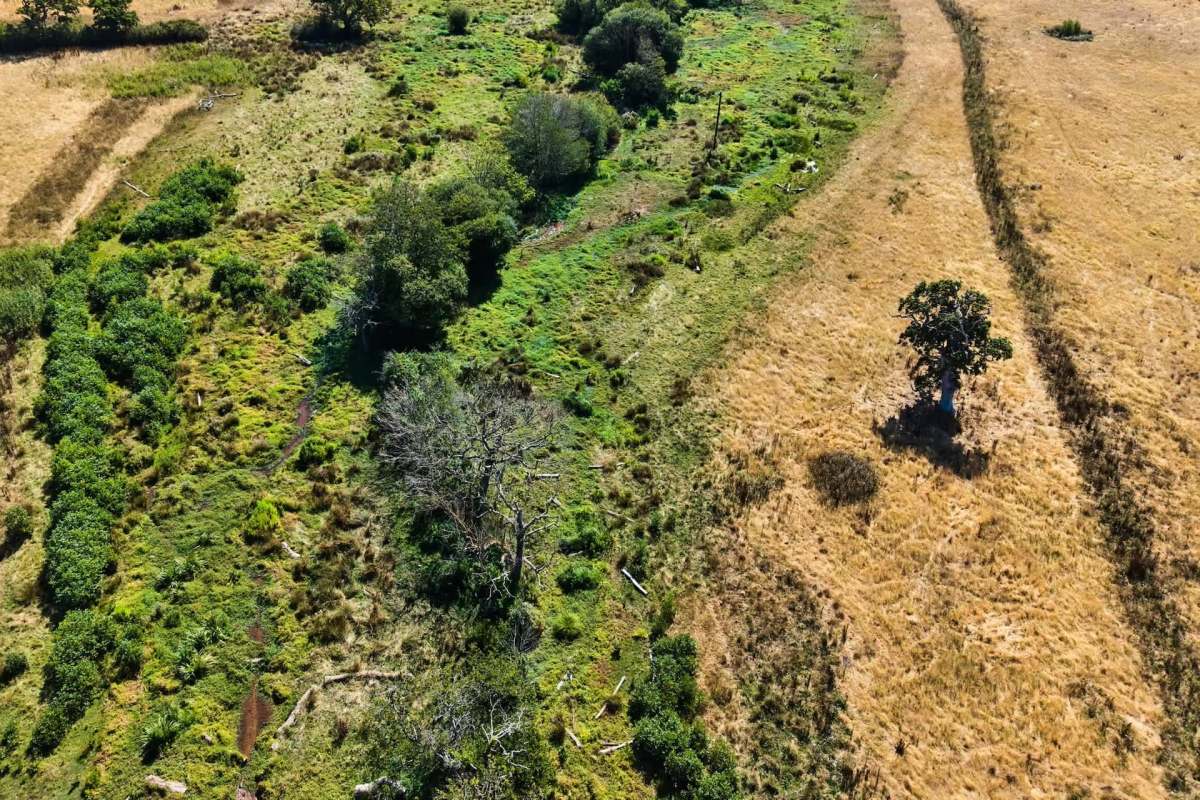
Aerial images from the National Trust's Holnicote estate in Somerset show a sharp divide: land where wetlands have been revived and rivers reconnected stayed green through five summer heatwaves, while neighboring ground dried out and browned.
The difference underscores the practical value of nature-based restoration as extreme weather becomes more frequent, offering drought protection, helping to limit wildfire risk, and reducing flood pressures.
Here's what to know
According to The Guardian, footage from above Holnicote found that parts of the estate altered through rewilding retained moisture and plant cover during severe heat. Those sections included restored wetlands, and river channels shifted back toward more natural routes.
By holding water during dry spells and releasing it more slowly during wet ones, these revived habitats can benefit wildlife while safeguarding nearby communities.
Ben Eardley, project manager at the Holnicote estate, said, "Nature is providing solutions to some of the biggest challenges facing society today."
He added, "By reconnecting river systems with the surrounding area and creating natural sponges in the landscape, we've created a system that stores water during drought, keeping wetlands and the surrounding habitats healthy, and slows water during storms and periods of extreme rainfall, helping to protect villages from the risk of flooding downstream."
TCD Picks » Quince Spotlight
💡These best-sellers from Quince deliver affordable, sustainable luxury for all




The results also challenge arguments that blame rewilding for worsening wildfire risk. At Holnicote, the trust said the restored wetland sections appear to be demonstrating the opposite, remaining more resilient in extreme conditions.
More background
In a single frame, greener restored land sits alongside parched countryside, making the effects of ecosystem restoration much easier to grasp.
The U.K. has lost more than 90% of its wetlands. That decline has stripped away the natural capacity to store water, just as many areas face larger swings between drought and intense rainfall.
The effects can include strained water supplies, habitat damage, and increased flooding risk downstream. Eardley said that the same natural processes supporting wildlife recovery were also helping communities adapt to climate breakdown.
Another National Trust property, the lowland heath at Dunwich, was destroyed by a wildfire that swept through the site.
What's being done?
Work at Holnicote has focused on restoring wetlands, reconnecting rivers to the wider landscape, and allowing water to flow through the area more naturally.
Using Holnicote as a case study, the National Trust is arguing for greater public spending on nature-based solutions. Harry Bowell, the National Trust's director of land and nature, called on the government to do more to improve the nation's resilience through restoration.
That kind of investment could help ease pressure on communities facing flood damage, water shortages, and heat-related impacts while also improving habitat for plants and animals.
Conservation here is being framed not as a luxury but as infrastructure that protects people, too.
"This year's summer has been a stark warning of how our weather systems are changing," Bowell said. "It's places like Holnicote where nature is showing us the way — demonstrating how, by treating and investing in nature as essential infrastructure, we can create landscapes that are more resilient to benefit communities and nature alike."

Get TCD's free newsletters for easy tips, smart advice, and a chance to earn $5,000 toward home upgrades. To see more stories like this one, change your Google preferences here.







