


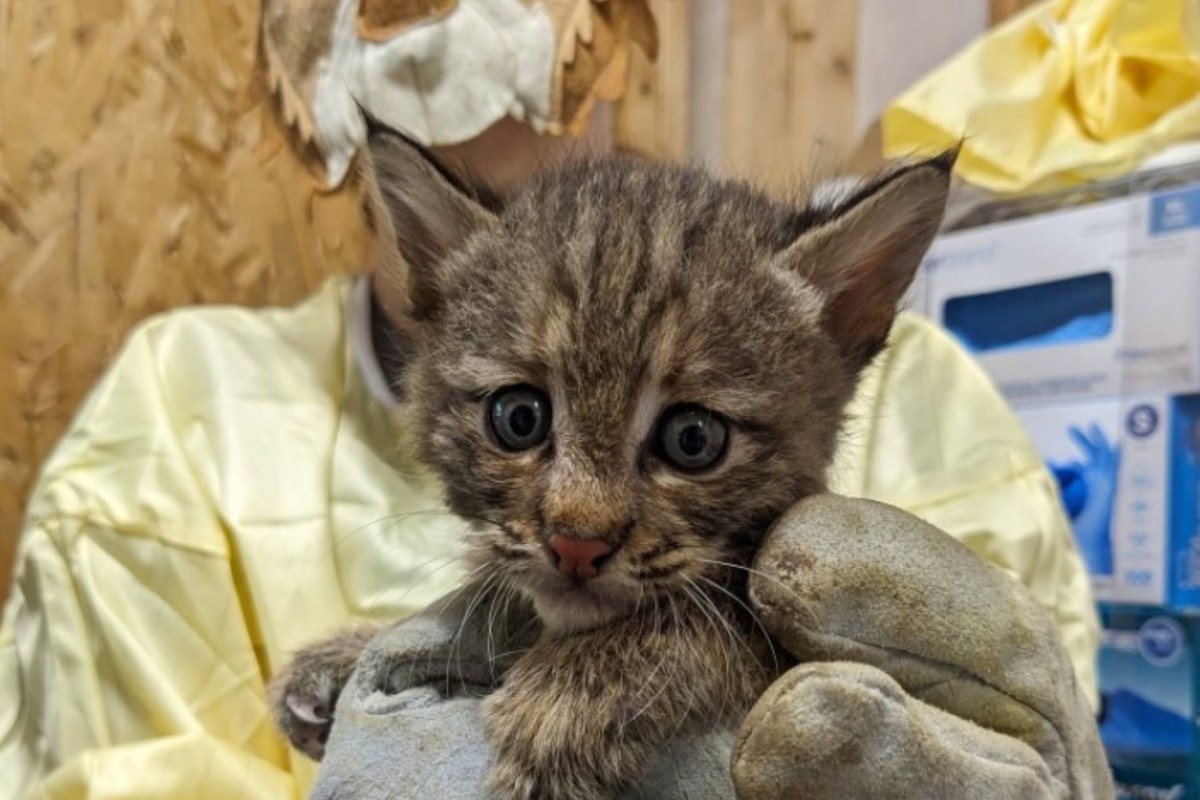
Before anyone can get near two rescued bobcat kittens in Virginia, there is an unusual checklist: wear a KN95 mask, hide your face with a bobcat mask, and don't make a sound.
The strict setup is meant to protect the kittens' chances of eventually making it back to the mountains.
What happened?
During an exclusive visit by WSLS 10, the Southwest Virginia Wildlife Center in Roanoke shared that it is caring for two orphaned bobcat kittens, Virginia's only wildcat.
Staff told the station the kittens are about 5 weeks old and were transferred from a rehabilitation facility in Lee County after their mother was hit and killed by a vehicle.
According to staff members, bobcats are some of the most difficult and costly animals the center takes in because the rehabilitation process depends on preventing them from becoming comfortable around humans.
Their temperament so far is encouraging. "Luckily, these guys are already really, really feisty," director of operations Katherine McGrath said, noting that the growling and swatting they are already showing is exactly what caretakers want to maintain.
TCD Picks » Quince Spotlight
💡These best-sellers from Quince deliver affordable, sustainable luxury for all




The kittens are also marked with colored dots on their ears so staff can tell them apart while monitoring medication, weight, and overall health during one of the rare stretches of human handling in what WSLS 10 said is expected to be a roughly 10-month rehabilitation.
Why does it matter?
McGrath said shrinking habitat and expanding urbanization are bringing bobcats into closer contact with people.
She said, "As their population declines, as urbanization increases and their habitat declines in size, there's not really a lot of places where we can find these guys, where they're getting into contact with people enough that they're coming into us."
She went on to explain that the goal is to avoid human imprinting: "We essentially don't want them to associate people with food." If they do, she said, "They lose that fear that they have of us."
Keeping that fear is important to their survival after release.
The center expects the kittens' rehabilitation to cost more than $20,000, and as they grow, each one will eventually eat about a whole chicken per day before later moving on to prey like quail and rabbits.
SWVA Wildlife Center has successfully introduced bobcats back into the wild before. Just this April, it released a pair of rehabilitated adult bobcats in Floyd County. The bobcats had spent a year under the center's care after being rescued as kittens.
What are people saying?
SWVA Wildlife Center Executive Director Chester Leonard said each kitten weighed a little over 500 grams (1.1 pounds) when they arrived and had gained about 100 to 150 grams within roughly three days.
Getting bobcat kittens in back-to-back years is not typical, McGrath said. As WSLS 10 reported, she said, "So we usually get them every other year, so one year after another is sort of a surprise to us."
Leonard said, "It's been a challenge learning to care for these guys, but it's something we've actually become experts at doing, and we look forward to welcoming them every year because it's becoming a tradition, it seems like."
The center is currently accepting donations to help cover the cost of caring for the kittens.

Get TCD's free newsletters for easy tips, smart advice, and a chance to earn $5,000 toward home upgrades. To see more stories like this one, change your Google preferences here.







