


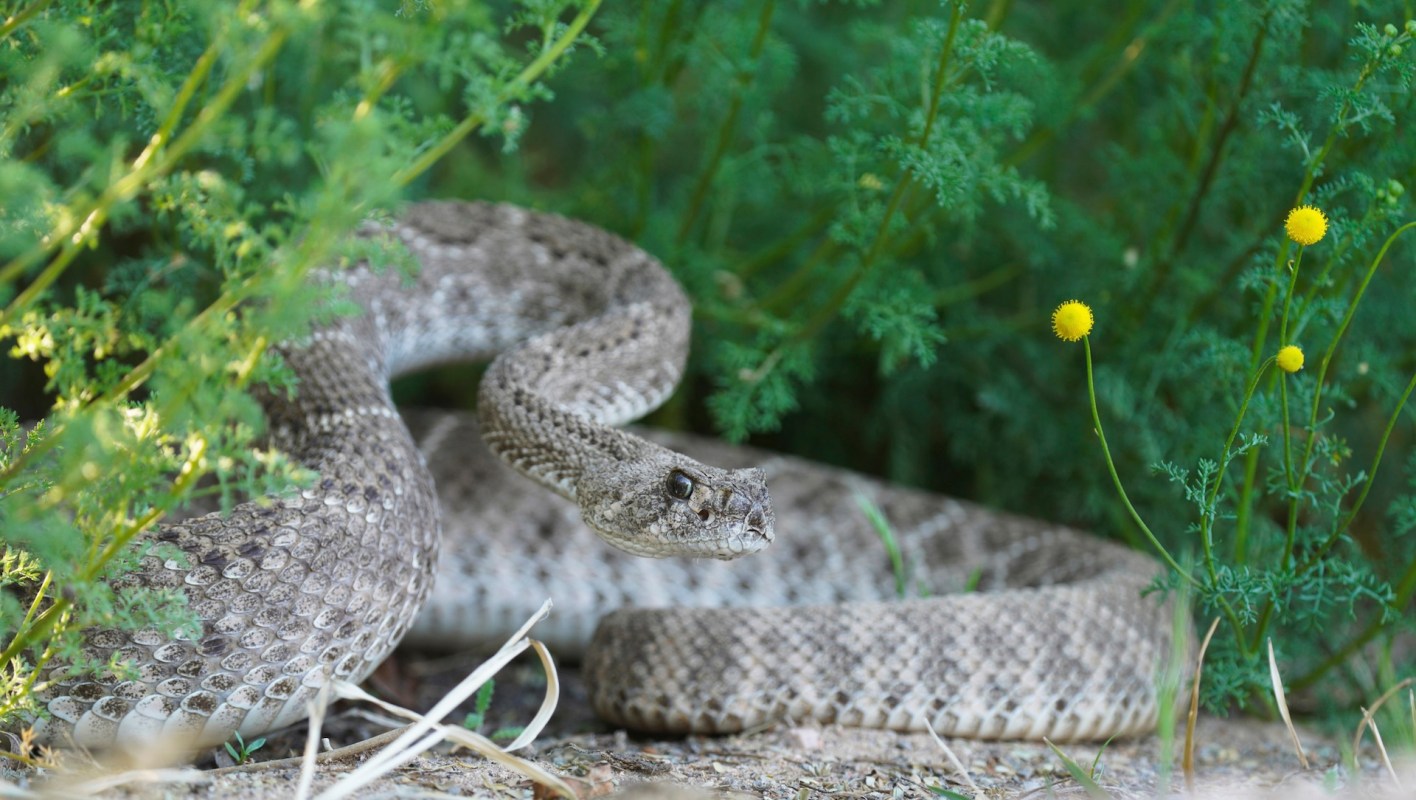
What began as yard work for one British Columbia family ended with their son in intensive care, and they now want others to understand how dangerous a rattlesnake bite can be.
Here's what to know
While working outside, Colin Spittal and his son, Landen Spittal, came across more than one snake, Andrea Spittal said.
According to Castanet, they had first seen a garter snake. Later, they picked up another snake after mistaking it for a gopher snake, but it was actually a rattlesnake, which bit Landen on his ring finger.
The sound of a weed whacker and lawnmower nearby may have masked any warning rattle, Andrea Spittal said.
"We always assume that we're going to hear it rattle, and maybe it was in that situation, but they couldn't hear it," she said, per Castanet.
His swelling started almost right away and quickly traveled up his arm. Landen was taken first to the South Similkameen Health Centre in Keremeos, then transferred to Penticton Regional Hospital, where he was admitted to the ICU.
TCD Picks » Quince Spotlight
💡These best-sellers from Quince deliver affordable, sustainable luxury for all




His care ultimately included about 14 vials of antivenom, IV fluids, repeated blood tests, and close monitoring.
According to WildSafeBC, rattlesnake bites usually happen when people attempt to handle or injure the animals.
More background
The Okanagan Similkameen Stewardship Society has said that people often mistake the Northern Pacific rattlesnake for the Great Basin gopher snake because they resemble each other, Castanet reported. It also noted that the rattlesnake is the area's only venomous snake.
Close calls like this often follow the same pattern: the more time people spend in or near wildlife habitat, the greater the odds of running into a defensive animal. Andrea Spittal said she was raised around rattlesnakes and knew they should be left alone, but that understanding had not fully carried over to the rest of the household.
What can be done?
Andrea Spittal said any rattlesnake bite should be treated as an emergency, and that the family later realized calling 911 right away would have gotten Landen help faster than driving him in themselves.
Castanet also reported that British Columbia's Wildlife Act makes harming or relocating a snake in the wild against the law.
Similar warnings have followed other rattlesnake encounters near homes and trails, where officials have urged people to keep their distance, stick to clear paths and avoid handling snakes that turn up in yards or gardens.
According to Castanet, Andrea Spittal said, "Just be aware and give them their space and leave them be...We live in their backyard, not the other way around."
Where can I learn more?
Landen Spittal's ordeal is one of several rattlesnake scares near homes and neighborhoods.
• In Methow Valley, Wash., an 8-year-old was bitten after a rattlesnake hid in the basement.
• In an Arizona town, officials warned residents after a fifth rattlesnake attack hospitalized another man.
• At a family home, a timber rattlesnake blocked the only exit as relatives left.
Each one echoes the warning Andrea Spittal shared after her son's ICU stay. Getting medical help quickly and leaving snakes alone can make all the difference.

Get TCD's free newsletters for easy tips, smart advice, and a chance to earn $5,000 toward home upgrades. To see more stories like this one, change your Google preferences here.







