


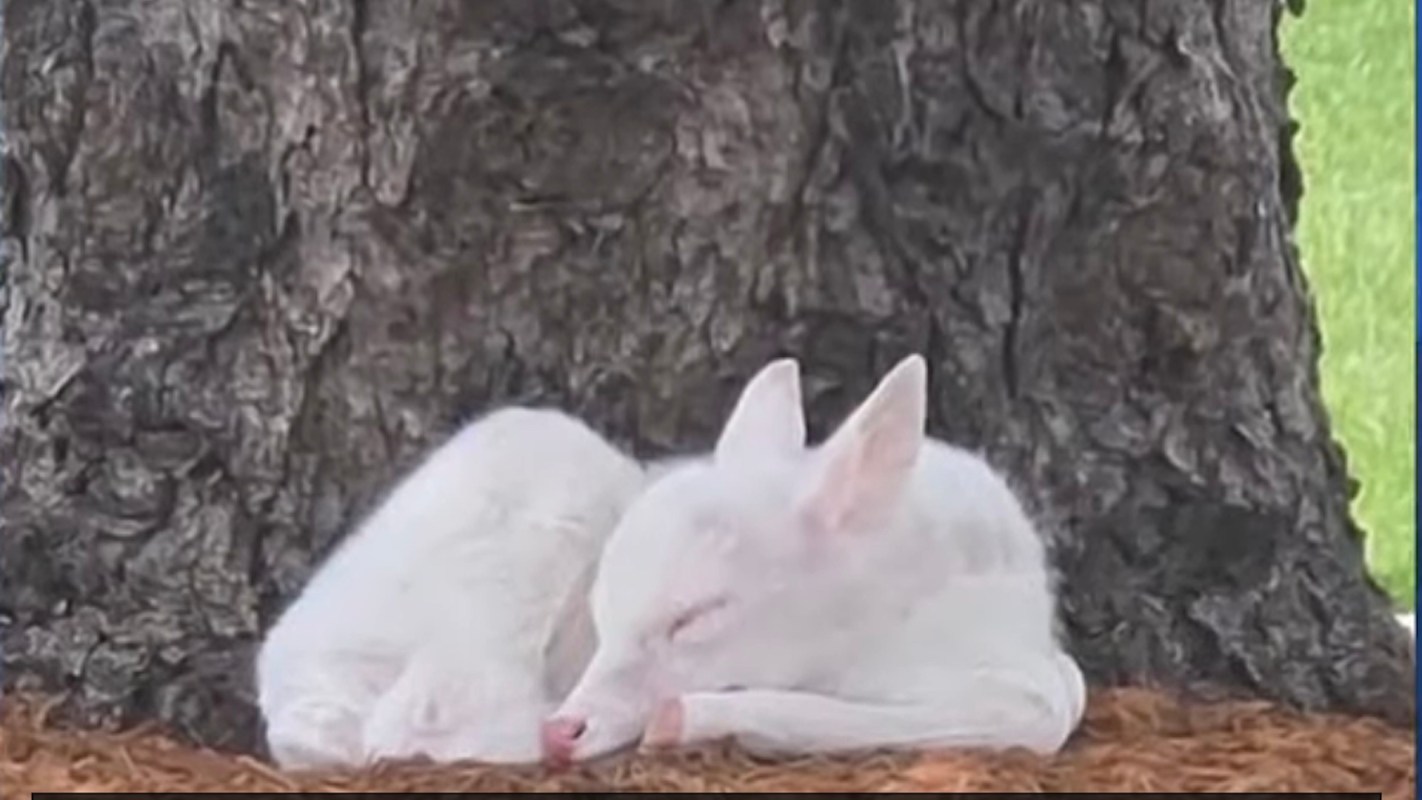
A rare white fawn was seen on the Indian Hills Community College campus in Ottumwa, Iowa, in May, stopping plenty of people in their tracks.
What happened?
The sighting is undoubtedly adorable, but it also points to a growing reality for wildlife. As people and animals increasingly share the same spaces, even well-intentioned encounters can put a vulnerable young animal at risk.
According to KCRG, the Iowa Department of Natural Resources asked people to keep their distance from the creature. Officials said the animal may be leucistic or albino, uncommon conditions that affect pigmentation and can give deer a very white coat.
The outlet noted that white deer account for under 1% of Iowa's deer population, or about one in every 30,000 deer.
The DNR said the fawn was likely not abandoned. Mother deer usually keep their young tucked away by themselves for much of the day as they feed nearby. The concern is that if too many people approach, linger, or try to get a closer look, the doe may not feel safe enough to come back.
Why is this important?
As eye-catching as the fawn is, its rarity may also make it more vulnerable. Young deer rely on staying quiet, still, and out of sight to survive, and a white coat can make that harder. The animal is legally protected, with KCRG noting that Iowa law prohibits harvesting deer with more than 50% white coloration.
TCD Picks » Quince Spotlight
💡These best-sellers from Quince deliver affordable, sustainable luxury for all




On a college campus filled with pedestrians, cars, and camera phones, however, risks can also accumulate.
As development expands and habitats become more fragmented, deer and other animals are increasingly pushed into neighborhoods, school grounds, and roadsides. In those spaces, human curiosity can unintentionally turn into stress, separation from a parent, or worse.
Even when people mean well, approaching a wild animal can disrupt natural behavior at a critical moment. For a fawn, the first days and weeks of life are especially sensitive. Too much disturbance could reduce the chances of a successful reunion with its mother.
How can you protect fawns?
It is best to give wild creatures space. That means not approaching, touching, feeding, or trying to move the animal. Pets should be kept away, too.
If a fawn appears to be alone, that usually does not mean it has been abandoned. Wildlife experts generally recommend leaving it where it is unless it is clearly injured or in immediate danger. In those cases, the next step is to contact local wildlife authorities rather than intervene directly.
Over the longer term, communities can help reduce these stressful encounters by protecting habitat, preserving green space, and supporting wildlife corridors that allow animals to move more safely without being pushed into heavily trafficked human areas.

Get TCD's free newsletters for easy tips, smart advice, and a chance to earn $5,000 toward home upgrades. To see more stories like this one, change your Google preferences here.







