


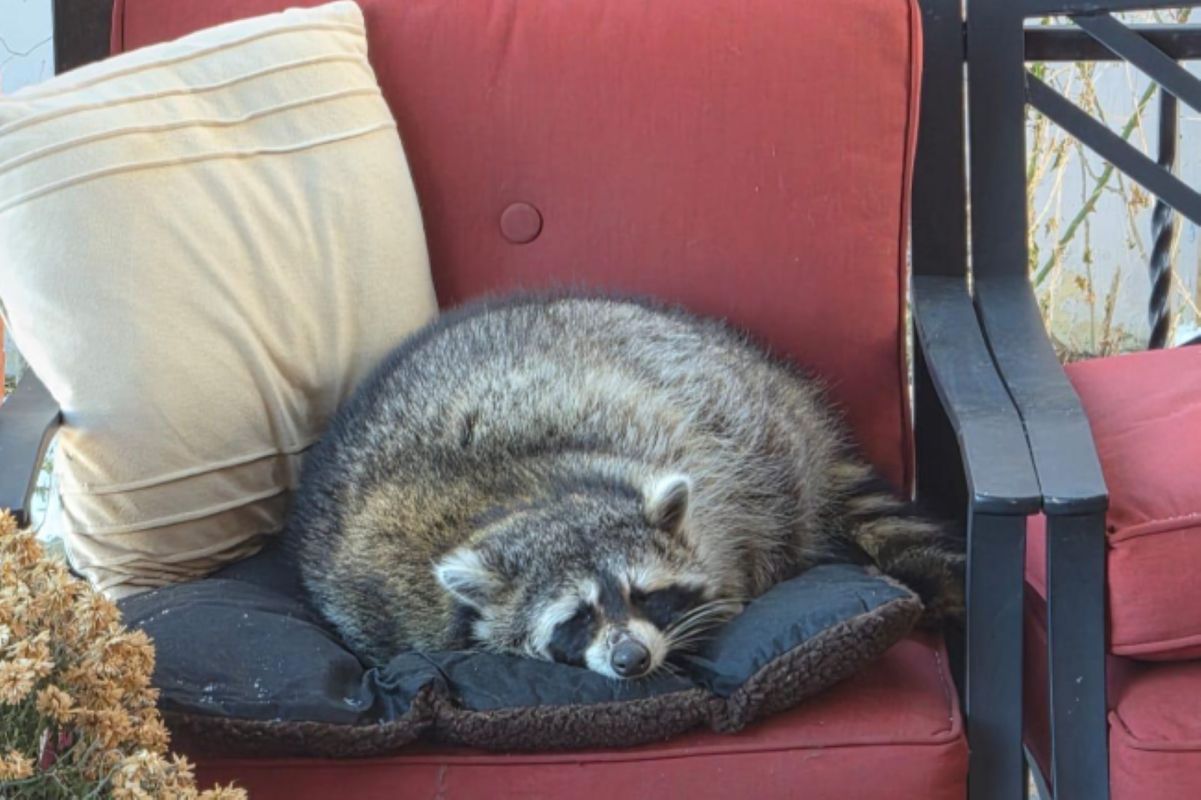
A family's porch has become an unexpected wildlife hangout after a raccoon started showing up regularly and sticking around.
While the animal may seem tame, the person behind the post says the situation has become stressful because they have small children, a cat, and no clear path to humane removal.
In a post on r/Raccoons, the poster said a raccoon had effectively made itself at home on their porch after a child fed it. Now, they want the animal gone but say local pest control told them it can't help, and there is no nearby trap-and-release option.
The household has been looking for safe solutions that protect both the animal and the people living there. The poster described the raccoon as "friendly."
Animals often grow bolder around homes after finding an easy food source. Once that association is established, they may return again and again, even after residents no longer want them there.
In this case, feeding the animal appears to have changed the raccoon's behavior and created a problem the family is now struggling to solve.
TCD Picks » Quince Spotlight
💡These best-sellers from Quince deliver affordable, sustainable luxury for all




"Friendly" wild animals can still be unpredictable, especially around small children and pets. Raccoons can carry diseases, defend themselves if cornered, and grow more persistent when they associate people with food.
Human behavior often plays a major role in these conflicts. Feeding wildlife, even once, can teach animals that porches, yards, and doorways are reliable places to find food. That can put people at risk while also making life more dangerous for the animal.
When wild animals lose their natural caution around humans, they can end up in situations that lead to injury, forced relocation, or euthanasia. What starts as a cute moment can quickly turn into a serious household and animal welfare issue.
If a raccoon is lingering around a home, the first step is to remove whatever attracted it in the first place. That means securing trash, bringing pet food indoors, cleaning up spilled birdseed, and making sure no one continues feeding the animal.
Experts generally advise against approaching or trying to handle a raccoon. Instead, keep children and pets away, block access to enclosed spaces if it can be done safely, and contact local animal control, a state wildlife agency, or licensed wildlife rehabilitators for guidance.
Homeowners can also make the area less inviting with humane deterrents such as motion-activated lights or sprinklers, closing off hiding spots under decks or porches, and limiting food sources. The goal is to encourage the animal to move on without escalating the situation.
Teaching children not to feed wild animals can also help prevent repeat incidents.
"Poor raccoon… I wouldn't have the heart to kick him out," one commenter wrote.
"We had a raccoon as a kid and he was very well fed and looked a lot like this guy. I wouldn't be surprised if he's someone's released pet," another suspected.

Get TCD's free newsletters for easy tips, smart advice, and a chance to earn $5,000 toward home upgrades. To see more stories like this one, change your Google preferences here.







