


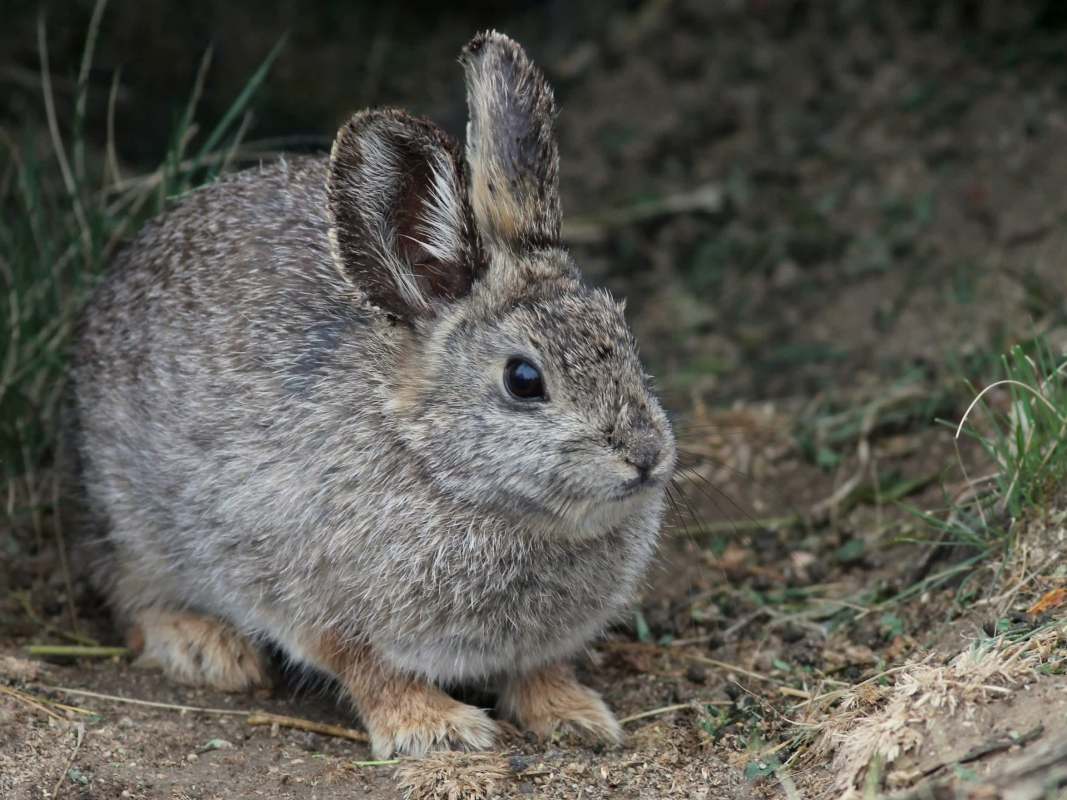
A legal battle is brewing over the pygmy rabbit, one of the smallest residents of the western United States. Environmental groups have said the delay in protecting the creature could have much larger consequences.
According to WyoFile, federal wildlife officials have missed a key deadline to decide whether the tiny rabbit should receive protections under the Endangered Species Act, and campaigners have warned that waiting until 2028 could leave both the species and its ecosystem in even deeper trouble.
Western Watersheds Project and WildEarth Guardians sued the U.S. Fish and Wildlife Service on May 13, asking a judge to force the agency to make a long-overdue decision on pygmy rabbits.
The species lives across southwestern Wyoming and in parts of seven additional Western states, relying on shrinking sagebrush-steppe habitat for food, shelter, and survival.
In early 2024, the agency issued a 90-day finding stating that there was "substantial information" indicating that federal protections "may be warranted."
Under the Endangered Species Act, that finding should have triggered a 12-month decision period.
TCD Picks » Quince Spotlight
💡These best-sellers from Quince deliver affordable, sustainable luxury for all




Instead, advocates have said the process has stalled, and a federal listing workplan suggests the agency may not act until fiscal year 2028.
Nearly 100 other species are scheduled ahead of the pygmy rabbit. Greta Anderson, deputy director of Western Watersheds Project, said the case is straightforward because "you either met the deadline or you didn't." The agency declined to comment on active litigation.
Pygmy rabbits are considered an indicator species for the health of the sagebrush-steppe, a landscape that supports other wildlife and helps define life across much of the rural West.
When a species so closely tied to a fragile ecosystem begins to decline, it can signal broader environmental stress.
Fish and Wildlife Service has already cited "the compound effects of fire, cheatgrass, and climate change" as factors that may be threatening pygmy rabbits.
Energy development and even some habitat treatments aimed at benefiting other wildlife may also further shrink habitat, adding pressure to an already vulnerable landscape.
Delayed decisions can slow conservation planning and make it harder to respond before losses become permanent. That concern comes as the region faces rising heat, habitat fragmentation, and increasing ecological disruption.
Anderson pointed to rabbit hemorrhagic disease in Nevada — where pygmy rabbit populations near Jiggs saw a "rapid decline" — as a newer threat that wildlife managers need to better understand.
The lawsuit is intended to force the next step in the Endangered Species Act process, with a 12-month finding determining whether listing the pygmy rabbit is warranted.
The Fish and Wildlife Service has 60 days to respond to the lawsuit.
In Wyoming, pygmy rabbits are listed as a species of greatest conservation need. Biologists have surveyed 108 locations and found signs of the animals at about half of them.
The species has been documented in Uinta, Lincoln, Sublette, Sweetwater, Fremont, Carbon, and Natrona counties.
The rabbit has also been the subject of federal review before. Environmental groups petitioned for protections in 2003, and while the broader species was not listed, an isolated and genetically distinct population in Washington did receive endangered status.
"Hopefully, our lawsuit will compel them to address pygmy rabbit populations sooner rather than later, and certainly before it's too late," Anderson told WyoFile.

Get TCD's free newsletters for easy tips, smart advice, and a chance to earn $5,000 toward home upgrades. To see more stories like this one, change your Google preferences here.







