


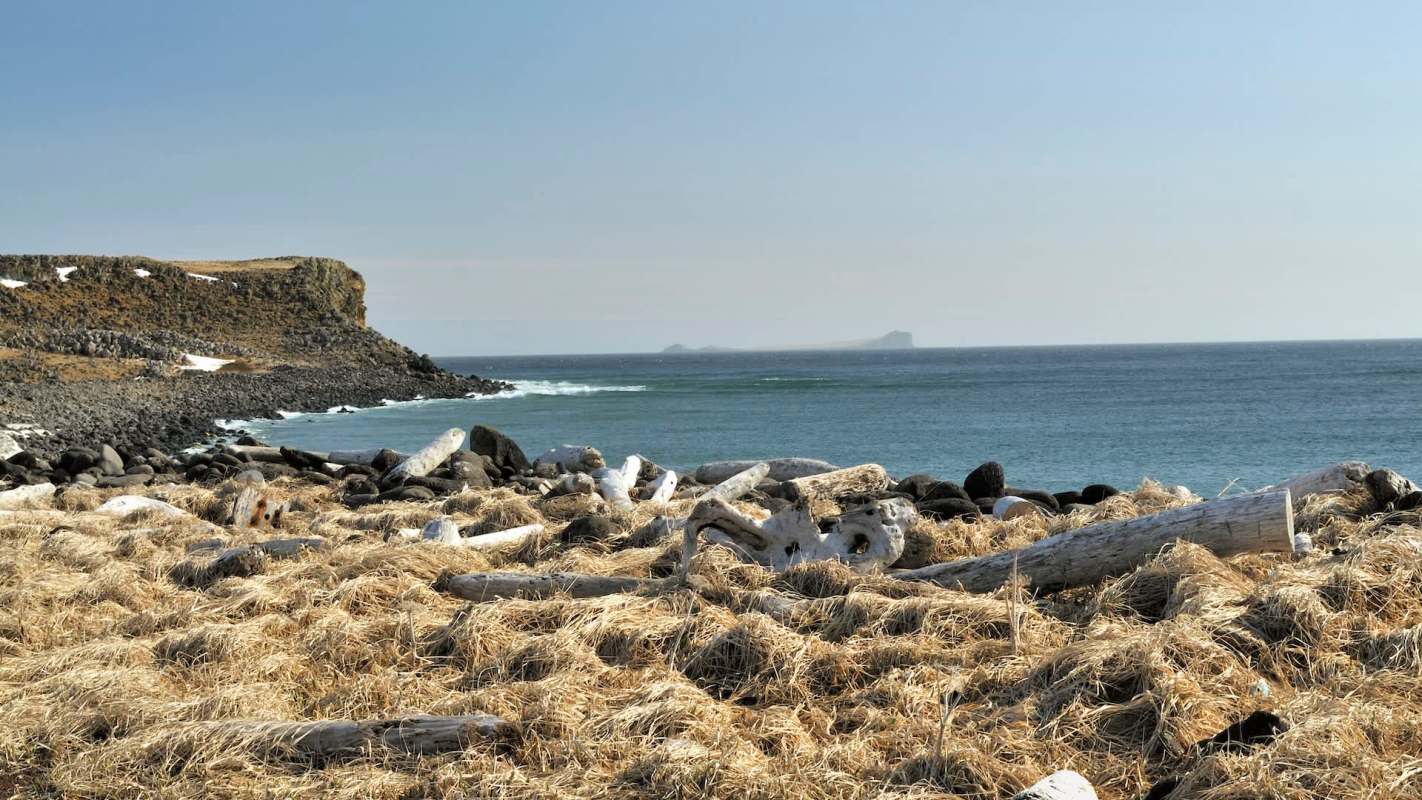
For decades, the Pribilof Islands in Alaska have barred dogs to protect the world's largest concentration of northern fur seals.
That long-standing policy remains intact, but federal officials created a narrow exception for dogs used in anti-rat work, the Alaska Beacon reported.
The new allowance is only for specially trained dogs that can detect or catch rats, giving the islands another defense against one of Alaska's most damaging invasive animals.
Here's what to know
An interim rule from the National Oceanic and Atmospheric Administration permits certified rat-detecting and rat-catching dogs to be brought to St. Paul Island and elsewhere in the Pribilofs for as long as 180 days.
Outside of that, the no-dogs policy in place since the 1980s still applies.
Concern about growing ship traffic is one reason island leaders wanted the option available.
TCD Picks » Quince Spotlight
💡These best-sellers from Quince deliver affordable, sustainable luxury for all




"We work very, very hard to keep this a rat-free island. And we also recognize that shipping lanes are opening up right in the Arctic and there's just potentially, if not already, going to be more vessel traffic in this part of the world," Chelsea Campbell, marine mammal programs manager for the Aleut Community of St. Paul Island, told the Beacon.
That caution is informed by what has happened elsewhere in Alaska.
The Pribilofs have remained free of rat infestations, but other islands and coastal areas have suffered ecological damage from the non-native rodents, which can be especially destructive in places where bird species evolved without land predators.
Rat scares in 2018 and 2024 helped drive the policy change.
Mike Williams, NOAA's Pribilof Islands program manager, said an unconfirmed sighting in 2024 was one factor, adding that St. Paul also dealt with a 2018 case in which a rat got past harbor traps and was not found dead until 10 months later.
More background
For island communities, stopping rats before they establish themselves is much easier than eliminating them afterward.
Once present, rats prey on seabirds, destroy nests, and disrupt food webs; invasive rats are even thought to have contributed to the dodo's extinction.
St. Paul already has some protections in place.
Community members coordinate anti-rat efforts with federal and state wildlife agencies and other partners, according to the Beacon. The islands also receive less ship traffic than parts of the Aleutians, reducing chances for rats to arrive in the first place.
Williams said another "saving grace" is the Pribilofs' native Arctic fox population.
The genetically distinct foxes, known for the blue tint in their fur, do not disturb fur seals and may keep rats from surviving if one makes it ashore. Williams noted that one of the first rats spotted on St. Paul in the 1990s was seen in a fox's mouth.
Campbell cited another source of concern: a cruise ship that underreported its rat infestation.
What's being done?
The NOAA rule, which took effect Aug. 6, adds another tool to that effort.
While no dog or trainer has been selected for the Pribilof work, a framework is in place to deploy a specialized dog if needed.
There is still debate over the best timing for that option.
Williams acknowledged that winter could make searches easier because any surviving rats would likely remain concentrated in town rather than ranging across the island for food.
Campbell stated that summer coverage could also be useful since it could ensure that ships arriving on the island are safe.
The Pribilofs are not alone in facing this threat.
Rat eradication has already succeeded elsewhere in Alaska, including on Hawadax Island, formerly known as Rat Island, where a 2008 partnership among the Fish and Wildlife Service, Island Conservation, and The Nature Conservancy removed the invasive rodents.
Federal officials are planning similar eradication efforts on Kiska, Attu, Amchitka, and Great Sitkin. Those proposals are moving through the environmental review process, signaling that Alaska agencies and communities view invasive rats as a serious threat to wildlife.
Campbell called the dog exception a bit of "forward thinking," saying the point was to enable the islands to bring in specialized help if needed.
"We should have some ability to get a rat-sniffing dog out here, just in case," she said.
Where can I learn more?
Island communities and wildlife managers are relying more on trained dogs and aggressive rodent control to protect fragile ecosystems.
The articles show how that approach has helped seabirds and other native species in places facing similar invasive threats.
• On Lord Howe Island, biosecurity dogs tracked invasive rats before they could overrun wildlife.
• At conservation sites worldwide, canines are playing a larger role against invasive species.
• In New South Wales, wildlife rebounded after rodent eradication, aiding the Lord Howe wood hen.
• On remote Tromelin Island, seabirds returned in force after invasive rats were removed.
• In Alaska, a conservation dog helped scientists map wolves by locating elusive scat.
This helps explain why officials wanted this option in place before a rat population gets established — on islands with vulnerable wildlife, a fast response can make all the difference.

Get TCD's free newsletters for easy tips, smart advice, and a chance to earn $5,000 toward home upgrades. To see more stories like this one, change your Google preferences here.







