


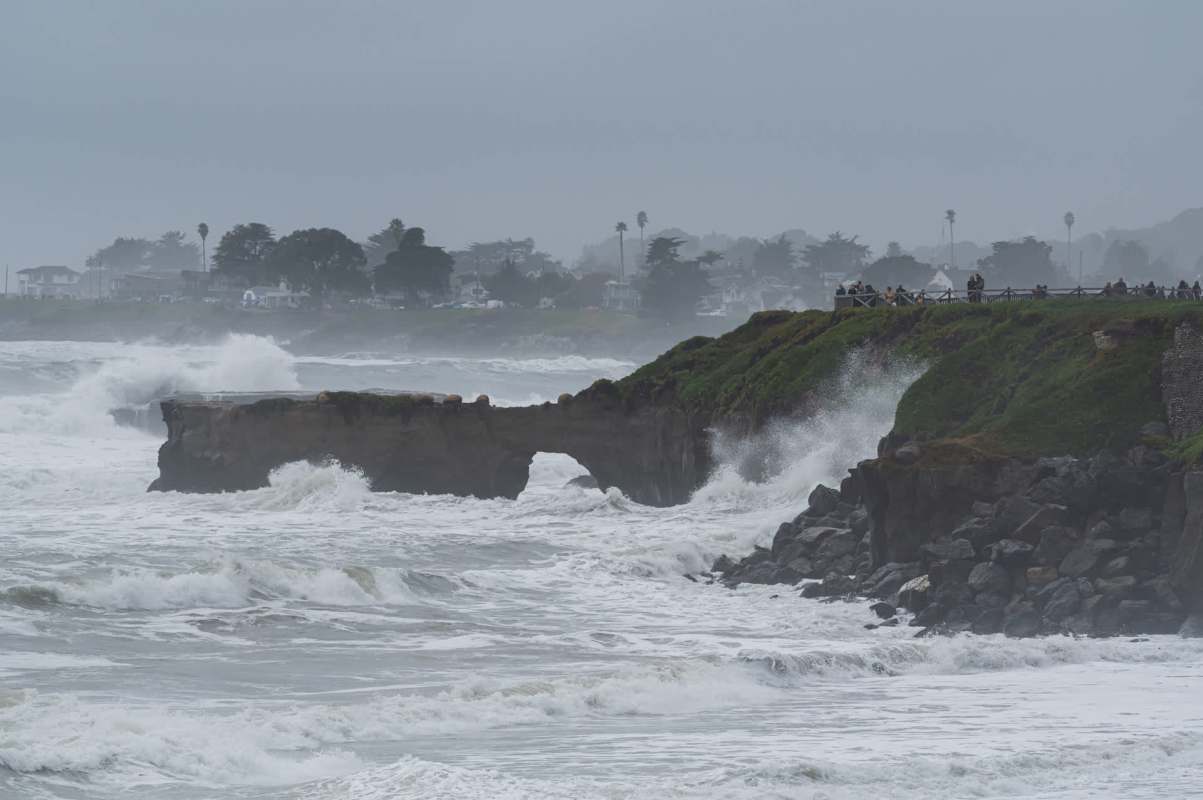
Another atmospheric river-fueled storm will pound the West Coast later this week. California could be hit with heavy rain, flash floods, and high-elevation snow that may be measured in feet.
The ingredients appear to be coming together for a storm that will severely impact the West Coast over the coming days. Meteorologist Judson Jones of The New York Times referred to the system that is set to soak portions of California as "a potent, fast-moving storm." The storm could bring a prolonged period of heavy rainfall to San Francisco. "The speed of this 'quick hitter' could be the key difference between manageable rain and a destructive event," added Jones.
A strong upper-level, low-pressure system will sweep ashore along the West Coast late Wednesday into Thursday. The storm's moisture will be enriched by an atmospheric river that will deliver abundant moisture — like an atmospheric fire hose — to California and parts of the Pacific Northwest.
More than 2 million people from Southwest Oregon to Northern California face a marginal risk, Level 1 of 4, of excessive rainfall capable of producing flash flooding, according to the Weather Prediction Center (WPC). That marginal risk area slides southward into Central and Southern California for Thursday and Friday.
"Within the Marginal Risk area, the greatest threat for flash flooding will be on previous burn scars in Southern California's Transverse Ranges, as well as in any urban areas at the foot of those mountains," WPC forecasters noted in their discussion for Thursday into early Friday.
The storm should peak from Thursday into Thursday night in Southern California. The Los Angeles National Weather Service Office noted that potential impacts could include localized roadway flooding in the L.A. metro area and a chance of burn-area flash flooding and debris flows. The highest rainfall rates could reach 0.5 to 0.75 inches per hour in the mountains and foothills near the city.
Strong winds will accompany the storm as it develops off the California coast, and those winds will persist as the storm moves inland over the next couple of days. Gale warnings have been hoisted along the coast from north of San Francisco to south of Monterey as southerly winds blow around 25 to 35 mph and gust to over 45 mph.
As moisture ascends the Sierras late Wednesday into Thursday, it will fall as snow, in some cases heavy enough to be measured in feet. Higher elevations could see as much as one to two feet of accumulation. "Travel could be very difficult to impossible," warned forecasters with the Reno National Weather Service Office in the winter storm watch posted for the area. "The hazardous conditions could impact the Thursday morning and evening commutes. Strong winds could cause damage to trees and power lines."
Our warming world is amplifying atmospheric rivers along the West Coast.
"As human-caused climate change continues to warm the planet, the number of days that the Western U.S. will experience atmospheric rivers is projected to increase," according to the U.S. Department of Agriculture. "Atmospheric rivers are also expected to be bigger and more hazardous on average. As climate change warms the air and oceans, these storms will have more fuel to become larger and stronger because a warmer atmosphere can hold more moisture."
TCD Picks » Quince Spotlight
💡These best-sellers from Quince deliver affordable, sustainable luxury for all




|
Is your home prepared for a blackout? Click your choice to see results and speak your mind. |
 We are ready 👍
Join our free newsletter for good news and useful tips, and don't miss this cool list of easy ways to help yourself while helping the planet.
Cool Picks






