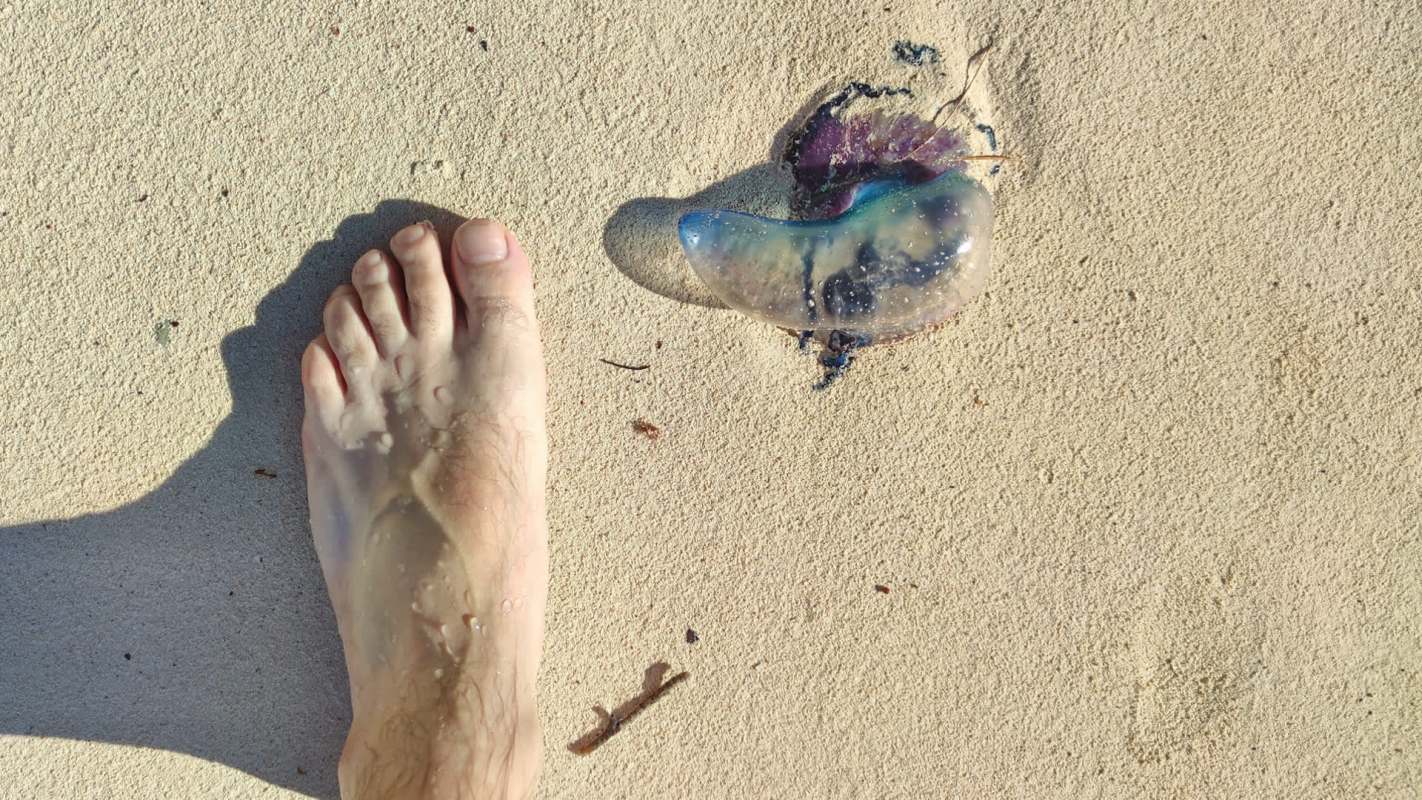
A beach day in Myrtle Beach could come with an unexpected hazard this week: Portuguese man o' wars washing onto shore.
Local police are urging visitors to stay alert, warning that these venomous marine creatures can still sting even after they wash up on the sand.
According to Fox Weather, officials with the Myrtle Beach Police Department posted a warning on Facebook after ocean currents carried sea vegetation and possible hazards onto the shore, including the Portuguese man o' war.
Man o' wars are often mistaken for jellyfish, but they are closely related to them. They float on the water's surface with a blue, violet, or pink balloon-like sac and long venomous tentacles trailing below. They're usually found in tropical and subtropical waters and can wash up along the Gulf Coast and the southeastern United States.
These creatures do not stop being dangerous once they're out of the water. Even dried-up specimens can still cause painful stings. Earlier this spring, sightings were reported from Florida to Texas, including a Galveston Island incident in which a 3-year-old was stung after handling a man o' war that had washed ashore, Fox Weather noted.
In South Carolina, officials warned people to watch where they step and not touch unfamiliar marine life, even if it appears dead. A Portuguese man o' war sting is rarely fatal for humans, but it can cause intense pain and burning welts. In busy tourist areas such as Myrtle Beach, children, pets, and barefoot visitors move through the surf line, where washed-up tentacles can cause injuries.
TCD Picks » EDF Spotlight
💡EDF's Vital Signs newsletter delivers stories about game-changing solutions close to home and around the world




Save $10,000 on solar panels without even sharing your phone number Want to go solar but not sure who to trust? EnergySage has your back with free and transparent quotes from fully vetted providers that can help you save as much as $10k on installation. To get started, just answer a few questions about your home — no phone number required. Within a day or two, EnergySage will email you the best local options for your needs, and their expert advisers can help you compare quotes and pick a winner. |

Avoid touching any marine animal or plant matter that has washed ashore unless trained officials say it is safe. Children should not pick up colorful sea creatures, no matter how harmless they may look.
If someone is stung, act quickly. Officials say to remove any tentacles immediately and use vinegar on the area to help deactivate the stinging cells. Anyone experiencing severe pain, trouble breathing, or signs of an allergic reaction should seek medical care immediately.
Check local beach alerts and public safety posts before heading out for the day, especially after storms or periods of strong currents. Conditions can change quickly, and wildlife hazards are often reported locally before they appear in wider news coverage.

Get TCD's free newsletters for easy tips, smart advice, and a chance to earn $5,000 toward home upgrades. To see more stories like this one, change your Google preferences here.
TCD Picks » Quince Spotlight
💡These best-sellers from Quince deliver affordable, sustainable luxury for all




Cool Picks