


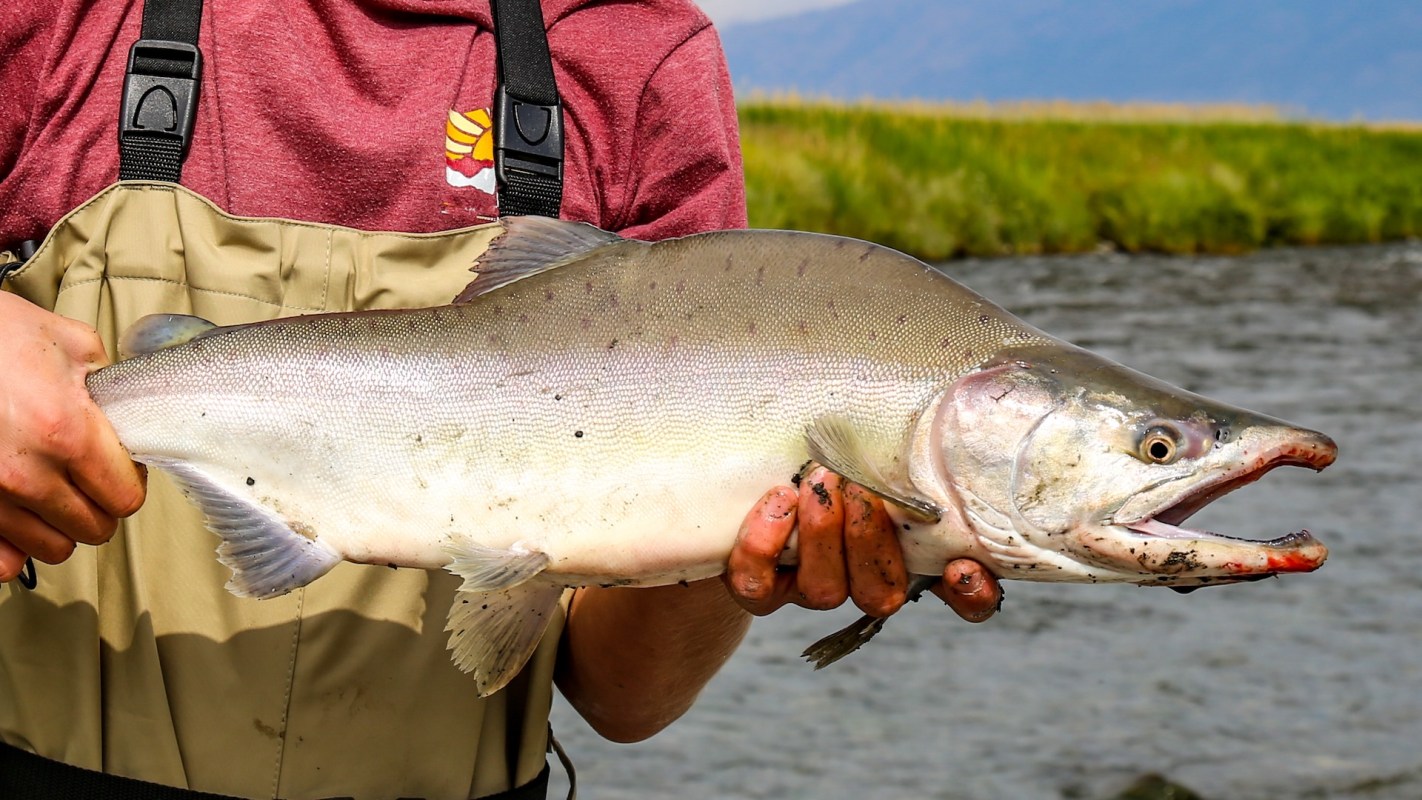
Sometimes the past can be the best predictor of the future.
That's what researchers from the National Oceanic and Atmospheric Administration believe when it comes to the spread of invasive pink salmon in the North Atlantic and Arctic oceans.
In a study published in the journal Fish and Fisheries, they turned to the experience of an unheralded invasion in the Great Lakes to provide valuable insight as the species takes hold elsewhere.
"We are only beginning to understand the impacts of pink salmon on Arctic and North Atlantic ecosystems, but we know that they could have significant effects on those who fish for other species, fishery managers, and coastal communities," explained lead author Joseph Langan in a news release.
A hatchery inadvertently introduced pink salmon, a species originally from the Pacific Ocean, to Lake Superior tributaries in the 1950s, per NOAA. This provided what Langan referred to as a "natural laboratory."
One easy observation is that the fish shows remarkable adaptability and the ability to spread. They're now in all the Great Lakes and have been booming over the last decade or so, according to NOAA.
TCD Picks » Quince Spotlight
💡These best-sellers from Quince deliver affordable, sustainable luxury for all




The research revealed that pink salmon seamlessly habituated from the ocean environment to freshwater lakes. They also deviated from the typical two-year life cycle seen in their Pacific counterparts, sometimes taking two to four years to grow and reproduce.
The fish is similarly making major headway in the North Atlantic, and it could be only a matter of time in the Arctic. That is concerning news, given their status as an invasive species.
In the North Atlantic, there are worries that they could threaten prized native fish such as Atlantic salmon, Arctic char, and brown trout. Norwegian fish managers are fighting back by trapping them.
In Alaska, there are concerns about Dolly Varden and Arctic char, which local communities rely on. Another worry is that when they die, pink salmon could harm local habitats as they decay, per NOAA.
For what it's worth, pink salmon are edible. While they can be flavorful when fresh, they don't preserve well, so they are preserved through canning, smoking, or curing. Be that as it may, eating and fishing them doesn't seem sufficient to control them.
The researchers hope some lessons from the Great Lakes can help guide global efforts.
"Things are changing so fast; we can't do studies in a silo," Langan concluded.

Get TCD's free newsletters for easy tips, smart advice, and a chance to earn $5,000 toward home upgrades. To see more stories like this one, change your Google preferences here.







