


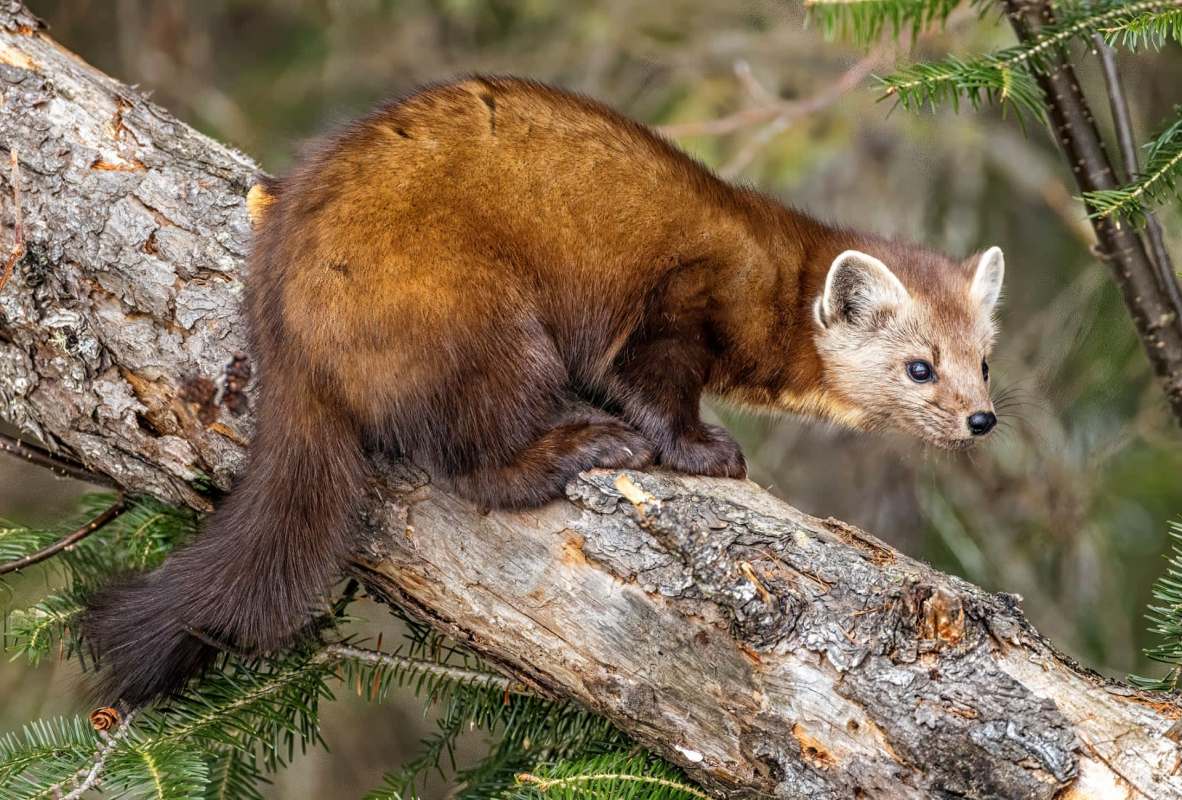
A trail camera on Exmoor has captured an encouraging sign for one of England's rarest mammals: a female pine marten appearing alongside four kits just months after the species was reintroduced there.
For conservationists and nearby communities, the footage is an early but meaningful indication that the species may be beginning to reclaim part of its former range in the South West.
What happened?
Pine martens, which are about the size of a small cat, had disappeared from Exmoor after years of hunting and habitat loss. To help bring them back, 19 were released the previous September in undisclosed woodland managed by the National Trust and the Exmoor National Park Authority, The Standard reported.
Now, one of the dozens of trail cameras used in the reintroduction program has filmed a female with four kits at a baited spot using peanut butter and fish oil. The effort is meant to restore a native species that experts say helps support healthier, more resilient woodlands.
"These clips were recorded on cameras being monitored by one of our brilliant project volunteers," Ali North, Two Moors Pine Marten Project field officer for Exmoor, said.
North added, "We were incredibly excited to finally see kits after so many months of intensive monitoring."
TCD Picks » Quince Spotlight
💡These best-sellers from Quince deliver affordable, sustainable luxury for all




Why does it matter?
The sighting suggests the animals are not only surviving after release but also breeding — a major benchmark in whether a restoration effort can become established.
The population remains very small. Conservationists say the recovery is still fragile, with pine martens present in sparse numbers, breeding slowly, and still vulnerable to dangers such as vehicle strikes and rat poison.
The project also has a strong community component. It depends on volunteers, land managers, partner organizations, and residents who report sightings.
The new footage also means researchers now have confirmation that breeding is happening in both Exmoor and Dartmoor, where 15 were released in 2024.
On Dartmoor, more video from residents indicates the animals may have bred again this year.
What's being done?
The Two Moors Pine Marten Project is continuing monitoring across Exmoor and Dartmoor, using trail cameras and public sighting reports to track how the animals are settling in, according to The Standard.
Pine martens are shy and highly mobile, making them difficult to spot in the wild.
Project leaders are also working to keep the public involved. People in Devon, Somerset, or Cornwall who think they have seen a pine marten are being asked to report the sighting so researchers can better map movement and breeding.
Ali Hawkins, senior ecologist at Exmoor National Park Authority, said, "While this is very positive news, the population remains small and vulnerable, so continued public support and reporting of sightings will be vital as we help this native species re-establish itself."
"Mothers give birth in March or April and have on average two to three kits, so to see four with their mum was an amazing sight and suggests that Exmoor is the perfect home for these animals," North said.
Hawkins called it "a hugely encouraging milestone for nature recovery in the National Park."

Get TCD's free newsletters for easy tips, smart advice, and a chance to earn $5,000 toward home upgrades. To see more stories like this one, change your Google preferences here.







