


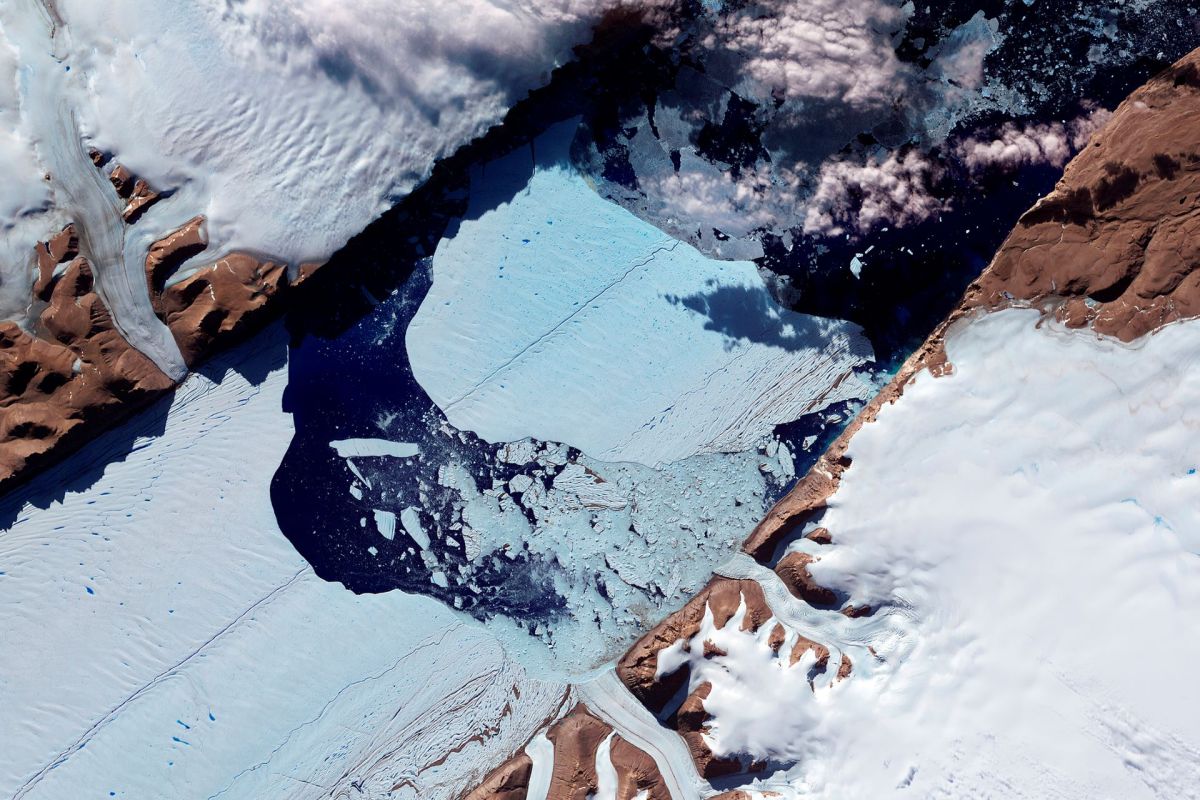
Recent research exploring the rapid melting of Greenland's Petermann Glacier points to seawater intrusion beneath the ice as a culprit. The findings also suggest that sea level rise could end up being much worse than previously estimated, according to Futurity.
What happened?
A group of researchers utilized satellite data to study Petermann Glacier. They found that the ice melt rate increased from about 9.8 feet per year in the 1990s to 32.8 feet per year in the 2020s.
The culprit for this accelerated melting? Seawater intrusion beneath the ice in the "grounding zone," or the boundary between where the ice is grounded and where it is floating (as also discussed in other research). Here, ocean water rises and falls with changes in tides, quickly melting grounded ice from below. Previously, scientists believed this zone to be much smaller.
According to Futurity, the new research indicates that glaciers melt much faster in the ocean than previously thought and that sea level rise has been thus far underestimated by scientists.
"Earlier numerical studies indicated that including melt in the grounding zone would double the projections of glacier mass loss," said professor of Earth system science and study co-author Eric Rignot, per Futurity. "The modeling work in this study confirms these fears. Glaciers melt much faster in the ocean than assumed previously."
Why is this research concerning?
Rising sea levels continue to threaten coastal communities, which are prone to flooding and erosion. This, in turn, affects property values and makes it difficult for people to obtain affordable homeowner's insurance. For instance, sellers of one luxury waterfront home in Massachusetts slashed their asking price by 74% as the home's value was rapidly washed away by coastal erosion.
Another outcome of rising sea levels is saltwater intrusion into rivers — such is the case in Brazil's Bailique Archipelago, where brackish water from the Atlantic Ocean is making it more difficult for residents to access fresh water.
These changes also endanger wildlife and the environment, with the potential to wipe away important ecosystems like marshes and wetlands, according to the Center for Climate and Energy Solutions.
What can I do to help with sea level rise?
Sea level rise is one of the outcomes of a warming world. As such, it's important to curb the overheating of our planet as much as possible.
Cities across the world are coming together to make a difference. For instance, Tokyo is requiring most new buildings to have solar panels, and Los Angeles outlawed gas power in all newly constructed buildings.
TCD Picks » Quince Spotlight
💡These best-sellers from Quince deliver affordable, sustainable luxury for all




You can help by voting for pro-climate candidates and making sustainable life choices, like signing up for community solar and taking advantage of the Inflation Reduction Act to green up your home.

Join our free newsletter for cool news and cool tips that make it easy to help yourself while helping the planet.
Cool Picks






