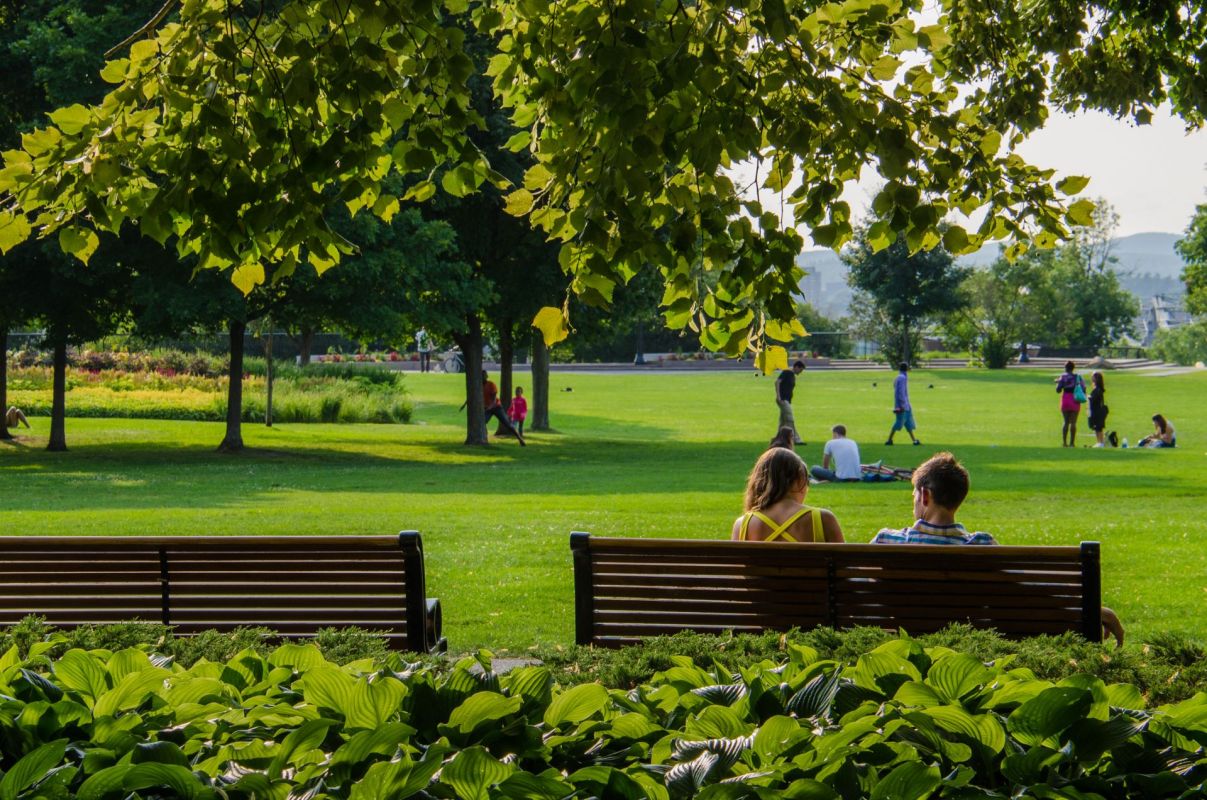
New research on park use patterns in Los Angeles, California, has shown that use declines on extremely hot days. Meanwhile, time of day and day of the week seem to have more influence on usage, even when factoring in park features designed to help attendees cool down.
"Park visitation is weakly correlated with extreme heat and park amenities," wrote the co-authors of a study appearing in the January 2026 edition of Landscape and Urban Planning. "Instead, visitation is clearly influenced by the day of week and time of day, indicating behavioral inelasticity is the greatest factor in park use."
Undergraduate students at the UCLA Institute of the Environment and Sustainability conducted the research using smartphone location data and found that extreme heat was indeed a factor affecting park attendance and selection. But "behavioral inelasticity" — or a lack of change in behavior, such as following routines or frequenting parks closer to home and work — seemed to play an even larger role than extreme heat in determining when and where residents used parks.
"One compelling exception is a greater proportion of high social sensitivity residents are willing to travel to parks in lower sensitivity areas than vice versa," the co-authors wrote, with high sensitivity describing characteristics such as younger and older ages, chronic health conditions, and low-income status, all of which might exacerbate a person's negative physical reactions to very high temperatures. Communities of color and low-income areas, where fewer and lesser-quality parks have historically existed, are also disproportionately vulnerable to extreme heat exposure, which can result in serious health conditions and even death.
Parks' "cooling amenities," meanwhile — water features like pools and splash pads — weren't found to be the strongest draw overall amid very high temperatures. This could be because, during days of extreme heat, park attendees would instead stay inside. To shift this, the researchers suggested, city planners might swap out any heat-absorbing play structure materials and increase tree cover to better shade water features.
They also concluded that parks' major contributions to heat relief come predominantly from their greenery and tree populations, which can provide shade locally and cooling evapotranspiration benefits city-wide. To improve equitable access to these benefits, the co-authors recommended that planners focus less on pools and splash pads and more on tree cover in marginalized communities — where trees are too often lacking — and along well-traveled sidewalks.
TCD Picks » Quince Spotlight
💡These best-sellers from Quince deliver affordable, sustainable luxury for all




Although extreme weather has always existed, scientists generally agree that human activity, such as burning dirty fossil fuels as an energy source, is exacerbating the situation. As extreme heat events become more frequent, the transition to clean energy sources and creative urban planning solutions are increasingly important.
Painting rooftops white — "cool roofs" — to reflect rather than absorb sunlight helps cool urban areas. They can reduce the need for air conditioning and lower temperatures overall. A similar tactic called "cool pavement" is being incorporated into roads to make them more reflective, reducing the temperature of city streets.
As the UCLA researchers demonstrated, growing green spaces may prove crucial to mitigating extreme heat. And their study may have contributed even more to Los Angeles urban planning pursuits. Their smartphone location data methodology could be leveraged to implement these and other improvements — such as hydration stations — that account for high-use parks, high-attendance periods, and high-traffic routes to benefit the most vulnerable and the highest numbers of people.
|
Do you think America does a good job of protecting its natural beauty? Click your choice to see results and speak your mind. |
 Definitely 👍
Join our free newsletter for good news and useful tips, and don't miss this cool list of easy ways to help yourself while helping the planet.