


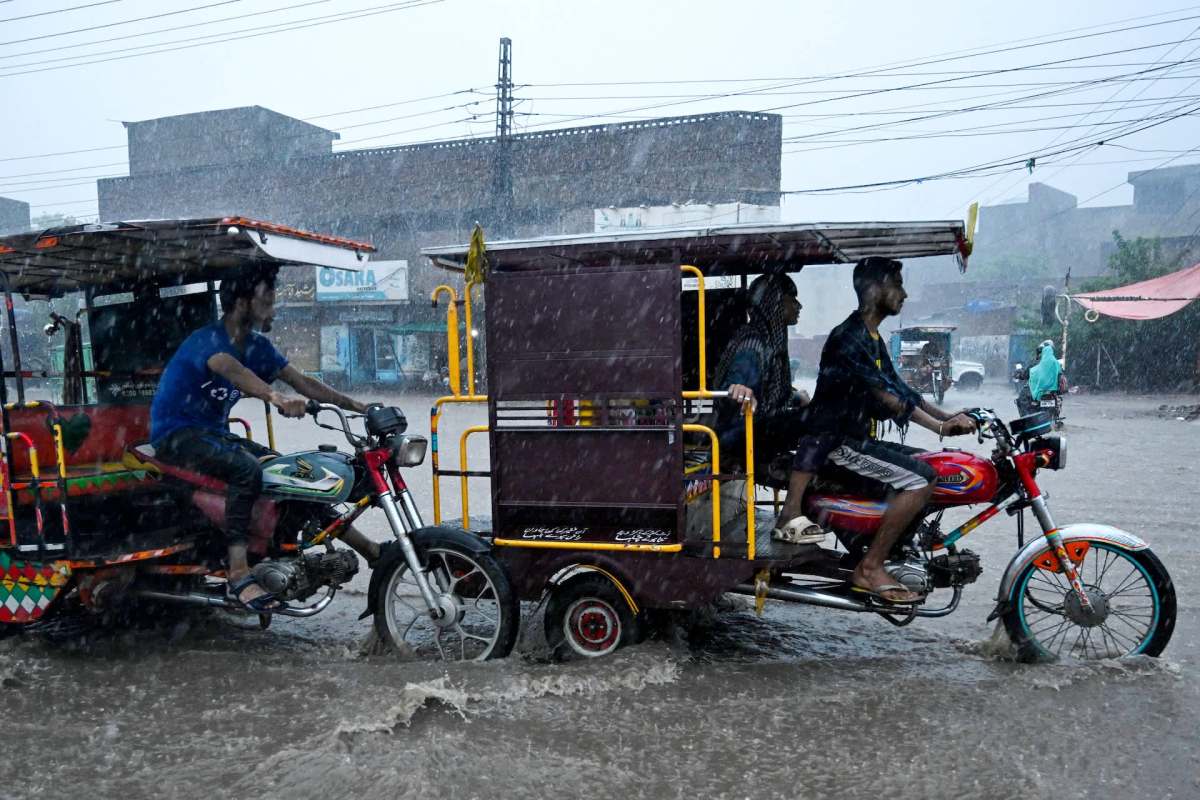
Torrential rain pounded northeast Pakistan at the end of August. The deadly flooding in the Punjab province is now raising the risk of disease in the region.
A late summer flood sent water spilling over the banks of three rivers in Pakistan's eastern Punjab province. The heavy monsoonal rains broke a 49-year-old record in Kamanwala, one of the over 1,400 villages impacted by flash flooding and the subsequent release of water from dams filled beyond capacity in nearby India. The flooding prompted Pakistani officials to evacuate over a million people in Punjab during the last week of August.
"This is the first time in my life that this much flood water has come," 60-year-old laborer Sayed Muhamad told The Guardian. "There's been no electricity, no water, no gas for three days. The damage that's been caused is around 500,000 Pakistani rupees [£1,300]."
The flooding in Pakistan took the lives of at least 33 people, according to the Provincial Disaster Management Authority, per The Times of India. It is estimated that over 850 people have died in Pakistan since late June as a result of flooding.
More deaths could be coming soon as the risk of disease rises in the region. Maryam Nawaz Sharif, the province's chief minister, declared a hospital emergency in Punjab due to fears of cholera, hepatitis outbreaks, and snake-bite poisoning.
Northern Pakistan has been hit hard by unusually heavy monsoon rain since late June. World Weather Attribution (WWA) scientists warn that intensified rainfall, driven by an overheating planet, has deepened flood impacts in Pakistan's high-risk communities.
"Historical trends associated with global warming in observational datasets show the 30-day maximum rainfall over the study region is now approximately 22% more intense than it would have been in a climate that had not warmed by 1.3 [degrees Celsius, or 2.3 degrees Fahrenheit], due to the burning of fossil fuels, and, to a smaller extent, deforestation," concluded a WWA analysis of flooding that has occurred in June and July in Pakistan.
Pakistan is one of the most vulnerable countries to the impacts of a warming world.
"Nearly half of Pakistan's 96.4 million urban residents live in informal settlements," WWA researchers noted. "Homes in these areas are often built on riverbanks, drainage basins, and dry riverbeds and are thus at high-risk of flooding. The settlements are often built from mud and rice husk, making them highly vulnerable."
Other studies have shown that a warming world is supercharging flooding events. Researchers with nonprofit Climate Central analyzed the change in hourly rainfall intensity since 1970 for 126 U.S. cities. They found that 88% of the locations they looked at have experienced an increase. The average hourly rainfall rate has jumped 15% since 1970 for the 126 locations considered in their study.
TCD Picks » Quince Spotlight
💡These best-sellers from Quince deliver affordable, sustainable luxury for all




|
How often do you experience power outages? Click your choice to see results and speak your mind. |
 Pretty regularly 😠
 "Climate change is bringing heavier rainfall extremes and increased, inequitable flood risk to many parts of the U.S.," say the authors of the study. "For every 1°F of warming, the air can hold 4% more moisture, increasing the chances of heavier downpours that contribute to flash flooding hazards."
Flooding is the second leading cause of weather-related deaths in the U.S., according to the National Weather Service. Over the past 30 years, on average, 113 people die from flooding in our country each year, more than those killed by hurricanes and lightning combined.

Join our free newsletter for good news and useful tips, and don't miss this cool list of easy ways to help yourself while helping the planet.
Cool Picks






