


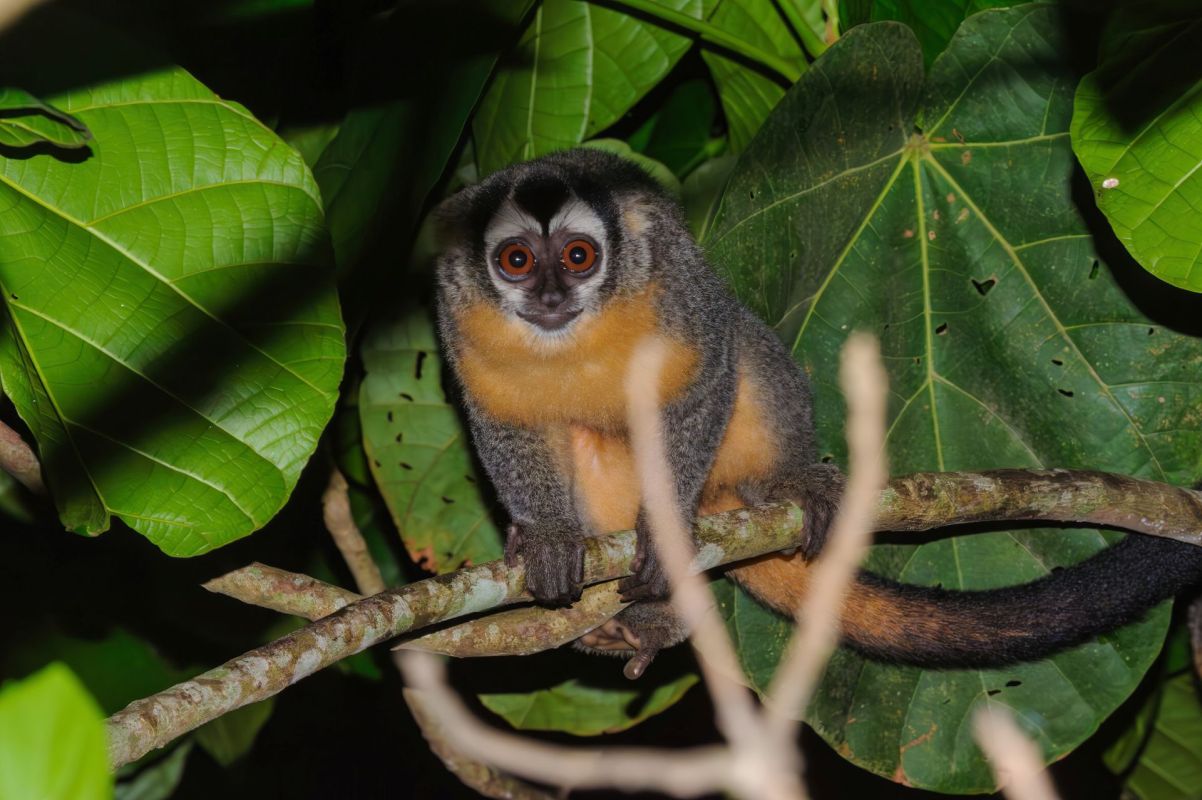
A quarter-century of tracking wild owl monkeys, often referred to as night monkeys, in Argentina has turned up something unexpected: the small, leaping primates are getting heavier.
And researchers say warming temperatures may be why.
In a Yale-led study of Azara's owl monkeys, first reported by Phys.org, researchers analyzed 287 weigh-ins from 180 wild monkeys in Formosa, Argentina, collected from 1999 through 2023.
By the end of the study period, the monkeys weighed about 50 grams more on average than at the beginning — roughly a 4% increase relative to the species' mean adult weight of 1,300 grams.
That shift coincided with the region's mean daily temperature rising from 22.2 degrees Celsius to 23.8 degrees Celsius, or more than 1 degree Celsius overall. The findings were published in Proceedings of the Royal Society B: Biological Sciences.
The result surprised the team because it runs counter to Bergmann's rule, a longstanding ecological idea suggesting that warm-blooded animals in warmer climates tend to be smaller.
TCD Picks » Quince Spotlight
💡These best-sellers from Quince deliver affordable, sustainable luxury for all




"We found that owl monkeys today weigh more, not less, than they did in 1999, even though average temperatures have increased since then," lead author Jonathan Pertile said.
Researchers describe it as the first study to connect climate change with body-weight changes in living primates.
The team found that warmer conditions during a monkey's first year were the strongest predictor of a heavier adult weight. Their explanation is that if young monkeys spend less energy keeping warm, they may have more calories available for growth.
Researchers also ruled out other possible drivers of the weight gain — including reproduction and food availability — and found that body length remained stable even as body mass increased. That helps narrow the focus to temperature-related changes during early development.
"Our study offers insight into how physical traits in a species can change when you don't have underlying changes to its genetics," Pertile said. "Temperatures will continue to rise as climate change unfolds, and it's important to understand the dynamics of how changing environmental factors will affect animals' bodies."

Get TCD's free newsletters for easy tips, smart advice, and a chance to earn $5,000 toward home upgrades. To see more stories like this one, change your Google preferences here.







