


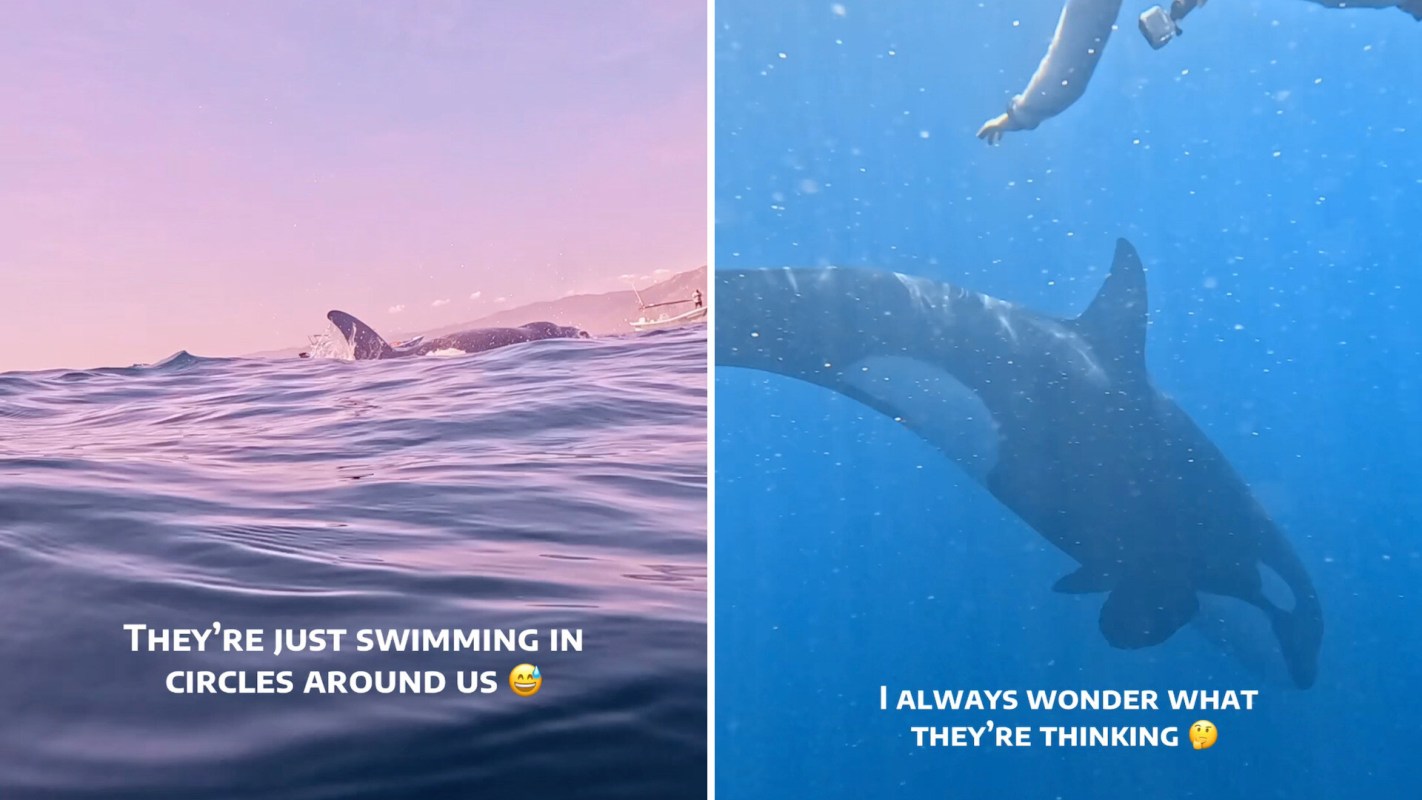
A snorkeling outing in the Bahamas turned into a rare and terrifying wildlife moment when a pair of orcas showed up.
For Bahamas snorkeling guide Scuba Dan (@ScubaDan_), the moment marked a milestone after years of underwater adventures.
What happened?
After a Bahamas snorkeling trip, Dan shared footage from the excursion where guests would normally expect to see sea turtles and fish. Instead, the group unexpectedly found itself close to two orcas.
"Are we swimming with orcas or are the orcas choosing to swim with us[?]" Dan asked in the video's caption.
The clip looked serene and even a little playful, but Dan later stressed that any encounter with wild animals still calls for caution.
In the video, Dan starts by showing the pair slowly swimming around the group, seemingly interested in their activity. He waves at them before explaining, "They don't see us as a threat. And more importantly, they don't see us as food."
TCD Picks » Quince Spotlight
💡These best-sellers from Quince deliver affordable, sustainable luxury for all




Coverage from The Economic Times describes negative encounters between humans and wild killer whales as exceptionally rare, noting that "there are no known cases of wild killer whales attacking humans."
Despite this, it's critical to be cautious around these massive animals.
"There will be times you get lost in the moment. Fixated on one orca," Dan said in a follow-up video. "[But you] gotta remember the rest of the pod is usually nearby. Especially when they are munching the turtle population."
Why does it matter?
Orca sightings are uncommon for many travelers, but human recreation is increasingly overlapping with the habitats of large wild animals. Boats and coastal tourism put more people in habitats where extraordinary encounters can happen. Those encounters require caution.
Researchers often interpret these close approaches as curiosity from a highly social apex predator rather than aggression. Even so, a curious animal is not automatically a safe one.
Viral wildlife videos can create the false impression that getting close is harmless, or even something to seek out. Wild animals should remain wild, and people should resist the urge to turn every encounter into a closer one.
As humans spend more time in animal habitats, unusual encounters like these become more likely, as reported by BBC Future.

Get TCD's free newsletters for easy tips, smart advice, and a chance to earn $5,000 toward home upgrades. To see more stories like this one, change your Google preferences here.







