


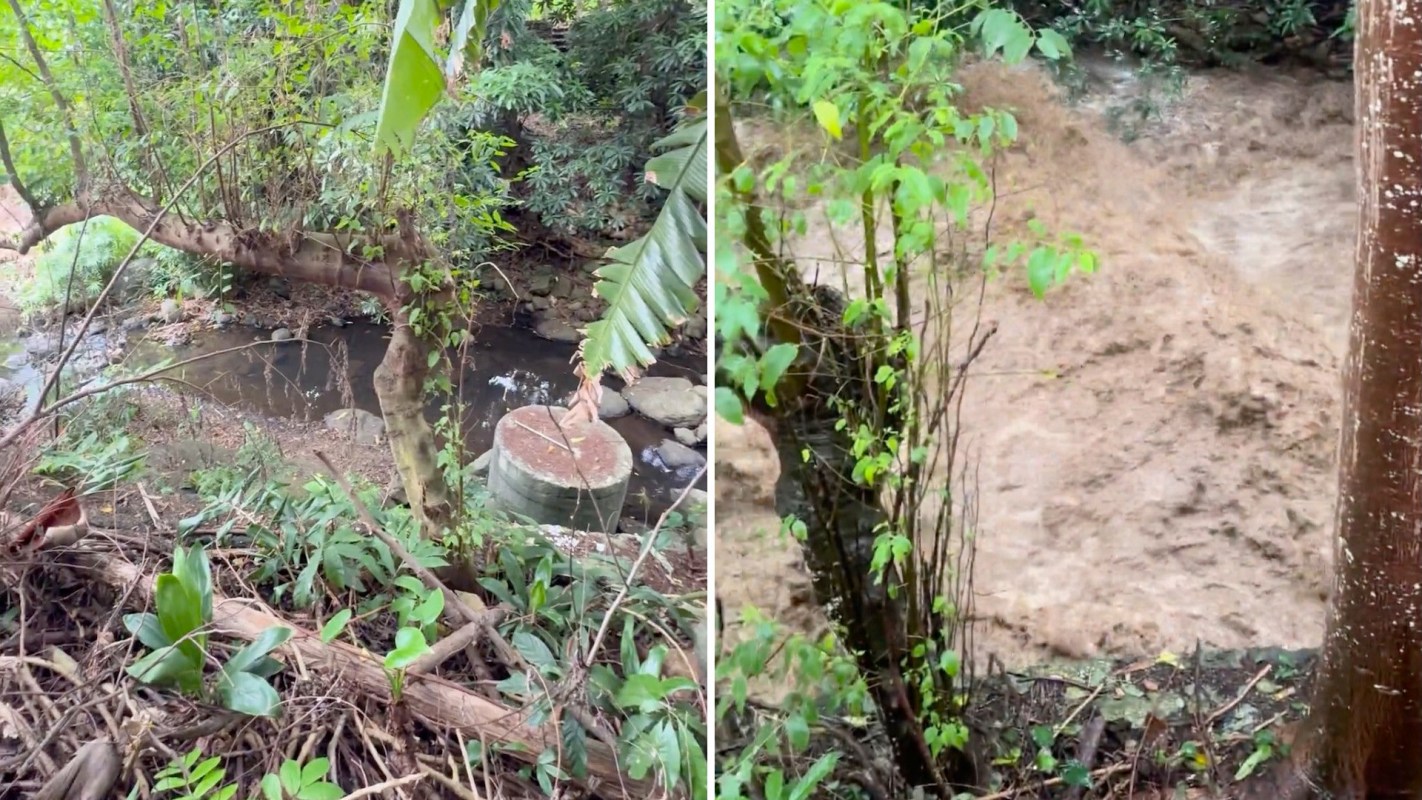
During March's severe flooding on Oahu, Hawai'i, a video from one home gave a firsthand look at how suddenly conditions changed.
What happened?
During what was described as the island's worst flooding in 20 years, a usually mild backyard stream swelled into a churning brown rush in roughly an hour.
What stands out in the Reddit clip is the dramatic before-and-after comparison. The stream behind the home first appeared as a narrow, calm mountain waterway, then reappeared as a muddy, fast-moving flow that filled the channel.
(Click here if the embedded video does not appear.)
The original poster made clear that what they captured was only a small piece of a much larger disaster.
"This was just our backyard stream, we were lucky," the original poster wrote in the comments. "Look up the Oahu flood back in March of this year. Certain parts of the island lost big sections of neighborhoods. A lot of houses were underwater."
TCD Picks » Quince Spotlight
💡These best-sellers from Quince deliver affordable, sustainable luxury for all




Other Redditors responded with a mix of amazement and concern.
One commenter remarked, "You're supposed to surf that to the ocean," while another pointed to what they saw as a silver lining: "Honestly, impressive urban design: creek stayed its banks."
Why does it matter?
The stream shifted from a manageable flow to violent runoff in about an hour. Flash flooding can become life-threatening before people have much time to react.
Worsening extreme weather disasters threaten lives and livelihoods by damaging homes, shutting down roads, disrupting work and school, and creating serious public health risks. Floodwater can carry debris, sewage, and pollutants into neighborhoods, while cleanup costs and property losses can strain household budgets and local economies long after the rain ends.
Even when water stays within a channel, communities still need resilient infrastructure and clear emergency planning. The danger isn't confined to a single area — floods can quickly reach your backyard, street, or front door.
What can I do?
In flood-prone areas, preparation is crucial. Knowing whether your home is near a stream, gulch, low-lying road, or drainage path can help you understand your risk before a storm arrives. It is also worth setting up local emergency alerts and reviewing evacuation guidance in advance.
Practical steps at home can reduce damage, even if they cannot eliminate it entirely. Keeping important documents in waterproof containers, moving valuables off the floor, clearing drains when it is safe to do so, and packing an emergency kit can help limit losses during fast-changing weather.
Floodwater should be treated seriously. Avoid walking or driving through moving water and never assume a familiar creek or stream will stay calm even if it has been fine to swim in before. While cities greatly benefit from stronger drainage systems and thoughtful land-use planning, personal safety decisions in the moment are still critical.

Get TCD's free newsletters for easy tips, smart advice, and a chance to earn $5,000 toward home upgrades. To see more stories like this one, change your Google preferences here.







