


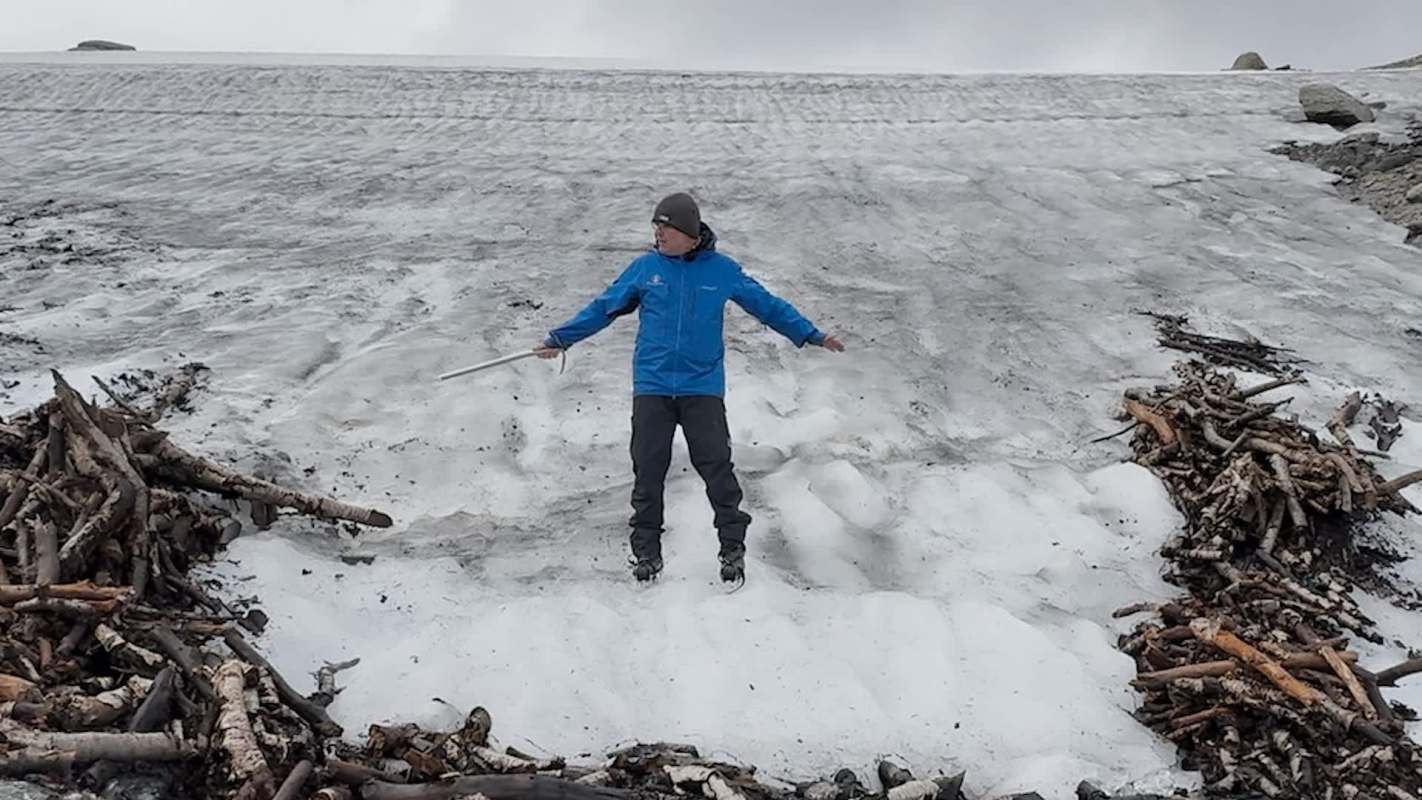
In Norway, ice melt high up in the mountains has uncovered remarkable archaeological discoveries. While the recent findings in these digs are exciting, the melting ice itself points to a larger issue.
What's happening?
According to Live Science, archaeologists have been excavating the Aurlandsfjellet area since August and have found items like a 1,500-year-old reindeer trap, as well as small pins and tools with meanings not fully understood by scientists.
"These are items we would never find in ordinary excavations, including a pine oar and a clothing pin made of antler," said archaeologist Leif Inge Åstveit, as quoted by Live Science. The pin, which was shared in a Facebook post by Secrets of the Ice, is very clearly shaped like a miniature axe — implying either it was some sort of decoration or tool.
BREAKING NEWS! Holy smoke, our colleagues in Vestland County, Norway have just announced the insane discovery of a...
Posted by Secrets Of The Ice on Monday 10 November 2025
Exciting as these discoveries are, their emergence after centuries of being covered in ice is more than a little concerning.
Why is the emergence of the archaeological findings concerning?
Rising temperatures, like those in the archaeological location in Norway, are leading to unprecedented conditions. Recently, melting permafrost has left communities in dangerous situations.
Though specific Arctic conditions like permafrost, glacial melt, or ice sheets have their own immediate repercussions for nearby humans or ecosystems, the impact actually extends to the entire planet.
The excess water can lead to higher tides during storms, making the effects of such weather events all the worse for homes or coastal organisms. Maybe most of all, less ice in the poles makes it harder for the rest of the globe to regulate rising temperatures. It's all a cycle, as these increasing temperatures lead to supercharged storms or other natural disasters.
What's being done about the Arctic ice melt?
Though archaeological excavations like this one can point to larger issues, such as the burning of dirty fuels, which pump the planet full of heat, some archaeology has actually revealed climate solutions.
Just last year, scientists uncovered a 3,775-year-old piece of wood that had maintained almost all of its carbon while buried in clay — a tactic they believe could be replicated to remove this planet-warming gas from the Earth.
To take the concerns around ice melt into your own hands, you can educate yourself on how aspects of everyday life contribute to critical climate concerns.
TCD Picks » Upway Spotlight
💡Upway makes it easy to find discounts of up to 60% on premium e-bike brands





|
Do you think we still have a lot to learn from ancient peoples? Click your choice to see results and speak your mind. |
 Definitely 👍
 Commenters on the Secrets of Ice Facebook post shared their mixed emotions on the incredible artifacts.
"Am I delighted by all these amazing discoveries? Absolutely. Am I also horrified that so much is melting to cause exposure? Even more so," one person said.
Someone else added, "The fact that the snow and ice that have preserved them is melting away is very concerning."

💰Get TCD's free newsletters for easy tips to save more, waste less, and make smarter choices — and earn up to $5,000 toward clean upgrades in TCD's exclusive Rewards Club.
Cool Picks






