


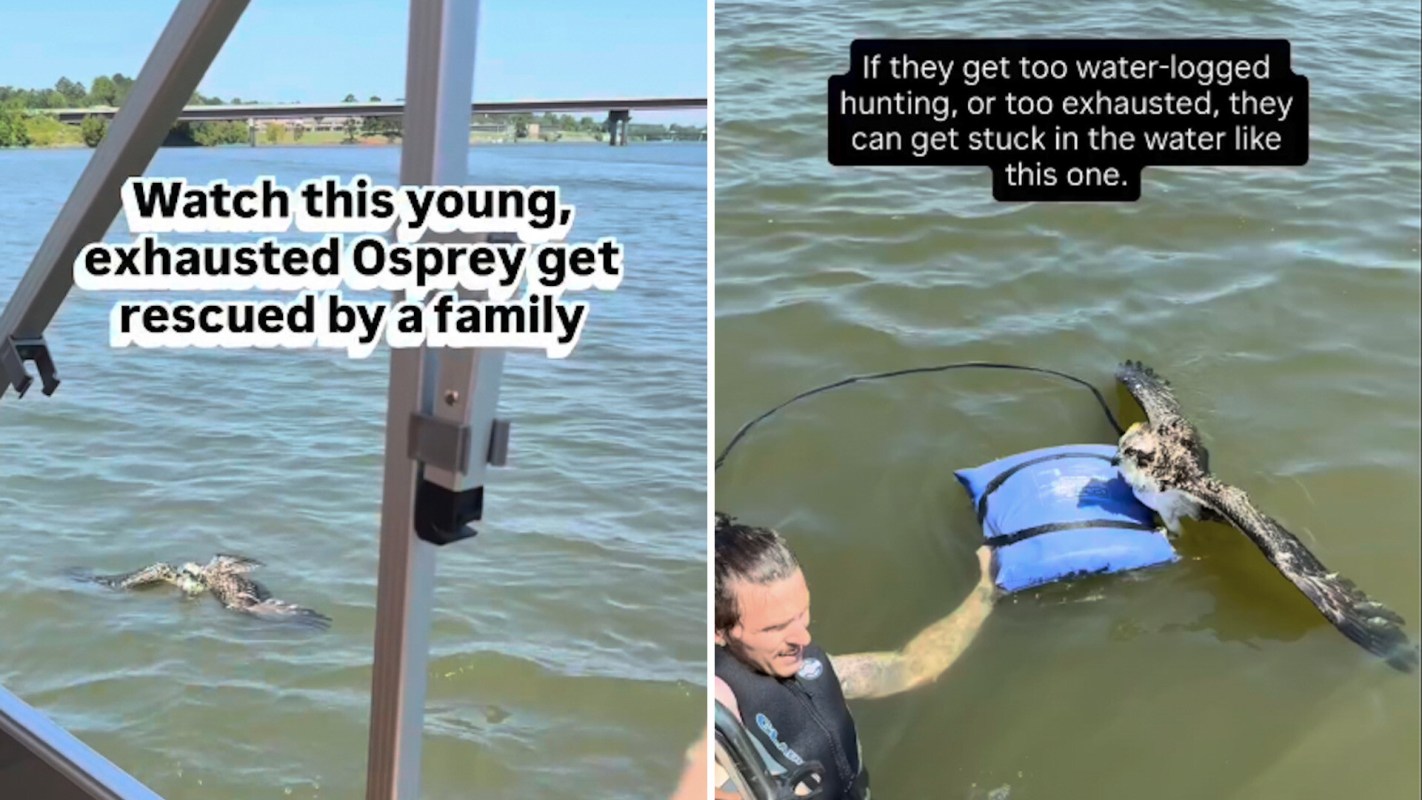
A family outing at the lake turned into a wildlife rescue when they found a young osprey in the water, unable to fly.
What happened?
A video shared by the National Audubon Society (@audubonsociety) shows Audubon North Carolina staffer Brittany Salmons with her family as they approach the worn-out bird by boat and use a towel to help move it toward shore.
"Going to the lake this summer? Be on the lookout for birds in need of help like this Osprey!" the organization wrote in the video's caption.
The video's audio captures the tension of the moment as family members try not to overwhelm the bird while keeping it from drifting farther out. At one point, a voice says, "We're just trying to move it to land," while another repeats, "It's so tired."
Why does it matter?
Summer draws more people to lakes, rivers, and beaches, which also means a greater chance of encountering wildlife that may be injured, exhausted, or disoriented.
With a bird of prey like an osprey, that kind of contact can quickly become dangerous for both the animal and the person nearby. Even a young bird has sharp talons and a hooked beak, and fear or stress can make it strike out. If a rescue is attempted too hastily, the result can be injury to the bird, the rescuer, or both.
TCD Picks » Quince Spotlight
💡These best-sellers from Quince deliver affordable, sustainable luxury for all




A bird that appears helpless may need space, specialized handling, or transport to a rehabber rather than immediate hands-on intervention.
What can I do?
Audubon's guidance in the caption starts with: "Call local wildlife rescue right away. They can give you guidance and might be able to respond quickly."
Audubon also says that anyone who chooses to intervene should "use tools, not hands." In this rescue, the family followed that approach, using a towel from the boat to support the bird and guide it toward land rather than grabbing it directly.
Because stress itself can be harmful to wildlife, backing away and letting the animal rest may matter just as much as the initial rescue.
Commenters also chimed in with practical suggestions.
One wrote, "Place a towel over its head, grab the legs, remove talons, let go (From a former Falconer)." Still, contacting trained wildlife professionals before taking action remains the safest first move for most people.

Get TCD's free newsletters for easy tips, smart advice, and a chance to earn $5,000 toward home upgrades. To see more stories like this one, change your Google preferences here.







