


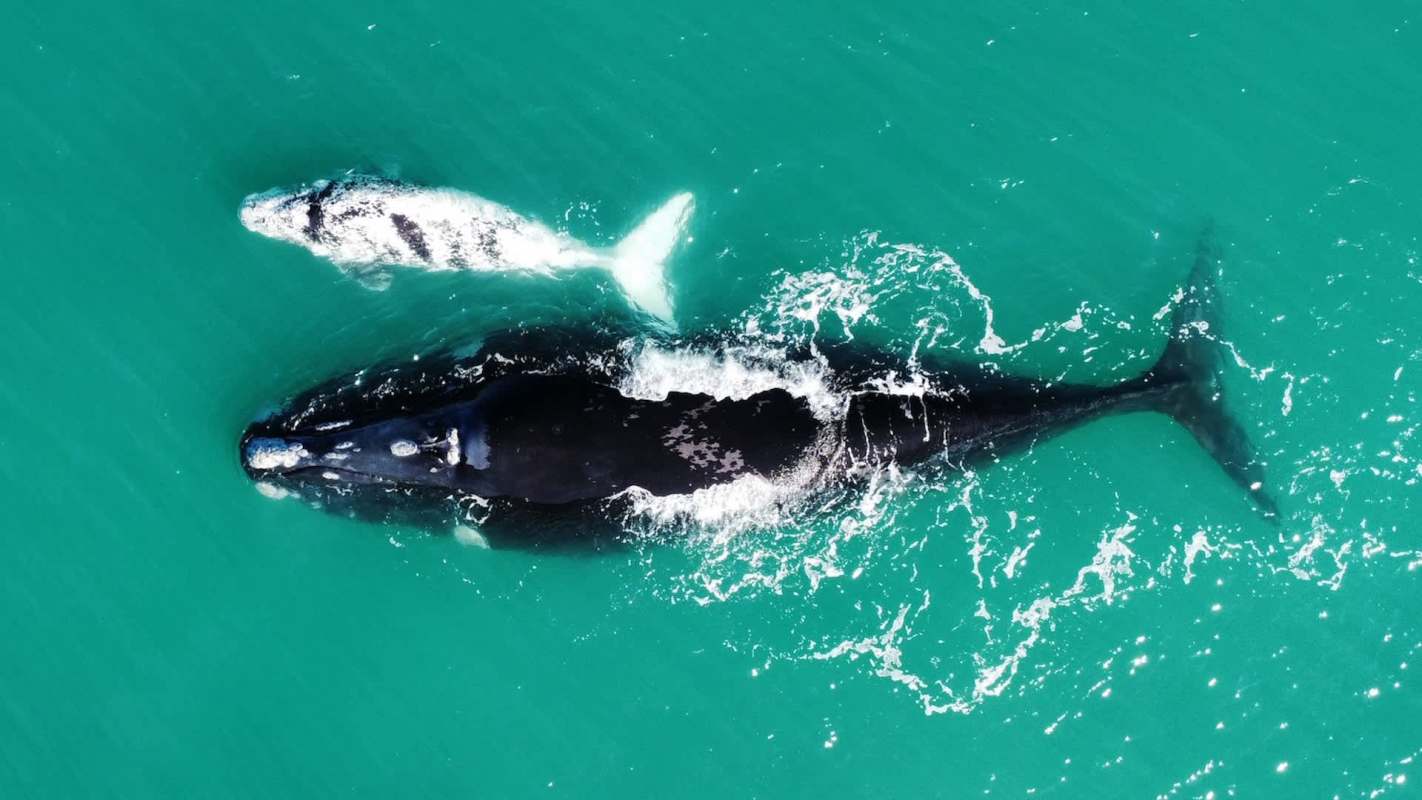
A rare piece of good news has arrived for one of the world's most endangered whales: North Atlantic right whales welcomed 23 calves this season, the highest total recorded since 2009.
For a species with fewer than 400 individuals remaining, the increase comes as scientists caution that the whales are still in danger.
What happened?
Amy Warren, scientific program officer at the New England Aquarium, told Living on Earth that this year's calving season was the fourth-highest ever recorded for North Atlantic right whales.
Recent years have been alarmingly lean, with some seasons producing zero calves and others just five.
North Atlantic right whales were once hunted so heavily that they were pushed to the brink of disappearance. Although protections enacted after whaling was outlawed helped the population recover somewhat, that progress has since been undermined by newer human-caused threats.
Today, the species is at constant risk from ship strikes and entanglement in fishing gear. Rising temperatures have added another layer of danger by shifting the whales' food supply into different waters, where the protections designed around their traditional feeding grounds may not exist.
TCD Picks » Quince Spotlight
💡These best-sellers from Quince deliver affordable, sustainable luxury for all




Researchers at the New England Aquarium monitor the species using the North Atlantic Right Whale Identification Catalog, a database containing records of more than 800 whales. Individuals can be identified by the distinctive white callosity patterns on their heads.
Why does it matter?
A healthy female right whale may have a calf every three to four years, according to Warren. But in the last decade, many mothers have gone nearly 10 years between births, likely because they struggled to regain enough body weight.
This year, some mothers had calves after intervals of three to six years, which may indicate that at least some whales are in better condition.
Still, the numbers remain precarious. "One good year isn't going to save a species," Warren said in the Inside Climate News article. Five of the 20 calves born two years ago were lost before three months, and two juvenile right whales also died from human causes this January. With fewer than 400 right whales left, births and preventable deaths can affect the species' future.
As warming oceans alter where animals feed and travel, protections may need to evolve with them.
What's being done?
Scientists are continuing the painstaking work of monitoring the whales and tracking individuals over time. Warren's team receives thousands of sightings each year and sorts through millions of photos to understand survival, reproduction, and movement patterns.
Ongoing monitoring helps conservationists assess whether protections are working and where gaps still exist. It also gives policymakers a clearer sense of where ship-speed rules, changes to fishing gear, and other safeguards may be needed as the whales expand into new areas.
Warren said she hopes this positive season serves as "an incentive to maintain protections" rather than a sign that the work is finished, because "it's not that simple."

Get TCD's free newsletters for easy tips, smart advice, and a chance to earn $5,000 toward home upgrades. To see more stories like this one, change your Google preferences here.







