


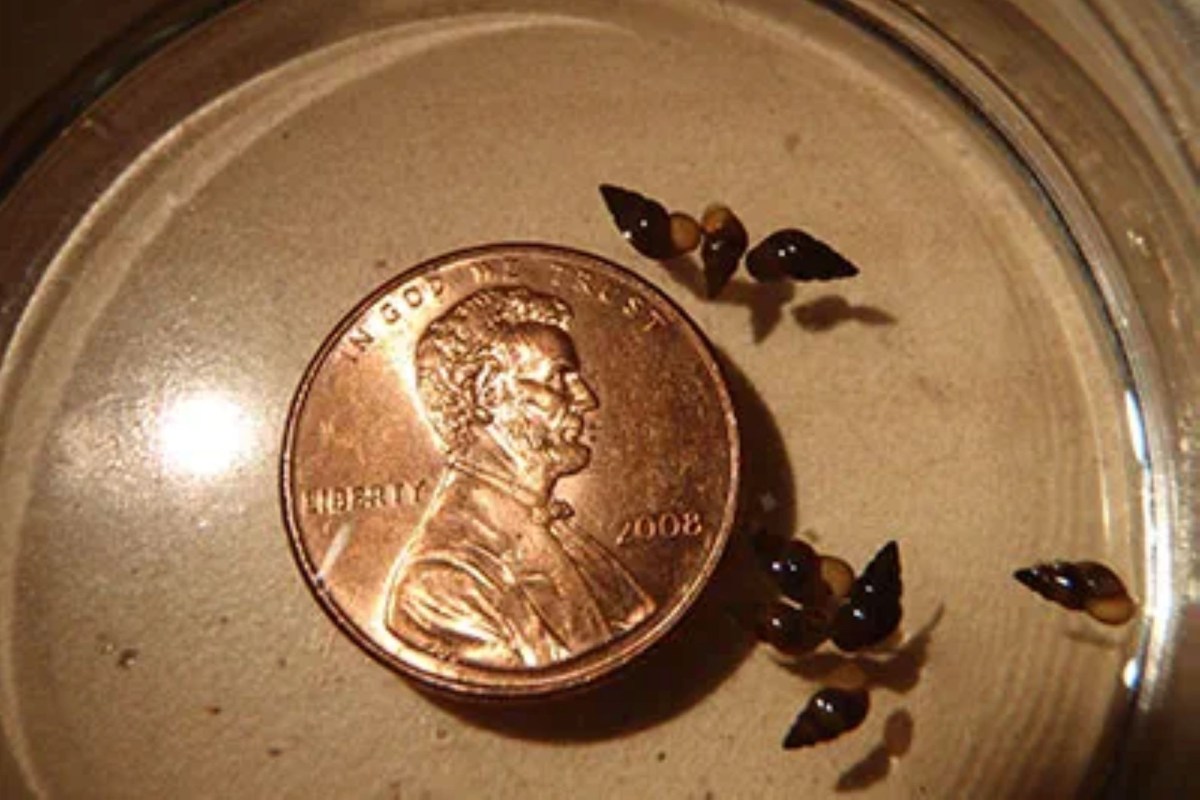
Researchers discovered an invasive snail in a southern Michigan creek that can produce 200 clones a year, raising concerns about the health of the state's waterways.
Invasive species biologist Jen Koop says established populations of New Zealand mudsnails cannot be eradicated. The animals themselves are minute — several could fit on a pencil eraser.
Here's what to know
The discovery marks the species' first spread into the southern Lower Peninsula, according to the Michigan Invasive Species Program. Coldwater River Watershed Council volunteers found them in Kent County's Bear Creek, a waterway that empties into the Thornapple River, Michigan Public reported.
Native to New Zealand, the tiny invaders were probably carried into the Great Lakes in ships' ballast water in 1991. They have since been found in several Michigan rivers.
According to the state program, a single snail can produce 200 clones annually. In some western states, populations have reached about 300,000 snails per square meter (27,900 snails per square foot).
"Unfortunately, their size makes them difficult to detect until it's too late. Once they are in an aquatic system, they are here to stay. We currently have no means of eradicating them or even mitigating their effects," said Jen Koop, an invasive species biologist and professor at Northern Illinois University.
TCD Picks » Quince Spotlight
💡These best-sellers from Quince deliver affordable, sustainable luxury for all




More background
For Michigan communities that rely on healthy waterways and value fishing, the snails' arrival raises concerns that extend through the food web to sport fish such as trout.
According to Michigan Public, Great Lakes fisheries already face reduced nutrients in the water column and fewer zooplankton for fish to eat. Other invasive species may also be helping create favorable conditions for the mudsnails.
Donna Kashian, Wayne State University's director of environmental science, described a possible feedback loop.
"The zebra and quagga mussels are sucking the nutrients out of the water column and putting it on the bottom of the stream, the bottom of the lakes, essentially through deposition of poop and whatnot. And so then it puts this nutrient-rich substrate on the floor. And so the New Zealand mudsnails coming in, it's like this is ideal habitat," Kashian said.
Beyond competing for resources, the snails can offer little nutritional benefit to fish that eat them. Their protective shells have a tiny trapdoor, allowing some to survive passage through a fish's digestive system and leave the fish without nutrients from its meal.
According to Kashian, Michigan's recorded mudsnails appear to be entirely female, meaning just one female transported to another waterway can establish a growing population.
What can be done?
Keeping the snails from reaching other waterways remains a priority, though their small size makes them hard to spot in mud and debris. Michigan Public reported that planned population genetics work is intended to help trace the origin of the Bear Creek snails.
Michigan's Invasive Species Program advises people to clean, drain, and dry their equipment when moving from one body of water to another. The program says this applies to waders, boots, and other items exposed to water or mud.
The New Zealand Mud Snail Collaborative also recommends using separate gear for watersheds with known mudsnail populations, along with checking and cleaning all equipment before packing it to take elsewhere.
Freezing, hot water, and prolonged air exposure can kill snails on equipment, according to the collaborative, helping prevent them from hitchhiking to another waterway.
Where can I learn more?
Michigan is one of many places grappling with invasive snails and other animals. These stories follow cloning snails in Colorado, snail outbreaks and control efforts overseas, and invasive eels and pythons in Florida.
• In Colorado, snails that clone themselves have prompted boat checks at Carter Lake.
• In India's Kerala, giant African snails spreading to farms and schools have prompted night hunts.
• In Samoa, flatworms introduced to control invasive snails were followed by native snail declines.
• In South Florida, invasive Asian swamp eels have become abundant in a wildlife refuge.
• In Florida, an invasive python was removed from a nest containing a huge egg pile.

Get TCD's free newsletters for easy tips, smart advice, and a chance to earn $5,000 toward home upgrades. To see more stories like this one, change your Google preferences here.







