


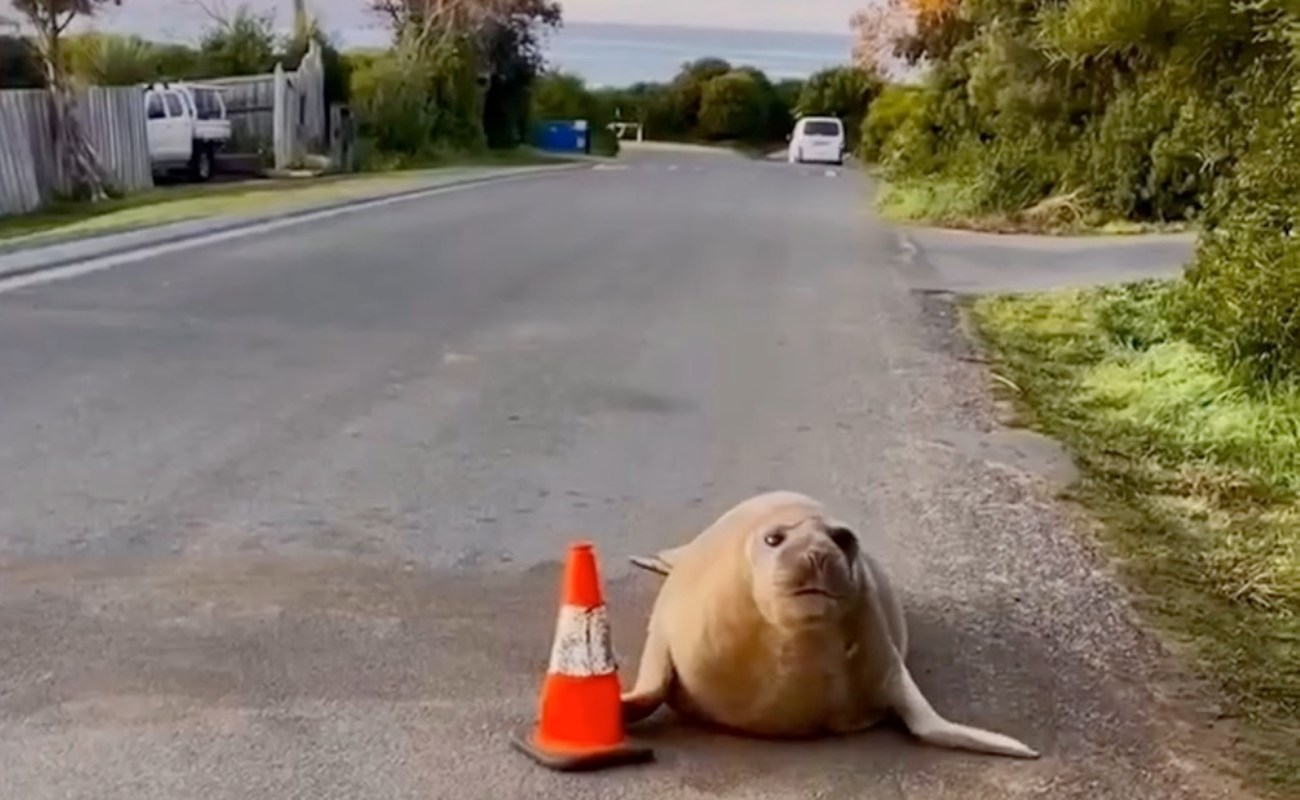
A young elephant seal in Tasmania named Neil has attracted millions of views online. Now, wildlife officials are issuing a stark warning that tourists traveling to meet the viral seal could put its life at risk.
Officials have warned that if public encounters become too hazardous to manage, options as severe as relocating Neil — or even euthanizing him — may have to be considered.
What happened?
According to a report from The Advocate, in a recent press release, Ogilvy PR cast the huge southern elephant seal as a "local celebrity" and encouraged tourists to book Airbnb stays near the places he often appears, saying they could improve their chances of seeing him during his annual molting period and later breeding season.
In Tasmania, Neil's antics have made him an internet sensation, with TikTok and Instagram videos drawing huge audiences. But The Advocate reported that wildlife experts consider Ogilvy PR's promotion irresponsible, even though it included advice to stay 66 feet away.
Rebecca Howarth, senior marine campaigner at Environment Tasmania, told The Advocate that the attention can quickly become dangerous for animals and humans alike.
"Although he is not naturally aggressive towards people, he deserves space and can unintentionally injure someone if he feels crowded or simply moves unexpectedly," she told the outlet.
TCD Picks » Quince Spotlight
💡These best-sellers from Quince deliver affordable, sustainable luxury for all




The Advocate reported that Neil is about five years old and still not fully grown, weighing roughly 2,205 pounds and expected to reach about 6,614 pounds as an adult.
Why does it matter?
Viral wildlife tourism can backfire when public fascination outweighs animal welfare and common-sense safety.
When crowds gather around a wild animal, the risks spread to everyone nearby. A startled or stressed seal the weight of a small car can hurt people unintentionally, and such incidents can strain local communities, emergency responders, and wildlife managers.
"Every time large crowds gather around him, it increases the chance of stress, disturbance or an incident involving a member of the public," Howarth told the Advocate. Repeated incidents, she warned, could prompt authorities to weigh tougher interventions.
Neil's popularity has already spilled into public disruption, including traffic problems in southern coastal Tasmania.
What's being done?
Experts want the public and tourism officials to change course by appreciating Neil from a distance rather than making trips to find or approach him.
Howarth told The Advocate tourism businesses should celebrate Tasmania's wildlife "responsibly, rather than encouraging people to seek out an endangered wild animal during a sensitive period."
Kris Carlyon, head of marine and wildlife health at Natural Resources and Environment, told the outlet that dangerous levels of public interaction could force officials to consider serious management actions, including relocation or euthanasia.
"It's certainly something that is last resort, but it has to be on our radar as options to maintain public safety," he said.
"It's not something we want to go anywhere near," Carlyon told The Advocate. "We have seen it elsewhere in the world where that people management side of things becomes unmanageable, and the animal's paid the price."

Get TCD's free newsletters for easy tips, smart advice, and a chance to earn $5,000 toward home upgrades. To see more stories like this one, change your Google preferences here.







