


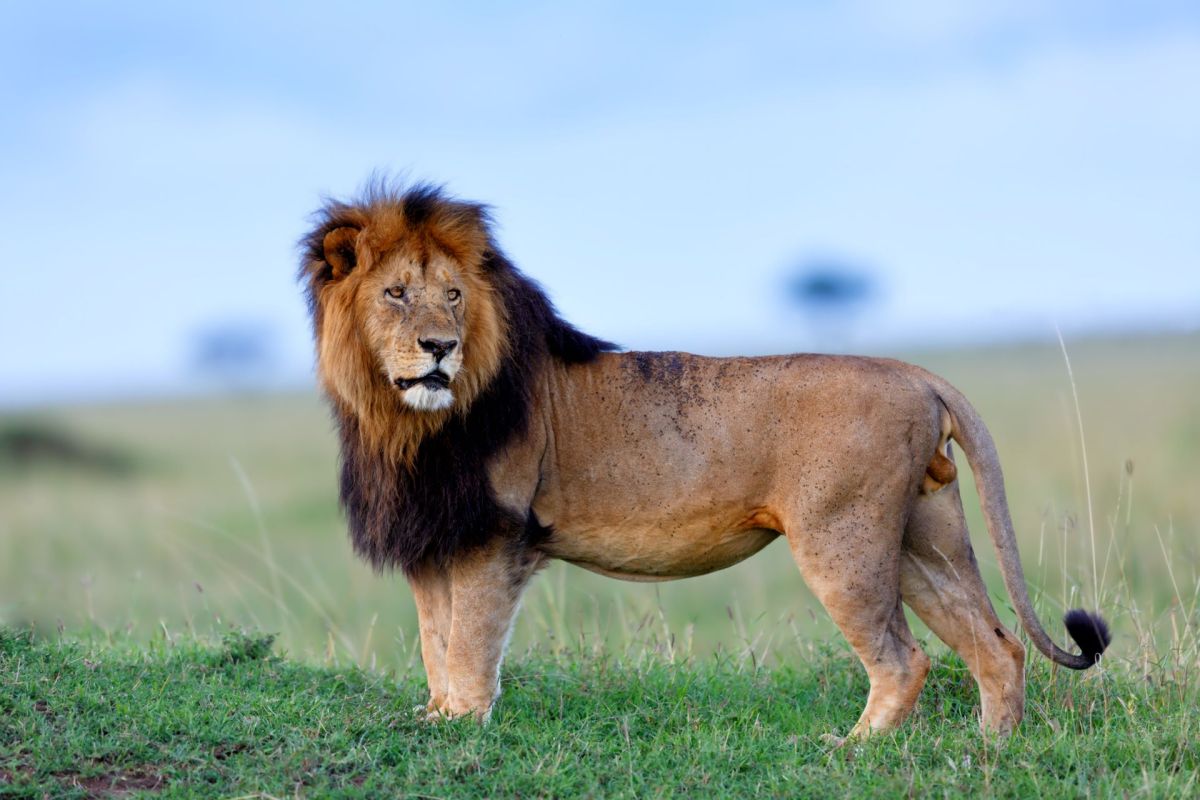
Near Nairobi, Kenya's capital, residents living at the edge of a famed national park are facing a growing threat: hungry lions.
With natural prey dwindling and migration routes blocked by urban sprawl, the big cats are increasingly targeting livestock. According to The Guardian, one expert describes the situation starkly, calling lions "victims and villains in a drama of our own making."
What's happening?
Nairobi National Park is the only major wildlife reserve within a capital city. Though fenced on most sides, its southern boundary remains open — the last link to broader savanna ecosystems. That land runs through the Maasai community territory, where families like Isaac ole Kishoyian's are making tough sacrifices to keep it open.
Kishoyian, a cattle herder in Empakasi, has fenced off only a small corner of his land. "A lion managed to enter the cattle pen while I was away," he told The Guardian. "My wife scared it off before it could kill one of my cows."
Lion sightings are now common. Another resident, Phyllis Enenoa, says she has lost several animals. "I don't know how long [my injured cow] will survive in that condition," she said, per The Guardian.
Why is this important?
As Kenya's rangelands give way to roads and development, wildlife inside the park is becoming genetically isolated. Dr. Joseph Ogutu of Hohenheim University warns this could lead to "ecological extinction," where inbreeding weakens survival traits and population health. With wild prey scarce, lions increasingly hunt livestock, raising the risk of conflict.
For pastoralist families, that means more than economic loss. It brings daily stress, safety fears, and pressure to abandon traditional livelihoods, especially as attacks grow more frequent.
"The choice is stark," Ogutu told The Guardian. "Feed lions with functioning ecosystems, or watch them feed on livestock until neither can be sustained."
What's being done about it?
With most of Kenya's wildlife living outside parks, the government has begun compensating landowners who preserve the habitat. In 2025, 256 landowners received $175,000 through a pilot program that paid them to keep their land unfenced — approximately $ 0.68 per acre per year.
"I got 6,000 shillings [$34] for my 20 acres," said herder Daniel Parsaurei, per The Guardian. "It's not much, but it helps. If we open up the land, lions can find food in the wild again."
TCD Picks » Quince Spotlight
💡These best-sellers from Quince deliver affordable, sustainable luxury for all




Experts say that expanding these efforts is critical, not just for wildlife, but also to ensure that rural communities aren't forced to choose between safety and conservation.
|
Do you think your city has good air quality? Click your choice to see results and speak your mind. |
 Definitely 🥰
Join our free newsletter for good news and useful tips, and don't miss this cool list of easy ways to help yourself while helping the planet.
Cool Picks






