


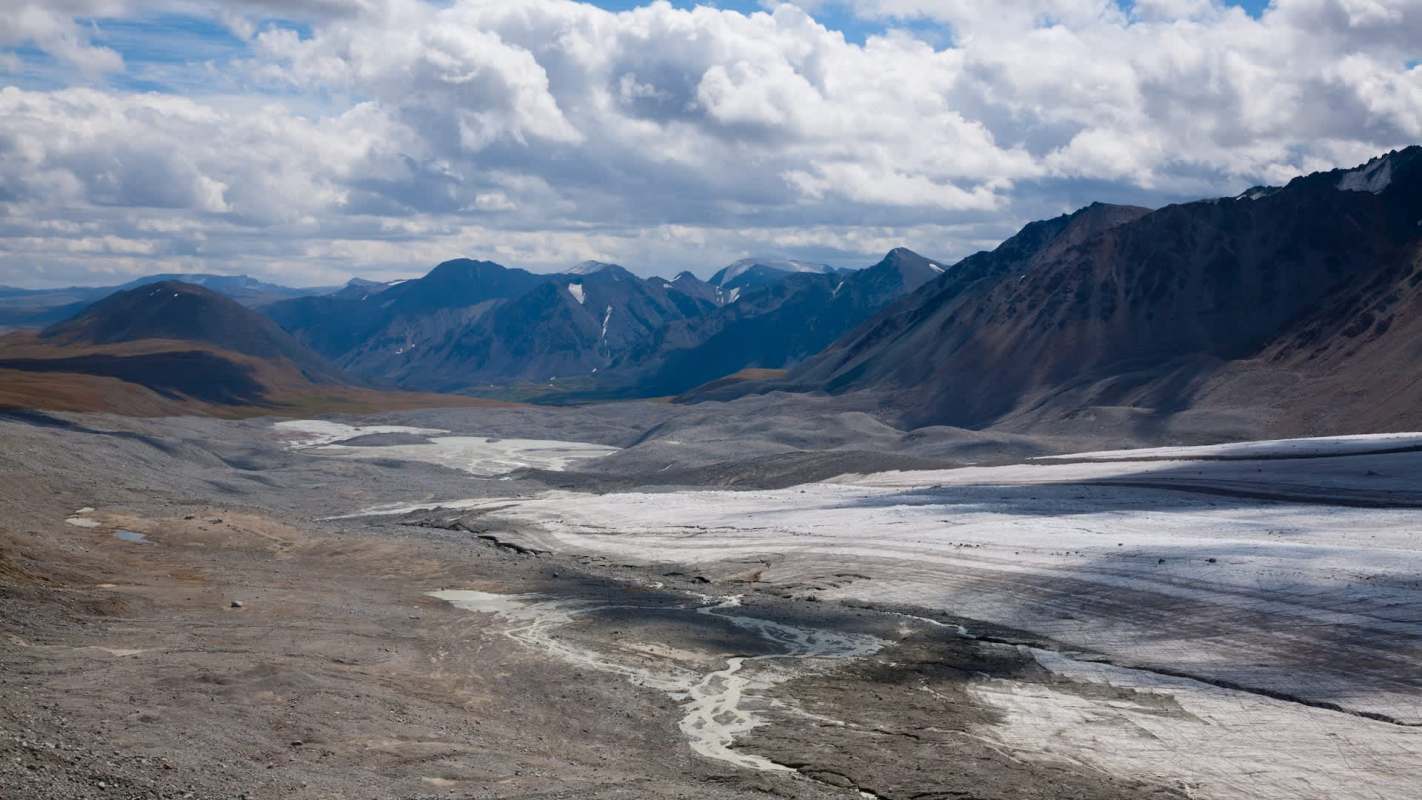
Glaciers in Mongolia are melting faster than ever, and the effects could be catastrophic for the nation.
What's happening?
A press release from the United Nations Economic and Social Commission for Asia and the Pacific delivered the foreboding news that Mongolia's glaciers, which make up over 70% of the country's freshwater supply, have lost both volume and area at alarming rates. Since 1940, their volume has been reduced by approximately 28%, and more shockingly, between 1990 and 2016, the glaciers lost 35% of their area.
This is not an aberration, but rather a new global norm. Protect Our Winters wrote that the World Glacier Monitoring Service found in 2023 that all 59 of their tracked glaciers had lost ice mass.
Why is glacial melting important?
In Mongolia, a semiarid climate, water is already scarce. Since its economy relies heavily on agriculture, the loss of so much glacial water means farmers must rely on groundwater, which causes crops to dry out much sooner each season.
Additionally, 20% of Mongolia's power grid runs on hydropower — 93% in the western region, according to ESCAP. When that power is unavailable, people turn to fossil fuels, and this creates a "feedback loop" where, ESCAP said, "limited water cuts hydropower output, leading to higher reliance on fossil energy, which in turn intensifies warming and glacier melt."
All over the Earth, glacial water sustains "aquatic life, hydroelectric power, irrigation, and drinking water," per POW.
Perk up the winter blues with natural, hemp-derived gummies Camino's hemp-derived gummies naturally support balance and recovery without disrupting your routine, so you can enjoy reliable, consistent dosing without guesswork or habit-forming ingredients. Flavors like sparkling pear for social events and tropical-burst for recovery deliver a sophisticated, elevated taste experience — and orchard peach for balance offers everyday support for managing stress while staying clear-headed and elevated.
Learn more → |

But glacial melt can also affect tourism and recreation — and even increase the risk of disease.
What's being done about Mongolia's melting glaciers?
The authors of the press release recommended a three-pronged approach to solving Mongolia's agriculture and power supply problems. One method is to create crops that are more water-efficient and drought-resistant. Another is adding more wind and solar energy as alternative sources. The third is ensuring the glacial melt is closely monitored to create a system of "data-driven basin management."
But Mongolia doesn't exist in an environmental vacuum. Humanity relies on a balanced ecosystem and plentiful glacial water. The United Nations declared 2025 the International Year of Glaciers' Preservation "to raise global awareness about the critical role of glaciers, snow, and ice in the climate system and the hydrological cycle, and the economic, social, and environmental impacts of the impending changes in the Earth's cryosphere."
After all, as ESCAP wrote, "glacier retreat, once viewed as an environmental concern, is now an economic one."
TCD Picks » Upway Spotlight
💡Upway makes it easy to find discounts of up to 60% on premium e-bike brands





|
What's the most you'd pay per month to put solar panels on your roof if there was no down payment?
Click your choice to see results and speak your mind. |
 $200 or more 💰
Get TCD's free newsletters for easy tips to save more, waste less, and make smarter choices — and earn up to $5,000 toward clean upgrades in TCD's exclusive Rewards Club.
Cool Picks






