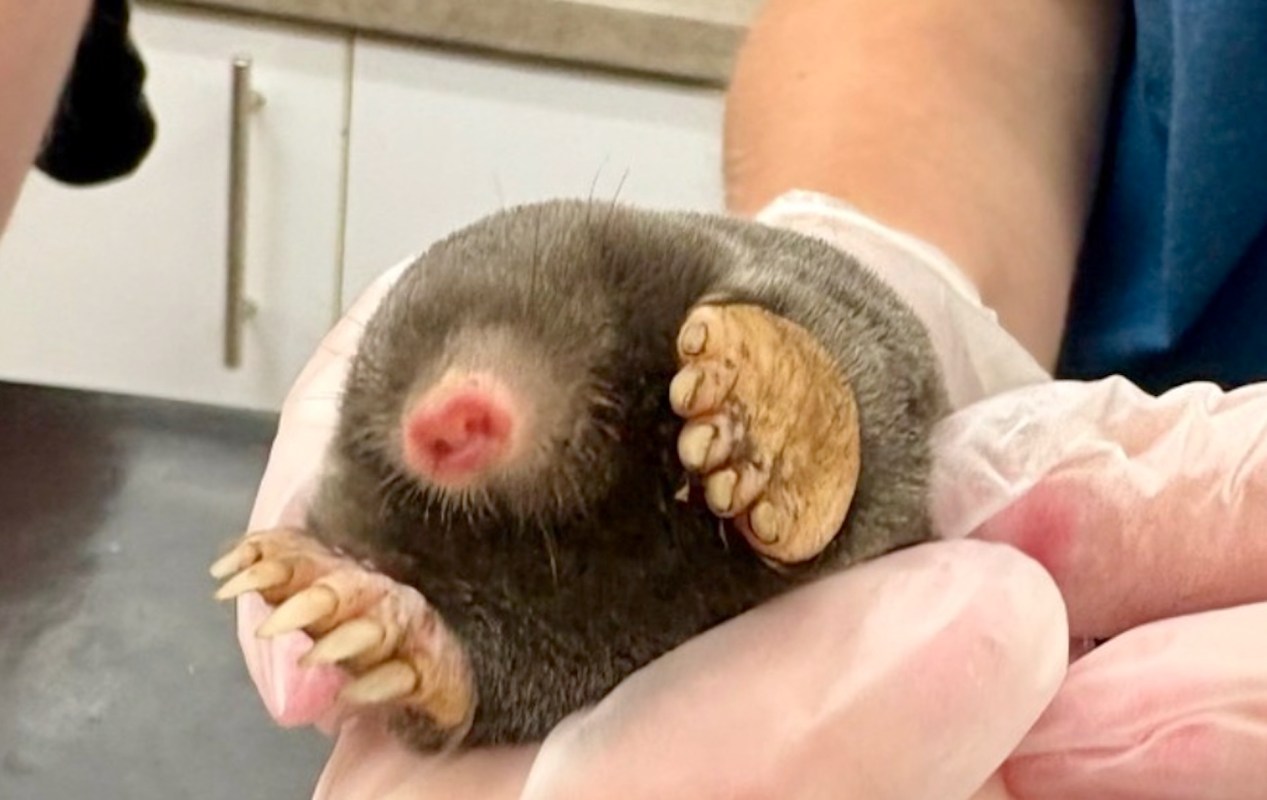
A mole that seemed unlikely to survive an encounter with a cat ended up with a far better outcome.
Wildlife Aid Foundation said the animal was discovered collapsed, with the cat nearby, and was brought in for emergency treatment. After recovering quickly, it was released the next day.
What happened?
In a July 1 Instagram post, Wildlife Aid Foundation described rescuing a mole after what it called a "rather intense run-in" with a cat. The group dubbed it "one lucky mole" and said it reached WAF in a cardboard box being used as a makeshift stretcher after being found in rough shape.
Once the animal arrived, veterinary staff evaluated it while uncertain "how he might fare." The team later wrote, "But against all odds, this little fighter walked away with only minor injuries!"
Wildlife Aid Foundation said the mole improved quickly enough to be released back into the wild the following day.
The photos shared by WAF show the mole being held by a staff member, with paws the size of its head and eyes nearly invisible. Another photo shared a close-up of the mole's pinpoint-sized eyes while it received fluids.
TCD Picks » Quince Spotlight
💡These best-sellers from Quince deliver affordable, sustainable luxury for all




"Moles aren't as defenceless as they seem," WAF wrote. "They actually carry a paralysing toxin in their saliva! While harmless to humans, they use it to immobilise worms, creating a fresh stockpile of food in their underground tunnels."
Why does it matter?
Moles play an important role in local ecosystems, even if they are rarely seen. Their digging helps aerate the soil, and they feed on insects and other invertebrates, making them part of the natural balance in gardens, parks, and wild spaces.
Encounters with domestic cats can be especially dangerous for small mammals, birds, reptiles, and amphibians. Even when an animal survives the initial attack, stress, puncture wounds, or infection can quickly become deadly without prompt treatment.
That the mole was back in the wild within a day of collapsing and needing a veterinary assessment underscores how much immediate intervention can matter for injured wildlife.
What's being done?
Wildlife rehabilitation groups care for animals in situations like this. Here, the team quickly got the mole veterinary attention, monitored its recovery, and released it once it was healthy enough to survive on its own.
Wild animals often have very specific needs. Well-meaning people may want to help, but the best first step is usually to contact a licensed local wildlife rescue or rehabilitator if an animal appears injured, collapsed, or in shock.
There are also practical ways people can reduce the risk of similar incidents. Keeping cats indoors or supervising outdoor time can protect wildlife while also lowering risks to the cats themselves, including disease, traffic, and fights with other animals.

Get TCD's free newsletters for easy tips, smart advice, and a chance to earn $5,000 toward home upgrades. To see more stories like this one, change your Google preferences here.