


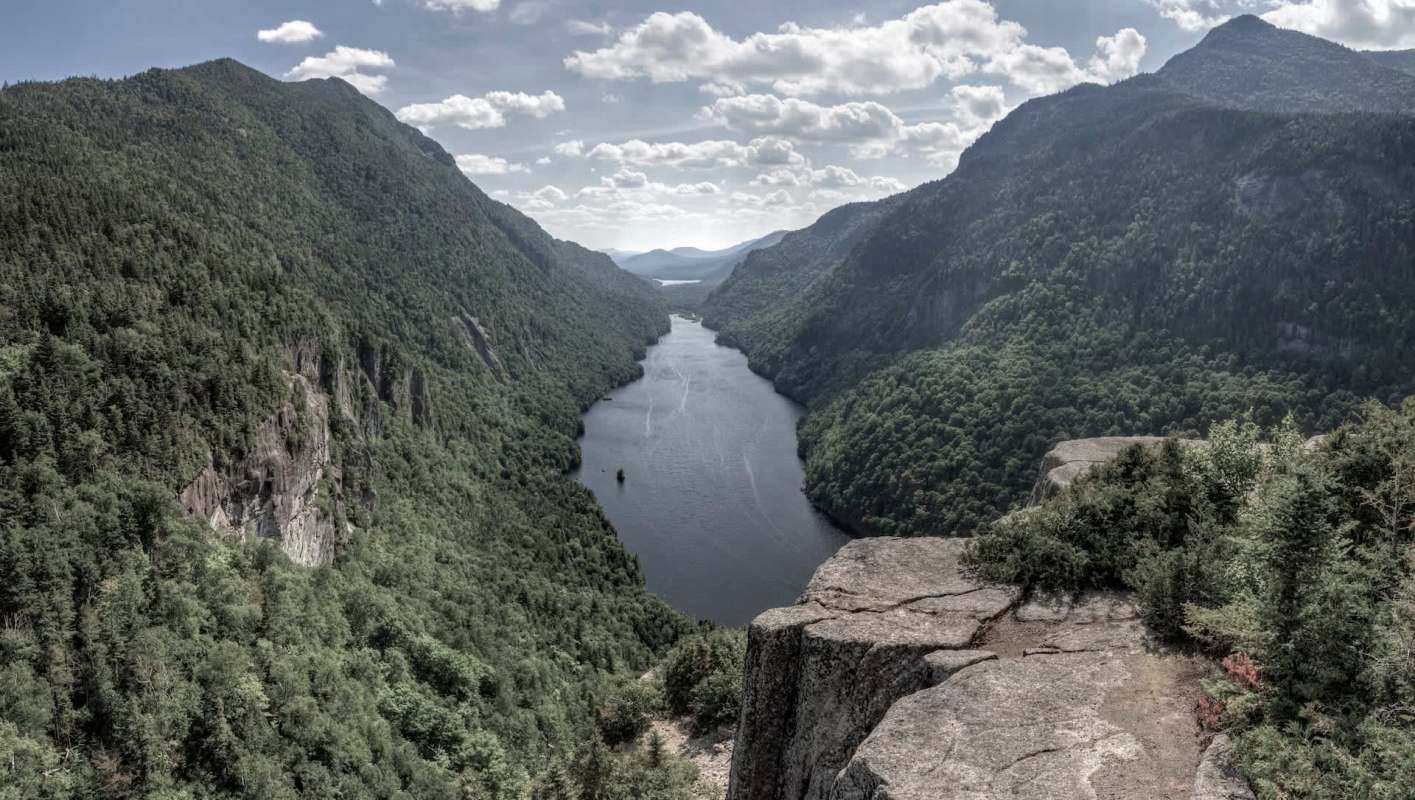
High in New York's Adirondack Mountains, scientists have detected microplastics in Lake Tear of the Clouds, the highest source of the Hudson River. Researchers say the pollution is likely coming from hikers themselves.
What's happening?
Citizen scientists leading the "Hudson River Source to Sea Expedition" first tested the lake in 2023 and found 9.45 microplastic particles per milliliter. When they returned in 2025, that number had nearly doubled to 16.54 particles per milliliter. Compare that to nearby Moss Pond, which is more remote and sees almost no visitors: It has only 0.73 particles per milliliter.
"We were disappointed and astonished," said data scientist Tim Keyes, who helped lead the project, to the Adirondack Daily Enterprise. "This work underscores the reality that even our most remote and iconic headwaters are not immune to human impact."
The study suggests that pollution is carried in by hikers' synthetic clothing, footwear, and gear, which shed microscopic fibers and particles as people move through the trail.
Why is this discovery concerning?
Microplastics — broken-down plastic particles smaller than 5 millimeters — have spread into every part of the planet, from the ocean floor to mountain snow. But finding them in a pristine, high-altitude lake shows just how pervasive the problem has become. Microplastics end up permeating our food chains, contaminating our drinking water, and building up in our bodies.
Though there's no immediate danger to humans or wildlife, researchers warn these particles can potentially lead to toxic effects over time. Studies have linked microplastics to inflammation, cardiovascular issues, immune disruption, and reproductive problems in humans.
TCD Picks » Quince Spotlight
💡These best-sellers from Quince deliver affordable, sustainable luxury for all




As Lake Tear is the Hudson River's source, its contamination represents how easily plastic pollution can flow downstream, affecting ecosystems and communities all along the way.
What can we do about shedding microplastics in natural spaces?
Researchers are now working to "fingerprint" the microplastics to identify exactly where they come from. In the meantime, they're urging hikers to take meaningful steps to reduce pollution. When hiking, wear natural fibers like wool, hemp, or bamboo, and avoid soft-soled shoes that degrade quickly. If you do wear synthetic moisture-wicking clothes, layer them under natural fibers to contain shedding. They also advise hikers to keep an eye on the wear of their outdoor gear.
Broader solutions are also on the horizon. Outdoor brands and textile companies are beginning to develop low-shed fabrics and filtration technologies to keep microfibers from washing into waterways. Ultimately, one of the best ways for us to cut down on microplastic pollution is to use less plastic altogether.
Even in these kinds of remote places, it seems humanity's plastic footprint is impossible to ignore. But with awareness and innovation, it doesn't have to keep growing.
|
How do you feel about microplastics being inside our bodies? Click your choice to see results and speak your mind. |
 I want them out now 🚫
Join our free newsletter for good news and useful tips, and don't miss this cool list of easy ways to help yourself while helping the planet.







