


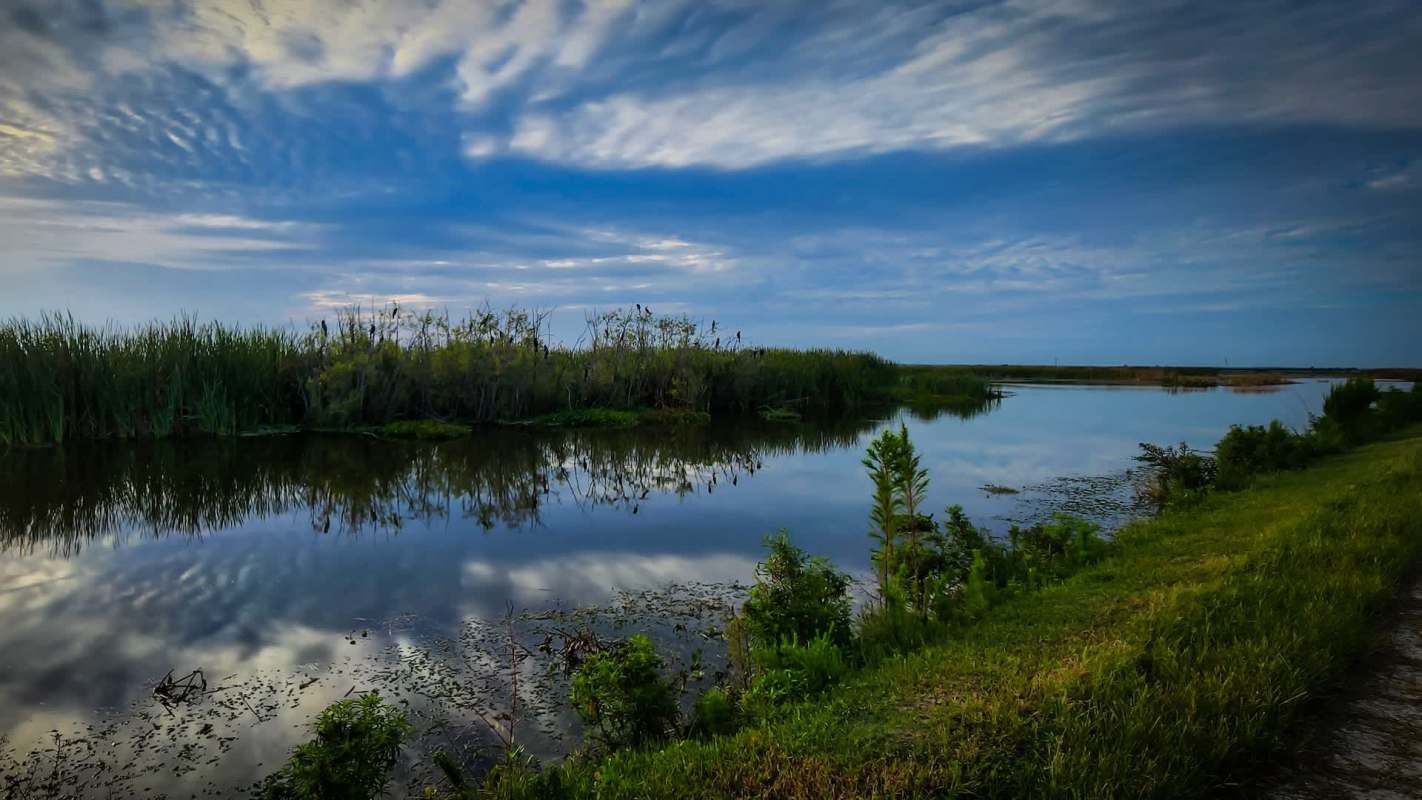
Forever chemicals have been discovered for the first time within a Florida reservation located in the Everglades.
What's happening?
Researchers from Florida International University, in collaboration with the Miccosukee Tribe of Indians of Florida, recently detected 12 different perfluoroalkyl and polyfluoroalkyl substances within the Miccosukee Indian Reservation, located in the Everglades.
In an article in Phys.org, the research team said there were likely multiple sources bringing these pollutants to what they call a "once-pristine environment." For instance, one canal in the northern part of the reservation was a hotspot for PFAS, and profiles of specific chemicals mirrored those found in Lake Okeechobee, located about 30-40 miles north. While the team says they can't yet make a definitive conclusion, they add that this possible connection deserves a closer look.
"It could be one contributor but we need more research to know for certain," said Courtney Heath, an FIU master's student who helped collect samples. "It's important to consider every aspect, because PFAS come from many sources — the water, air, soil. This data is just one piece of the puzzle that raises a bigger question: What are the sources of these PFAS? Where are they coming from?"
Why is this research important?
Although the PFAS levels discovered on the Miccosukee Indian Reservation are considerably lower than those found in Miami's major canals, study author Natalia Soares Quinete says lower concentrations don't automatically translate to "safe" for the ecosystem, people, and wildlife. This is partially due to the fact that these chemicals tend to accumulate in the environment over time.
PFAS are a group of human-made chemicals that have been used in everyday items like non-stick cookware and water-resistant clothing, as well as in firefighting foams, for decades. Concern about these chemicals has grown in recent years as they have been increasingly discovered in bodies of water and in drinking water systems across the globe. For instance, health officials in Michigan are working to remove PFAS from residents' tap water after finding "maximum contaminant levels" in nearby households near one airport.
According to the Environmental Protection Agency, exposure to certain levels of PFAS can cause severe disruptions to one's reproductive system, immune system, or hormone levels. These chemicals have also been linked to abnormal childhood development, an increased risk of some cancers, and increased cholesterol levels.
PFAS can also impact the Everglades, an ecosystem that has been nicknamed the River of Grass because of its vast spaces full of sawgrass. The Everglades have already been reduced to less than half of their original size, according to the Florida Museum of Natural History.
What's being done about PFAS?
Researchers are developing new ways to break down PFAS to help protect people and wildlife. For instance, scientists at the University of Illinois found a way to remove the full spectrum of PFAS from water in a single process, and a team at the University of Rochester is doing similar work.
You can help reduce your exposure by looking for PFAS-free brands with the help of PFAS Central, opting to forego nonstick cookware, and limiting your purchases of stain- or water-resistant clothing.
TCD Picks » Quince Spotlight
💡These best-sellers from Quince deliver affordable, sustainable luxury for all




|
Do you worry about having toxic forever chemicals in your home?
Click your choice to see results and speak your mind. |
 Majorly 😥
Join our free newsletter for good news and useful tips, and don't miss this cool list of easy ways to help yourself while helping the planet.
Cool Picks






