


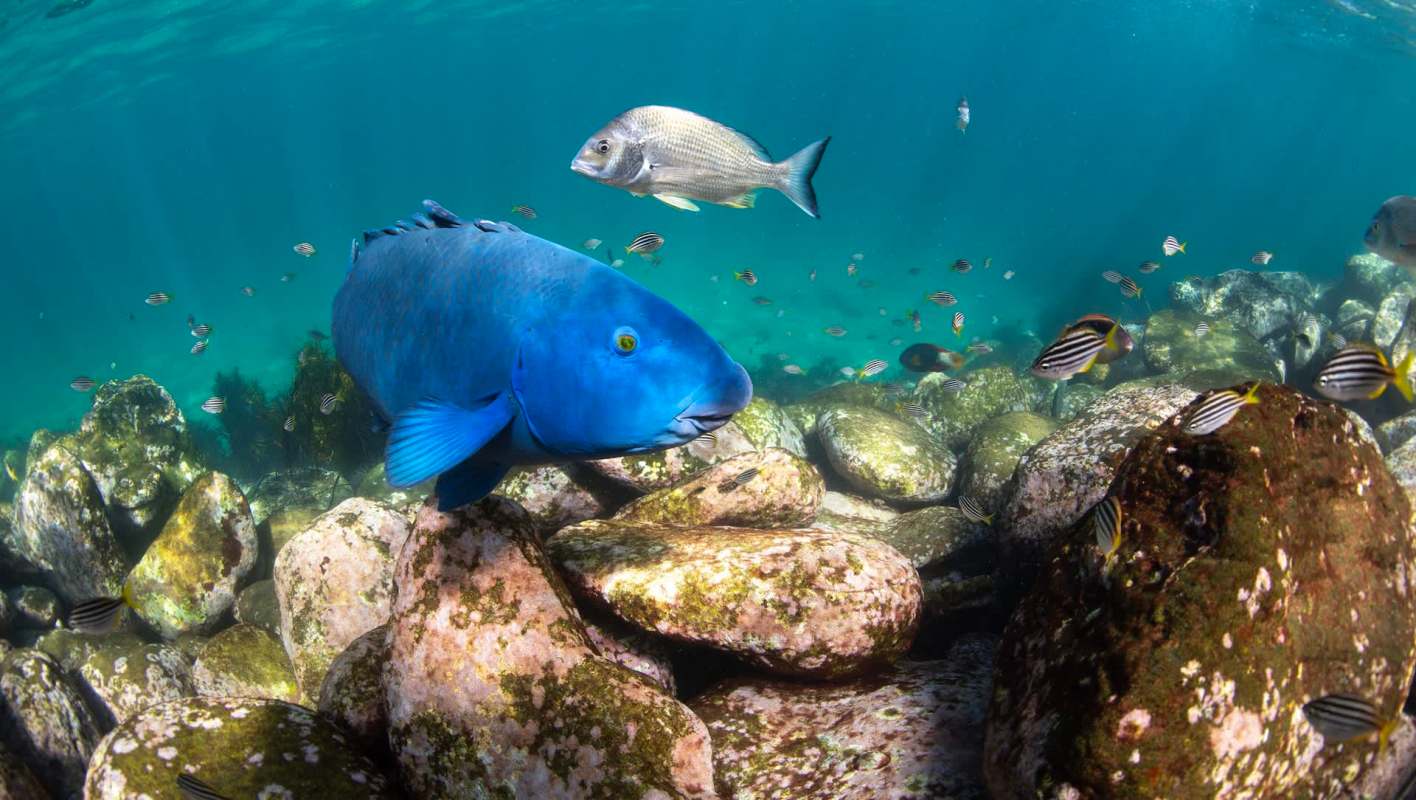
When it's hot, you try your best to find a cool place, whether that be in an air-conditioned building, at the beach, or at the pool. Hopefully, you have options, but now imagine marine life in search of cooler waters. According to a study reported by The Guardian, they're heading toward the poles.
What's happening?
The study, conducted by researchers at the University of the Sunshine Coast and published in Earth's Future, found that marine life is shifting to the poles at a rate of 59 kilometers (about 36 miles) every decade. Some fish, such as the Kingfish, are moving at a faster rate — 102 kilometers (about 53 miles) every decade.
The fish are shifting to cooler water due to the ocean's warming. By 2040, Australia's oceans will be in uncharted waters due to rising temperatures, even if polluting gases are significantly cut, the study found.
The researchers "found that in 15 years, marine ecosystems would be facing extreme heat, oxygen loss, and acidity conditions," per The Guardian.
Study lead author Alice Pidd from the University of the Sunshine Coast said, "As our oceans acidify [and] lose oxygen, the life they support is under increasing pressure to move, adapt or die. We're already seeing this in action."
She added, "The past is no longer a good guide to the future."
Why is the ocean warming concerning?
Marine species in Australia's oceans aren't the only ones migrating to the poles. According to a study reported on in Scientific American in 2020, marine animals have been moving from the equator to the poles across the globe over the past century.
"These movements could wreak havoc on food webs and endanger the livelihoods of people who depend on key fisheries, researchers say," per Scientific American.
Warmer waters are also having other effects on fish, such as those that live in the Baltic Sea. A study found that fish's metabolism increases in warmer water, so they need more food. That's causing them to eat smaller fish instead of waiting for the bigger prey that will sustain their needs longer.
Scientists are concerned this could lead to extinctions. When animals go extinct, that can have a domino effect on the other animals in the area.
TCD Picks » Quince Spotlight
💡These best-sellers from Quince deliver affordable, sustainable luxury for all




|
Should taxpayers help pay to clean up the Great Pacific Garbage Patch?
Click your choice to see results and speak your mind. |
 We should pay for all of it 👍
 Just take the wolves in Yellowstone National Park. According to National Geographic, they were hunted to extinction in the 1920s because people saw them as a threat to people and livestock. As a result, the elk population lost its primary predator, so they overgrazed. Their overgrazing took away the plants that mice and rabbits used to hide, so their populations decreased.
Additionally, grizzly bears suffered because the elk ate their berries.
What's being done about the warming of ocean waters?
The study's researchers are urging a reduction in polluting gases. To do that, society must reduce its reliance on dirty energy sources that release toxic gases, which warm the planet.
Additionally, marine migration is a critical climate issue that is vital to continue exploring.

Join our free newsletter for good news and useful tips, and don't miss this cool list of easy ways to help yourself while helping the planet.
Cool Picks




