


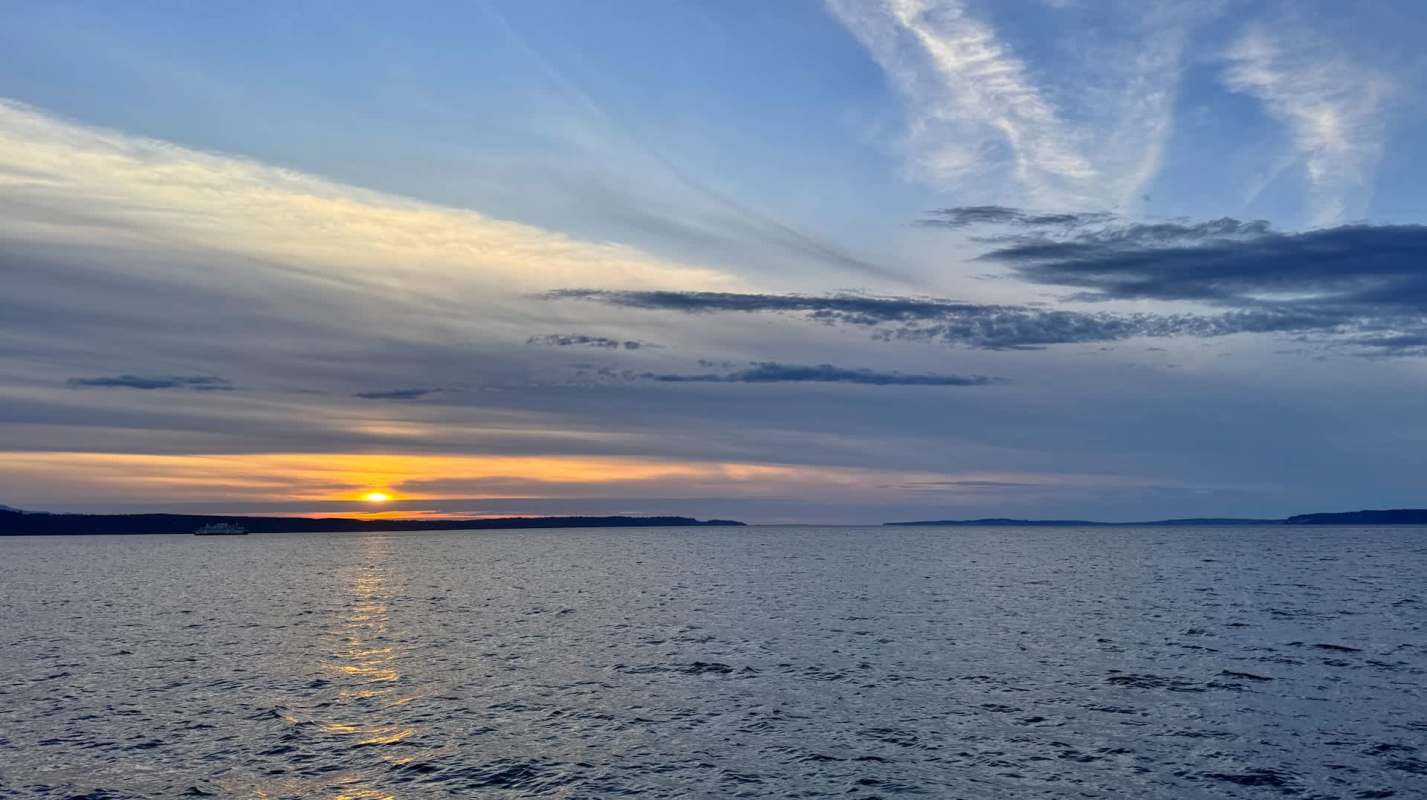
Two marine heat waves occurring simultaneously in the Pacific Ocean are being linked to a forecast for record warm temperatures this weekend. It might be the first full weekend of October, but for large portions of the United States, it will feel more like August.
A climate scientist specializing in marine heat waves is tracking two of them that have overlapped this fall in the Pacific, according to The Washington Post. They are part of an expansive blob of anomalously warm ocean water that grew to almost the size of the U.S. at one point, stretching from near Japan to near the West Coast, which will play a pivotal role in driving temperatures to record levels this weekend.
The marine heat wave researcher said the first ocean heat wave began to roll out near eastern Asia during April. Dillon Amaya, a research scientist with the National Oceanic and Atmospheric Administration, cited the Kuroshio Current, which channels warm waters from the tropics near the Philippines to the North Pacific south of Japan, as playing a key role. In its extended northern reach, known as the Kuroshio Extension, the current may be flowing faster and farther north, creating massive sea-surface temperature anomalies.
"There is research to suggest that the North Pacific jet stream can be influenced by the position of the Kuroshio extension through air-sea interactions," Amaya told the Post.
The second marine heat wave that Amaya is watching developed more recently, stretching from near Hawai'i to the West Coast in the northeastern Pacific. These blobs of warm water are displacing the jet stream, the fast-moving currents of air aloft that steer weather systems.
The resultant weather pattern this weekend will see the jet stream moved farther north, allowing unseasonably warm, summer-like air to surge across much of the United States and even into parts of Canada.
The National Weather Service is projecting the number of people facing moderate to major heat risk, Levels 2 and 3 out of 4, to jump from just over 9 million Thursday to more than 23 million Friday.
Central and southern Minnesota is targeted for the worst heat risk on Saturday, with over 4 million people there expected to experience major heat risk. This level means "health systems likely to see increased demand with significant increases in ER visits," according to the National Weather Service. The Twin Cities is bracing for record temperatures as highs soar into the lower 90s for a sizzling Saturday.
Marine heat waves are another example of weather events being supercharged by an overheating planet. To see how much a warming world has influenced ocean heat waves, Amaya contrasts detrended sea-temperature records, which exclude the long-term rise, with the unadjusted data that keep that rise included.
"You'll see that much of the current North Pacific marine heat wave is amplified by long-term warming," he said, per the Post.
TCD Picks » Quince Spotlight
💡These best-sellers from Quince deliver affordable, sustainable luxury for all




|
Should the government be allowed to control how restaurants run their business? Click your choice to see results and speak your mind. |
 Never 👎
Join our free newsletter for good news and useful tips, and don't miss this cool list of easy ways to help yourself while helping the planet.
Cool Picks






