


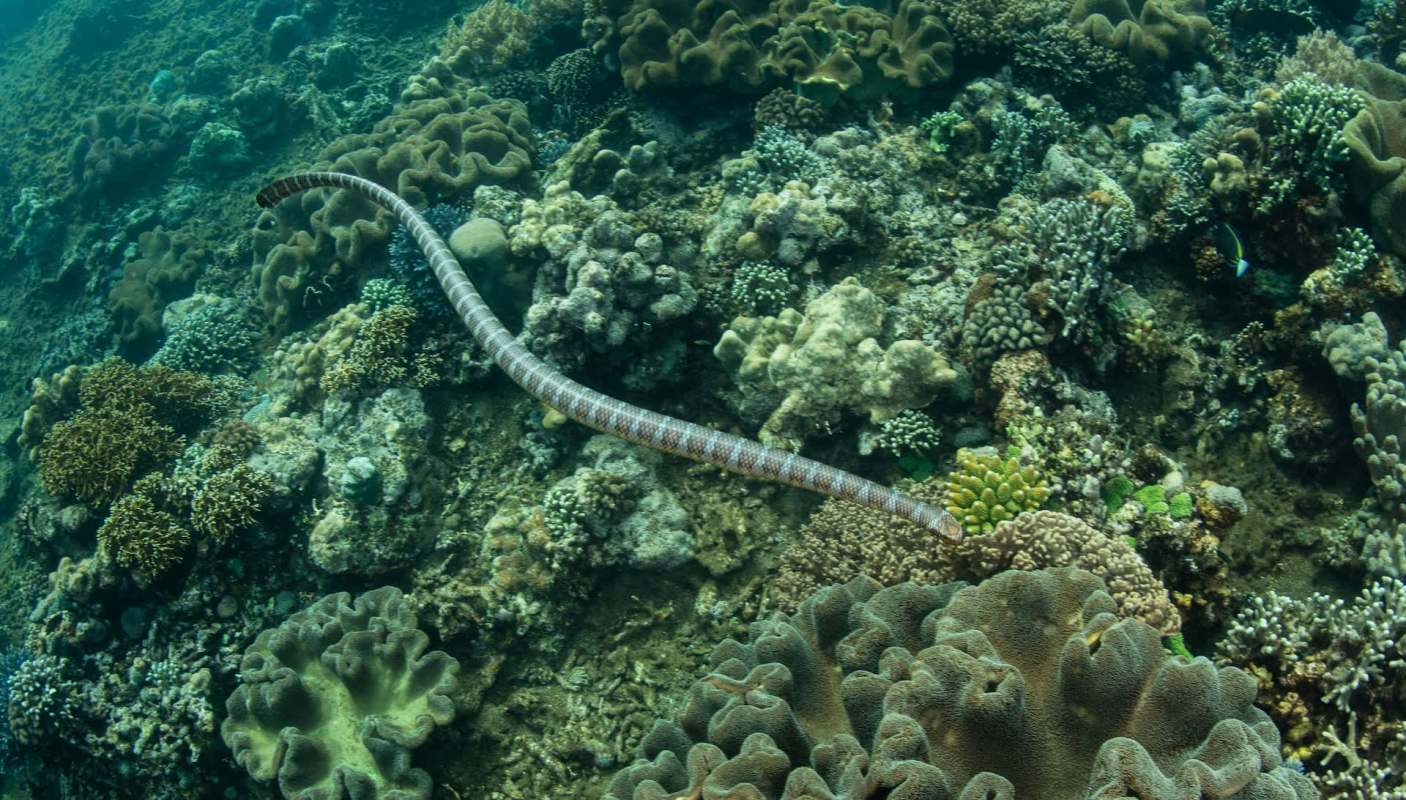
An invasive species has turned Indonesia's "Snake Island" into "Rat Island," with devastating consequences above and below the waterline.
Here's what to know
Indonesia's Manuk Island is the Banda Sea's largest seabird breeding colony, best known among divers for its volcanic setting, reef life, and unusually large numbers of sea snakes. Rats, however, have wreaked havoc across the island, and a community-led conservation push now hopes to restore it to its natural state, according to Divernet.
The grassroots effort is being led by Edi Frommenwiler, an underwater videographer, pioneering Indonesian liveaboard operator, and owner of the Pindito. He said that when he first dived Manuk in 1992, he was struck by the sheer number of red-tailed tropicbirds, frigatebirds, boobies, and sea snakes.
About 40 liveaboards still visit the uninhabited volcanic island each year, but the ecological decline occurring above the waterline seems to be affecting nearby marine habitats as well.
Divernet reported seabird numbers fell from roughly 90,000 in the early 1970s to about 7,000 a decade later, and by 2009 had dropped by half again, while rats — believed to have arrived via fishing boats — took over the island.
"If you walk 20m along the beach you're likely to see as many as 30 rats," Frommenwiler told Divernet.
TCD Picks » Quince Spotlight
💡These best-sellers from Quince deliver affordable, sustainable luxury for all




More background
The island itself covers about 100 hectares and rises 925 feet (282 meters) above sea level. It has no harbor or land-based dive operation, and currents can change unpredictably. Even so, divers continue to seek it out for hard corals, sponges, gorgonians, geothermal bubbles, and encounters with tuna, barracuda, reef sharks, rays, and occasional scalloped hammerheads.
Frommenwiler said Manuk once benefited from a "guano engine," in which seabirds fed offshore and then returned to roost, leaving droppings rich in nitrogen and phosphorus. As those nutrients move into surrounding waters, they help nourish reef ecosystems.
Divernet reported that studies on tropical islands suggest reefs alongside strong seabird colonies can have up to four times the fish biomass, along with faster coral growth and greater resilience.
What's being done?
Frommenwiler is trying to raise an initial $25,000 for a first-stage eradication project, hoping Indonesian authorities will support it at the million-dollar level.
That funding would go toward feasibility work, carefully designed baiting plans intended to avoid harming species such as native reptiles and land crabs, and coordination with government agencies, Banda communities, and conservation experts on long-term biosecurity.
He has provided seed money and is urging other liveaboard operators to contribute. He has also been working with New Zealand-based Island Conservation and the Ocean Earth Foundation, which Divernet said could conduct the operation using helicopters or drones without damaging Manuk's ecosystem.
"The fact that there are no people or domestic animals on the island should make it easier," says Frommenwiler. "I don't want to have something halfway – I want to have a proper job done. By being part of this project, I want to give back to the ocean."
Where can I learn more?
Here are more stories from other islands that have gone through similar issues, showing what invasive species removal can do for local ecosystems.
• On Tromelin Island, seabirds rebounded dramatically after invasive rats were removed.
• On Lord Howe Island, NSW, nearly extinct wildlife returned after a rodent eradication campaign.
• In French Polynesia, storm petrels returned to an island after a century-long absence.
• Across Orkney, Scotland, thousands of invasive stoats were eradicated to restore native wildlife.
• On Orkney, the signs are really promising, as curlews benefit from stoat control.

Get TCD's free newsletters for easy tips, smart advice, and a chance to earn $5,000 toward home upgrades. To see more stories like this one, change your Google preferences here.







