


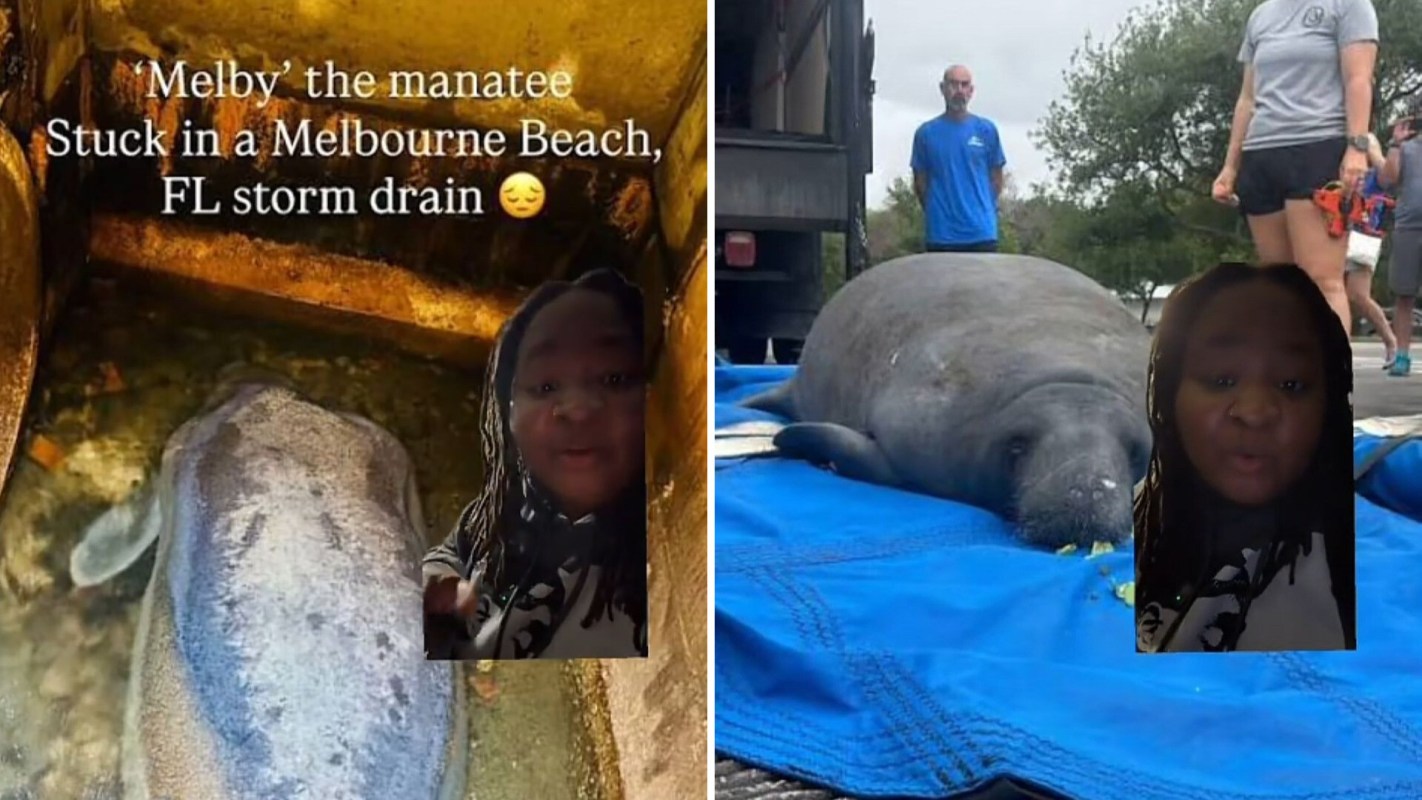
Melby, a Florida manatee, is gaining attention online after rescuers revealed that he was trapped underneath a road in a storm drain.
What happened?
Nature educator Dr Krystal Toney (@krystalmtoney) took to TikTok to tell the story of Melby, who was featured in a National Geographic article.
Melby was found, and eventually rescued, after people on the street heard noises coming from below. Officials assume Melby moved into the storm drain looking for warm waters after a freezing cold snap. But after getting into the area, Melby was unable to find his way out.
It took time and resources to pull Melby from his makeshift apartment, and the manatee needed to be rehabilitated before being released back into the wild. During a recovery spell at SeaWorld in Orlando, Melby gained 105 pounds in just a few months, bringing him back to a healthy enough weight to be set free.
@krystalmtoney Melby the manatee took one VERY wrong turn and ended up trapped beneath a Florida road. 😭 Thankfully, rescuers got him out, rehabbed him, and sent him back home—105 pounds heavier! 😂🌊 Nature is LIT. #NatureIsLit #Manatee #WildlifeRescue #FloridaWildlife #MarineLife ♬ original sound - Dr. Black In Nature 🔥
The story shows how vulnerable manatees can be when they wander into spaces shaped by human infrastructure. A wrong turn into a culvert, drainage area, or another tight passage can quickly become life-threatening for an animal that needs room to move and easy access to water.
Why does it matter?
When an animal as large as a manatee gets trapped in a human-made space, the consequences can be severe not only for the animal but also for the people tasked with helping it. These rescues require time, expertise, equipment, and coordination across local conservation networks.
TCD Picks » Quince Spotlight
💡These best-sellers from Quince deliver affordable, sustainable luxury for all




Manatees are an iconic part of Florida's natural heritage, and protecting them helps preserve the health and character of the waterways that residents and visitors value.
Healthy wildlife populations can be a sign that waterways are being watched, cared for, and treated as shared spaces rather than as afterthoughts.
Melby's case shows the role of rescue and rehabilitation teams that step in when animals are injured, displaced, or trapped. Those efforts can include everything from emergency extraction to monitoring, feeding, and recovery support before a release is possible.
Paying closer attention to the places where roads and waterways intersect can help reduce the odds of animals becoming stranded in the first place. Communities that prioritize habitat protection and wildlife-safe planning can lower risks before rescuers are ever needed.

Get TCD's free newsletters for easy tips, smart advice, and a chance to earn $5,000 toward home upgrades. To see more stories like this one, change your Google preferences here.







