


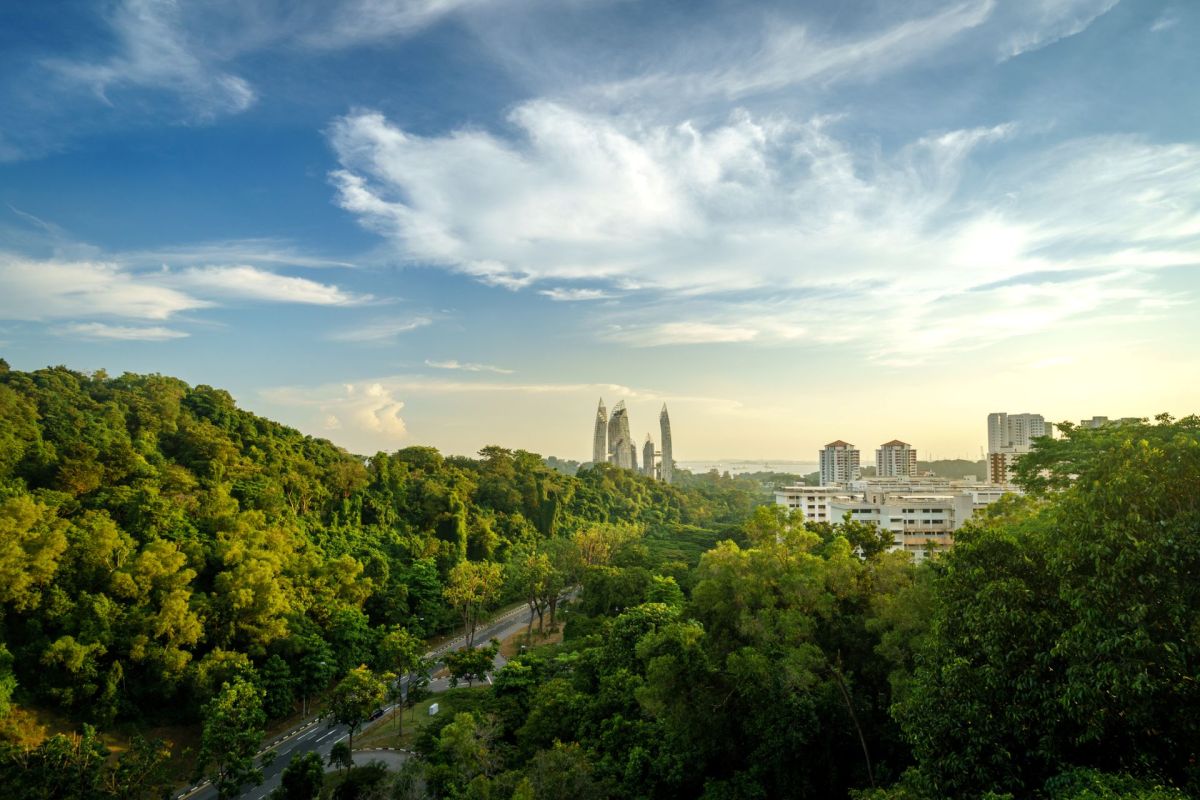
Even as Singapore works on its first nationwide plan to adapt to climate change, more residents are speaking out against forest loss, which they say helps keep nearby areas cooler and less flood-prone.
Nowhere is that clash clearer than at Maju Forest, where a proposed housing project has triggered an unusually strong backlash in the city-state, Mongabay reported.
Here's what to know
Despite public objections, authorities still plan to develop housing at Maju Forest — a 57-acre (23-hectare) regenerating forest in central Singapore — and at Gillman Barracks.
On Aug. 14, national development minister Alvin Tan said the projects would still move forward, though the revised plans would leave more forest standing than originally proposed.
A major point of dispute is how much Singapore's environmental impact assessments actually capture. The reviews address pollution, waste, and biodiversity, but residents and environmental groups said they fail to account for many of the climate and health benefits that forests provide to surrounding communities.
More than 2,000 people attended an Aug. 16 rally at Hong Lim Park, where 22-year-old environmental studies student Saw Yun Ya said, "Forests are crucial for our health and well-being."
TCD Picks » Quince Spotlight
💡These best-sellers from Quince deliver affordable, sustainable luxury for all




She said forests provide relief from heat and act as "natural air-conditioners."
About 16% of Singapore's land area is covered by secondary forest, and several of those areas face development pressure as the country tries to ease a housing shortage.
More background
The government has declared 2026 the Year of Climate Adaptation, and Singapore's first national adaptation plan is expected in 2027.
The draft framework names biodiversity, greenery, flood resilience, public health and livability among its focus areas, but officials have not suggested preserving existing secondary forests will be a core adaptation priority.
Scientists said that omission could shape daily life in significant ways. Winston Chow, an urban climate professor at Singapore Management University and principal investigator for the Cooling Singapore initiative, said there is strong evidence that clearing forests such as Maju would increase urban heat, worsen air quality and raise flood risk.
A 2024 study by the National University of Singapore estimated that by 2035, hotter and more humid conditions could cut productive working time by 14% across major sectors, costing the economy 2.22 billion Singapore dollars annually.
Nature guide and food delivery cyclist Jimmy Tan has described himself as a "microclimate refugee" after relocating in search of a cooler place to live.
The loss of forests can translate into hotter homes, riskier outdoor labor, worse sleep and greater exposure to flooding.
What's being done?
Singapore said it will spend 100 billion Singapore dollars on climate adaptation, including 10 billion for steps such as seawalls and drainage infrastructure.
In 2025, officials established a heat resilience office and began a 40 million Singapore dollar program to study heat stress among vulnerable groups.
Julie Tang, a climate organizer with SG Climate Rally, has argued that forests should be recognized as adaptation infrastructure, alongside seawalls, drainage systems and cooling technologies.
Saw has urged environmental assessments to examine the health, climate and sociocultural consequences of forest removal before "irreversible decisions" are made.
Public pressure has resulted in some forest being retained.
Benjamin Horton, the dean of the School of Energy and Environment at City University of Hong Kong, said, "If you talk about being future-ready and climate-resilient to attract investors, you need to walk the talk. If you brand yourself a 'city in nature' and are trying to keep the place cool, the last thing you want to be doing is cutting down trees."
Where can I learn more?
The battle over Maju Forest is part of a much wider debate about what gets sacrificed in the name of development — and what standing forests are really worth in a warming world. Elsewhere, the same tension is playing out in permit disputes, diluted anti-deforestation rules, contested project sites and city efforts to cut pollution.
• In Borneo, activists said Royal Golden Eagle continues to destroy critical forests despite permit challenges.
• In Congo, officials opened half the country to oil and gas bidding.
• In Europe, lawmakers and industries watered down a law meant to curb deforestation.
• In Kenya's Kilifi County, residents outraged over location of a nuclear plant demanded clearer answers.
• Across C40 cities, leaders are implementing a major policy to reduce traffic pollution.
Across very different places, the same theme keeps surfacing: Climate resilience is shaped by land-use decisions long before a heat wave or flood hits. That is why so many people in Singapore want existing forests treated as part of the country's adaptation infrastructure.

Get TCD's free newsletters for easy tips, smart advice, and a chance to earn $5,000 toward home upgrades. To see more stories like this one, change your Google preferences here.







