


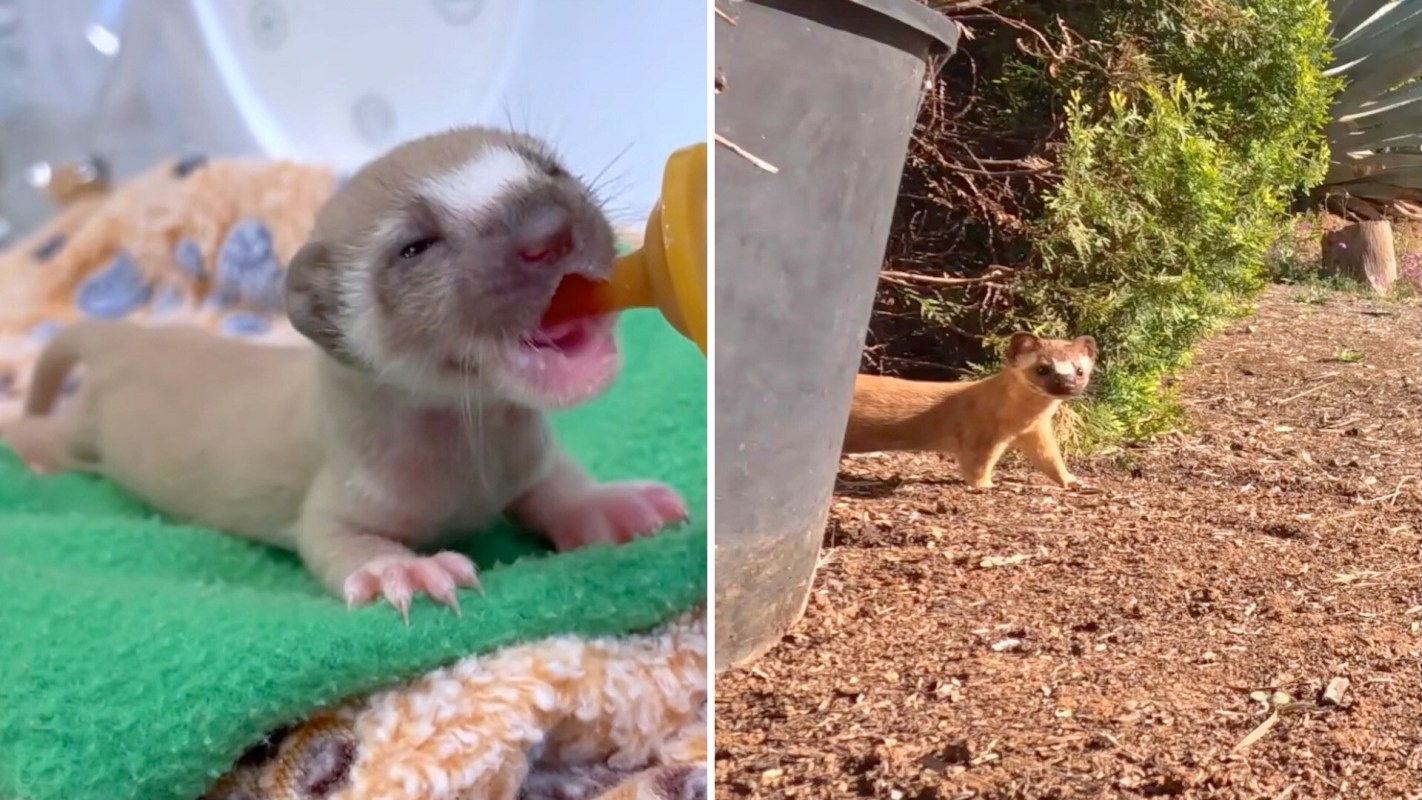
A critically ill newborn long-tailed weasel that arrived at a San Diego wildlife center is now back where she belongs. After saga that lasted more than two months, the center announced the animal is back in the wild.
What happened?
As UPI documented, the youngest weasel ever admitted to San Diego Humane Society's care was a newborn long-tailed orphan found in Riverside County on March 20.
Officials said she was brought to the Bahde Wildlife Center through the organization's Project Wildlife program.
At intake, she was in critical condition, and caregivers had to provide constant support while also making sure she did not grow too accustomed to people. UPI shared a video of the creature's recovery and care.
The Humane Society described how delicate the process was, saying, "That included daily medication for ringworm, which was tricky as the caregivers worked hard to not habituate her to humans."
The organization added, "After 10 days of intensive monitoring, she reached a major milestone when her eyes finally opened."
TCD Picks » Quince Spotlight
💡These best-sellers from Quince deliver affordable, sustainable luxury for all




Later, the baby weasel was moved to the Ramona Wildlife Center, where she lived in a habitat meant to help her build the skills needed to survive. The Humane Society said she was released near Ramona after spending about 70 days there.
Why does it matter?
Long-tailed weasels are native predators that help maintain balance in the food web. The Humane Society mentioned that they play a key role in controlling rodent and insect populations.
They added that while they're present throughout North America, their speed and nocturnal habits make them extremely hard to find.
The rescue involved medical treatment, intensive monitoring, and habitat-based rehabilitation meant to give the animal a real chance of surviving after release.
It also included carefully avoiding a reliance on humans. That can be dangerous to the animals if they become dependent on humans for feeding or lose their fear of humans.
What are people saying?
Alexis Wohl, wildlife veterinary manager at San Diego Humane Society, described the challenges in the announcement.
"Caring for a mammal this young and this rare requires precision and expertise," Wohl said. "Because we so rarely see this species, every milestone -- from the first time she successfully ate on her own to opening her eyes -- is a major victory for our team and local biodiversity."

Get TCD's free newsletters for easy tips, smart advice, and a chance to earn $5,000 toward home upgrades. To see more stories like this one, change your Google preferences here.







