


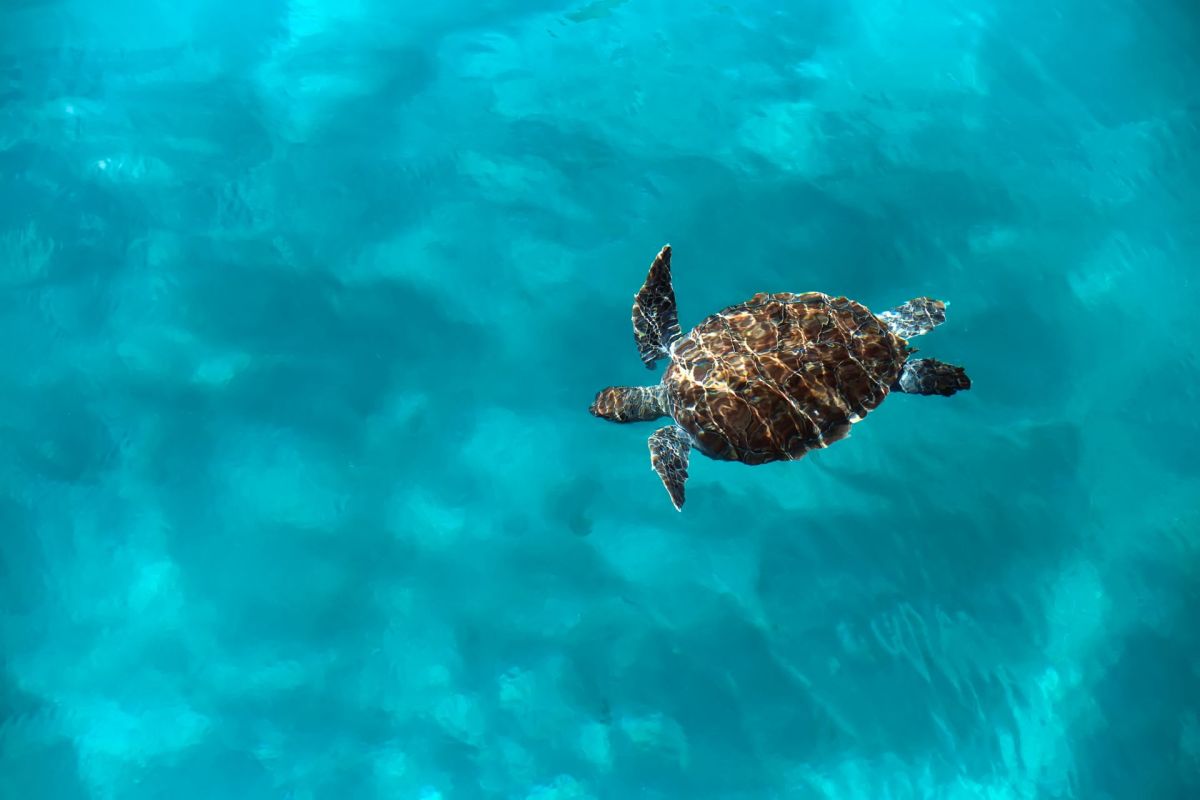
New research from Queen Mary University of London revealed troubling results: the warming climate is causing loggerhead sea turtles to nest earlier, disrupting their life cycles.
What's happening?
According to a 17-year study published in the journal Animals, turtles nesting in Cabo Verde are not only arriving on nesting beaches earlier but also waiting longer between breeding seasons, resulting in lower population sizes.
Rising sea surface temperatures are advancing nesting timing, so the turtles feel they must rush to complete their nests more quickly. That might seem like an evolutionary adaptation, but the apparent success masks the trouble brewing beneath the surface. The larger warming planet is quietly sapping their ability to reproduce at all.
The research shows that ocean productivity — the amount of food available in the sea turtle feeding grounds — has declined steadily over nearly two decades. Satellite data tracking chlorophyll levels, which form the base of the marine food web, indicates shrinking resources where these turtles need to build up their energy reserves.
Without plentiful food, female turtles can't recharge between seasons, and their bodies simply can't lay as many eggs — or lay them nearly as often.
"From the beach, everything is a conservation success — more nests, earlier nesting, lots of activity," Kirsten Fairweather, co-lead author and scientific coordinator at Associação Projeto Biodiversidade, which partnered with Queen Mary, said in a news release. "But when you follow individual turtles over many years, a more complex picture emerges. The turtles are working harder for less return."
Why are earlier sea turtle nesting seasons concerning?
With the sea turtles waiting longer between breeding seasons — roughly every four years now instead of two — it's leaving fewer turtles for future generations. And when females do lay eggs, they lay fewer per nest, meaning fewer young enter the oceans each year. The study also found that the turtles' average body sizes are declining, weakening their reproductive capacity.
All of these are signs that they are not adapting well to warmer conditions, despite how it seems on the surface. There have been significant efforts by conservation groups to protect nesting sea turtles in places like Florida and Costa Rica, but the work must continue once they enter the ocean.
What's being done to help the turtles?
According to Queen Mary, Cabo Verde hosts tens of thousands of nesting loggerhead turtles annually, underscoring the importance of long-term conservation efforts. But Fairweather stressed the need to take things "beyond the shoreline" to ensure the turtles' survival, especially in a rapidly changing world.
Some of the strategies recommended in the research include improved monitoring of foraging grounds and continued observation of changes in female body sizes, as these can signal early warnings of stress across populations.
TCD Picks » Quince Spotlight
💡These best-sellers from Quince deliver affordable, sustainable luxury for all




Individually, everyday people can help by donating to environmental organizations dedicated to improving loggerhead turtle habitats. You can also reduce plastic use, which is tied to warming oceans as it breaks down and releases potent heat-trapping gases.
|
Which of these savings plans for rooftop solar panels would be most appealing for you?
Click your choice to see results and earn rewards to spend on home upgrades. |
 Save $1,000 this year 💸
Get TCD's free newsletters for easy tips to save more, waste less, and make smarter choices — and earn up to $5,000 toward clean upgrades in TCD's exclusive Rewards Club.
Cool Picks




