


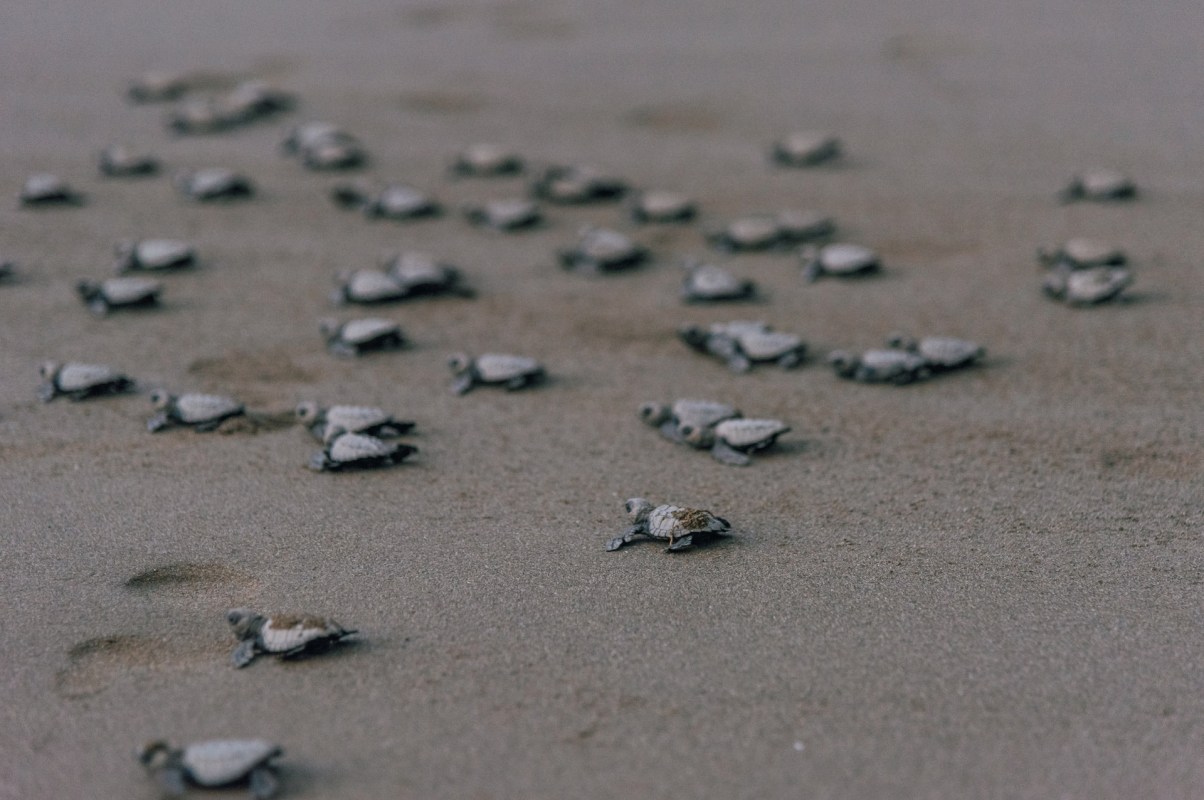
The shoreline along Tybee Island, Georgia, is disappearing and eliminating loggerhead sea turtles' habitats.
Beach erosion on the island's north end is preventing hatchlings from reaching the ocean.
What's happening?
As Savannah Now reported, the Tybee Island Marine Science Center is monitoring 18 loggerhead sea turtle nests due to the worsening erosion.
One turtle nest is in an especially precarious position along a sandy cliff and about five feet off the ground. High tides have created these sandy cliffs leading up to the dunes, where rattlesnakes live in the grass.
It is rare for this phenomenon to occur at this time of the year when baby sea turtles have yet to hatch in their nests.
"We try to let them be as natural as possible, without interference," said the science center's Tammy Smith. "But sometimes we have to help."
Why are receding shorelines a problem?
The shoreline along Tybee Island has receded over 60 feet in the last five years. Meanwhile, some sections of the beach have eroded by approximately 165 feet.
Loggerhead sea turtles and other species rely upon these beaches for their survival and to nest and protect their babies. The changing habitat conditions are altering nesting behaviors and putting young, vulnerable turtles at heightened risk.
Rising ocean temperatures and water pollution are also challenging the livelihood of sea turtles.
Shoreline erosion is also problematic because of how it affects biodiversity, tourism, local economies, and homeowners who live along the coast.
TCD Picks » Quince Spotlight
💡These best-sellers from Quince deliver affordable, sustainable luxury for all




|
Which of these factors is the biggest obstacle preventing you from getting solar panels? Click your choice to see results and speak your mind. |
 The upfront cost 💰
 What's being done to protect vulnerable turtles?
With rising tides and diminishing sand, turtle nests are dangerously close to the water line and subject to being washed out to sea before hatching. Therefore, human help is needed to move the nests back toward the dunes, where hatching is more likely to be successful and thus help perpetuate the species' survival.
"On average, we get a 60% hatch success with 30% relocation rate," said Mark Dodd from the Georgia Department of Natural Resources. "If we move much less than that, hatching success starts to drop."
Fortunately, turtle preservation efforts have been successful in many places to protect and support these beautiful creatures.
You can help protect sea turtles and other vulnerable species where you live by volunteering your time or donating money to conservation groups.
Sustainable lifestyle changes like using less plastic and installing solar panels also contribute to a cleaner, greener world that supports marine life. If you use EnergySage's free quote comparison tool, you can save up to $10,000 on a local solar installation.
It's also helpful to learn about the critical climate issues that affect wildlife and discuss what you know with the people in your life. Greater awareness about the impacts of coastal erosion can spark action and influence policies that protect us all from the effects of our steadily warming climate.

Join our free newsletter for good news and useful tips, and don't miss this cool list of easy ways to help yourself while helping the planet.
Cool Picks






