


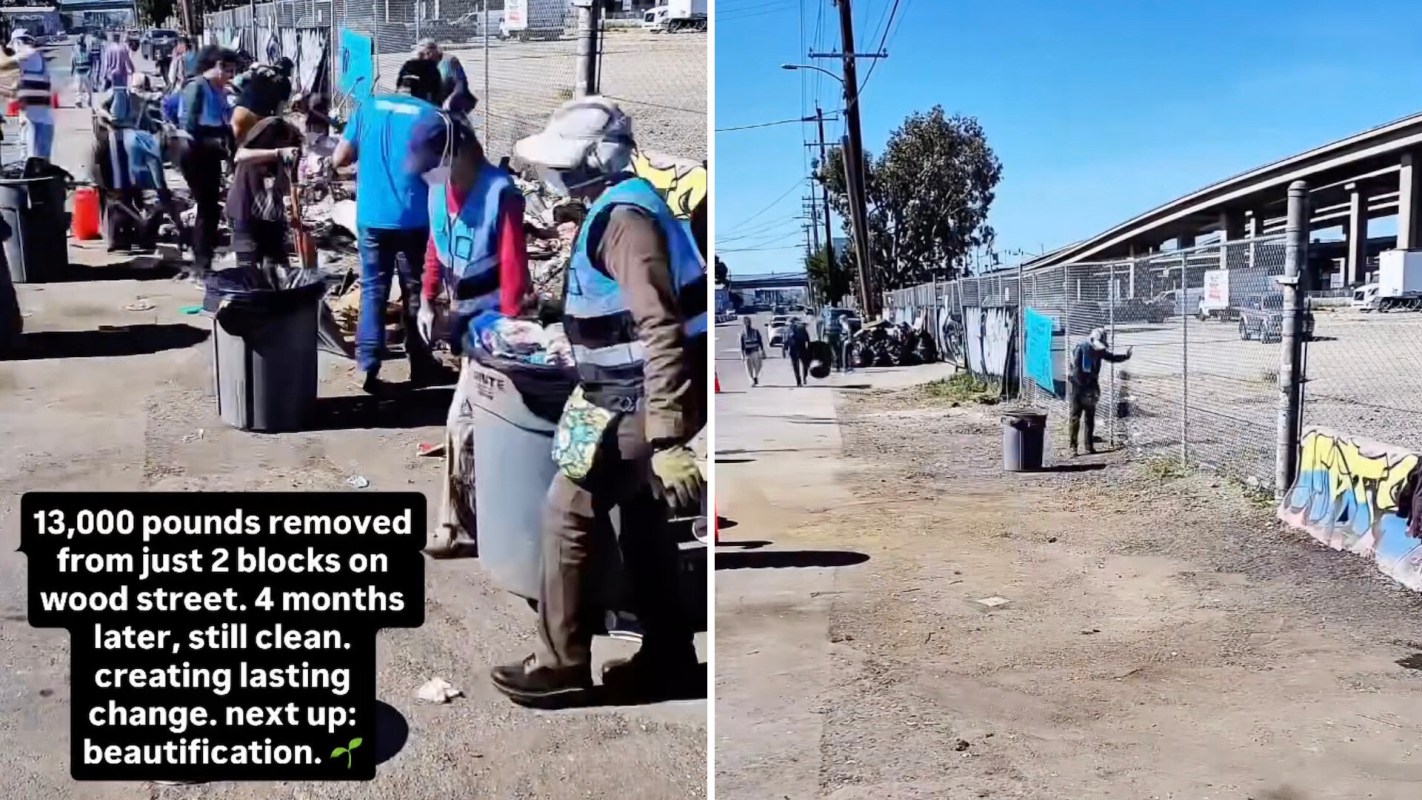
A recent Instagram video is showing viewers that local cleanup projects can produce lasting change, even in areas inundated with garbage.
The video shows two blocks of Wood Street in Oakland, where crews removed 13,000 pounds of dumped material. Four months later, the area was still clean, and the next phase is aimed at helping keep it that way.
What happened?
The footage was captured by the Urban Compassion Project, a nonprofit focused on cleaning up and revitalizing communities across the Bay Area. To date, the organization says it has removed more than 3,300 tons of trash from local neighborhoods.
The group said the effort in the video focused on a corridor it described as one of Oakland's most heavily dumped areas. It also highlighted that the result lasted beyond the initial haul, with the stretch remaining clear for months afterwards.
That strategy is already expanding. The Urban Compassion Project wrote, "Now we're taking it a step further. Beautification is coming next. Because the goal isn't just to clean up dumping, it's to transform spaces so dumping doesn't come back."
People in the comments applauded the update and the visible progress. One supporter wrote, "Taking the streets back! You're all heroes!!!"
TCD Picks » Quince Spotlight
💡These best-sellers from Quince deliver affordable, sustainable luxury for all




Why does it matter?
Illegal dumping can do far more than make a street look neglected. Piles of waste can create health and safety concerns, attract more trash, and signal that a neighborhood is being overlooked.
Keeping an area clean after such a major haul suggests that community-led cleanup, continued attention, and visible care can help disrupt the cycle that turns certain corridors into repeat dumping grounds.
Cleaner blocks can feel safer and more welcoming for the people who live nearby, walk through the area, or run businesses there. When a street appears cared for, it can encourage greater community use and a stronger sense of neighborhood pride.
Beautification could reinforce that effect even further. Adding improvements after a cleanup can make a space feel active and valued, which may help discourage future dumping before it starts.
What's being done?
The organization is also continuing to rally people around local action, regularly hosting cleanup events around the city.
If you want to support similar efforts more broadly, you can also explore ways to donate money to climate causes that support healthier, cleaner communities.
"It's about creating lasting change," the Urban Compassion Project wrote.

Get TCD's free newsletters for easy tips, smart advice, and a chance to earn $5,000 toward home upgrades. To see more stories like this one, change your Google preferences here.







