


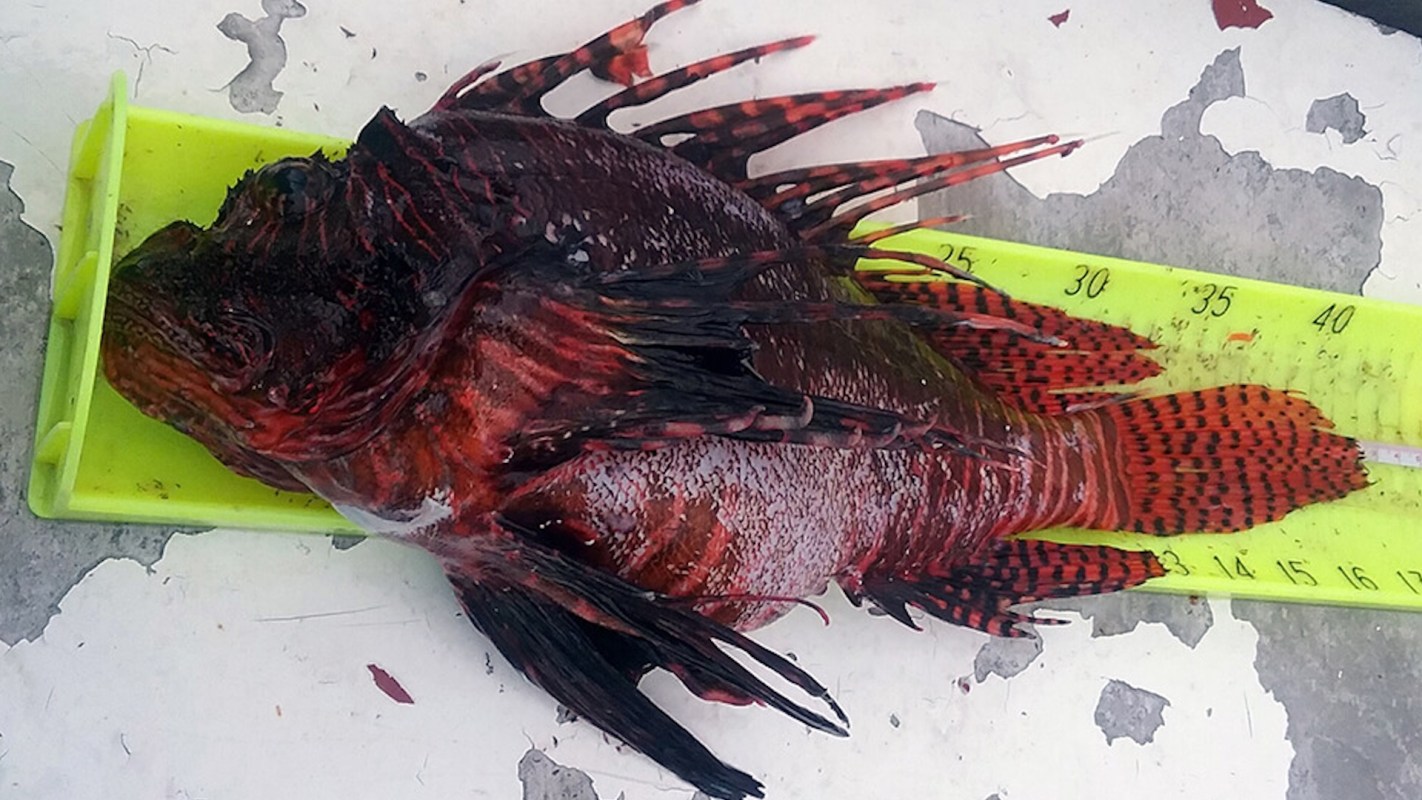
A Gulf of Mexico expedition at the Flower Garden Banks and nearby artificial reefs resulted in 157 invasive lionfish being removed by 30 divers.
As The Galveston County Daily News reported, the expedition is easing pressure on one of the region's key coral reef ecosystems.
What happened?
Lionfish have no natural predators in the Gulf, so divers targeted them directly on the second of three planned Lionfish Invitational research trips.
The Daily News reported that the group left Freeport aboard the M/V Fling, traveled roughly 120 miles to the Flower Garden Banks, and used pole spears and puncture-resistant catch containers to hunt the fish.
The expedition brings together Texas Parks & Wildlife, the National Oceanic and Atmospheric Administration, Texas A&M University at Galveston, and nonprofit Lionfish Invitational Inc., as the paper reported.
Rachel Bowman, president of Lionfish Invitational Inc., said that cooperative approach is one of the event's biggest strengths.
TCD Picks » Quince Spotlight
💡These best-sellers from Quince deliver affordable, sustainable luxury for all




"There's this awesome collaboration happening between all these different organizations, just with the goal of getting as much data collected as possible," Bowman told the Daily News.
"We had a lot of big lionfish on this one, which is a bit unusual for us," Bowman added. "Usually our size ratios go towards the medium, but a lot of these fish were quite sizable."
Why does it matter?
Though they are visually striking, lionfish are a serious problem for Gulf ecosystems. They come from waters off Southeast Asia and feed on fish, shrimp, and crabs, which can crowd out local species and disrupt the food web.
Biodiversity, tourism, and recreational fishing all depend on healthy fish populations in these sensitive marine habitats. Texas Parks & Wildlife's Hanna Bauer told the Daily News that regular removals can make an important dent.
"Clearly lionfish are not going anywhere, but regular removals can help decrease their impact on sensitive ecosystems and recreationally important fish species, like red snapper," she noted.
The Flower Garden Banks reef system in the Gulf has shown more resilience than some other coral reefs, the paper noted.
What's being done?
This effort does not work like a standard lionfish derby. Spearfishing is ordinarily prohibited in the Flower Garden Banks National Marine Sanctuary, but organizers obtain federal permits so lionfish can be removed there.
The trip also served as a research mission, the paper said. Each lionfish is tagged and measured before being frozen, and scientists later study its gut contents, genetics, and age, while Texas Parks & Wildlife staff survey fish and invertebrates around offshore artificial reefs.
For the 2026 trip, participants paid $1,100 and needed advanced diving certification, nitrox certification, and dive insurance. Applications are closed for this year's Sept. 6-10 expedition, and sign-ups usually open late in the year and close in March.
The collaboration is a win-win for the local ecosystem and research.
"You've also got these citizen scientists who want to go diving in a cool place but are also super jazzed about the opportunity to help scientists do stuff and collect data," Bowman explained to the paper.

Get TCD's free newsletters for easy tips, smart advice, and a chance to earn $5,000 toward home upgrades. To see more stories like this one, change your Google preferences here.







