


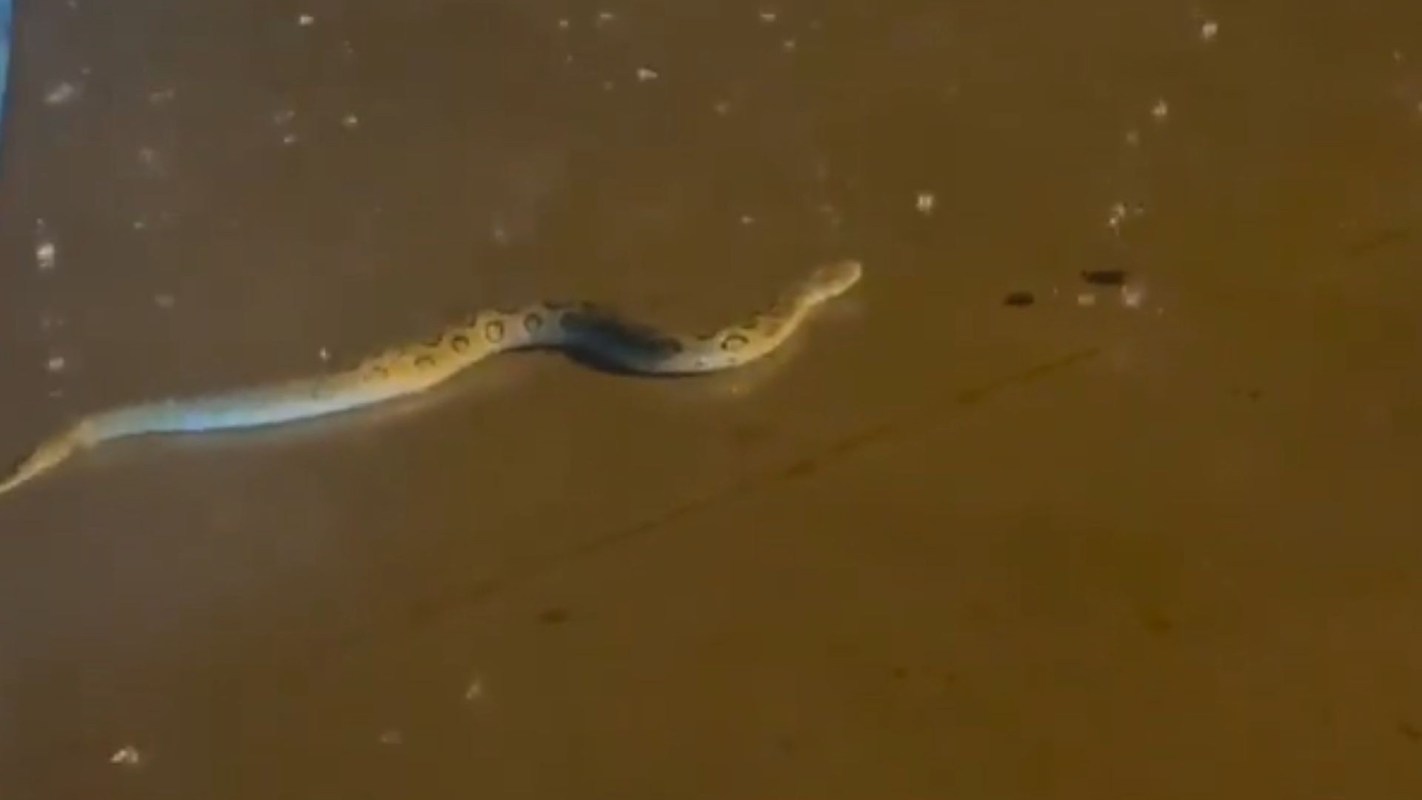
A video from India showing an unusually large snake has sparked an online discussion, with viewers pointing out that the animal is likely highly dangerous.
Here's what to know
On Reddit, the uploaded video offers almost no context beyond its title, which asks whether the snake is a viper or a python. The footage itself shows a large snake crossing a busy road as drivers pass by, and the comments quickly turned into a debate over the species.
Misidentifying a snake can put both people and the animal at risk. Someone who assumes a snake is harmless may move too close, while someone who panics may try to kill an animal that was not threatening anyone.
In this case, people in the comments claimed the snake was a Russell's Viper, a highly dangerous snake.
More background
Large snakes often trigger outsized fear, but wildlife experts generally stress that most snakes prefer to avoid people rather than confront them. Problems usually begin when a snake is surprised, cornered, or surrounded by crowds.
Human activity can play a major role in these encounters. As housing, roads, farming, and other development expand into natural areas, people and wild animals are more likely to cross paths.
TCD Picks » Quince Spotlight
💡These best-sellers from Quince deliver affordable, sustainable luxury for all




A snake sighting can affect neighborhood safety, emergency response, and local attitudes toward wildlife. Fear-driven reactions may lead to injuries, while rushed attempts to capture or move a snake can make the situation more dangerous.
These encounters also show that healthy ecosystems still exist alongside human communities and that coexistence requires caution, space, and better public understanding of native species.
What can be done?
When people come across a large snake, the safest response is often the simplest: keep a distance, avoid trying to identify it up close, and contact local wildlife rescue or forest officials if those services are available.
Trained responders are better equipped to determine whether a snake is venomous, stressed, injured, or simply passing through. They are also less likely to turn a manageable situation into a dangerous one.
Communities can also reduce conflict by protecting habitat, limiting unnecessary disturbance, and improving awareness of how to respond when wildlife appears near homes or public spaces. The goal is not to eliminate snakes from the landscape but to make those rare encounters less dangerous for everyone involved.

Get TCD's free newsletters for easy tips, smart advice, and a chance to earn $5,000 toward home upgrades. To see more stories like this one, change your Google preferences here.







