


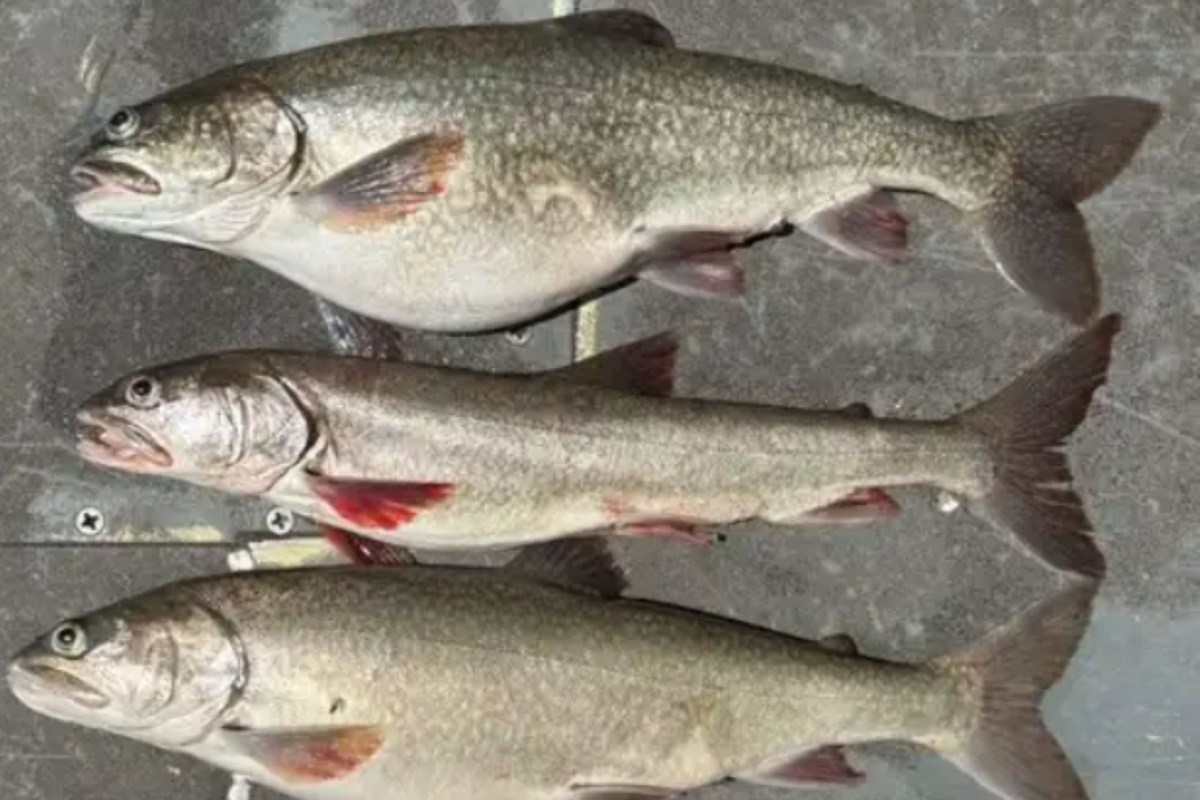
Something unusual is turning up in the icy depths of Lake Superior: extremely skinny lake trout that scientists say look almost starved, MPR News reported. Researchers have started calling them "zombie fish," and they still do not know what is causing the condition.
In the deepest parts of Lake Superior, about a quarter mile below the surface, researchers are finding more and more emaciated lake trout that weigh roughly half as much as healthy fish of the same size. The fish belong to a fatty deep-water subspecies called siscowets, which are normally built to survive harsh conditions more than 1,000 feet down, as described here by Michigan State University.
Instead, some of the fish have only around a third of the fat found in healthy trout of the same age and size. Shawn Sitar, a fisheries research biologist with the Michigan Department of Natural Resources, said they look so underfed that they appear to be "suffering from a famine," according to MPR.
The trend has worsened quickly. Sitar said that in one deep-water net last year, about 50% of the catch looked like "zombies." In shallower survey areas, the share has ranged from 12% to 37%. According to MPR, the fish have so far been seen only in very deep waters off Michigan's Upper Peninsula.
Lake Superior's deepest waters are dark, high-pressure, and home to a delicate food web. A sudden change in the health of a top predator could signal that something larger is shifting in the ecosystem, whether it is prey loss, disease, pollution, or another stressor that scientists have not yet identified.
Montana anglers noted a similar issue with trout in 2024. Scientists studying the Great Lakes have also found unsettling amounts of microplastics, which can harm fish.
TCD Picks » Quince Spotlight
💡These best-sellers from Quince deliver affordable, sustainable luxury for all




Lake trout are a major part of Lake Superior's ecological balance and a long-running conservation success story. After invasive sea lampreys nearly wiped them out decades ago, control efforts helped the species recover across most of the lake.
Now, scientists are trying to figure out whether these "zombie" trout are an isolated deep-water mystery or an early warning sign. Greg McClinchey of the Great Lakes Fishery Commission said researchers are working to understand the cause, the long-term implications, and whether action is needed before the problem spreads or worsens, per MPR.
Researchers are actively testing several possible explanations. One theory is that the fish are starving because something in the deep-water food web has changed, leaving siscowets without enough calories in an already extreme environment with limited food sources.
Scientists are also looking into the possibility of a disease. They have planned a fish health assessment for June to check whether illness could be spreading among the trout. Sea lampreys are another possibility, though Sitar said that seems less likely because the thin fish do not show significantly more lamprey scars than healthy ones.
Toxins are also under review. The "zombie" fish have shown slightly higher mercury levels than healthy trout, though researchers do not yet know whether that is a cause or just another clue.
"We want to make sure that we're not looking down the barrel of something much worse than we might imagine," McClinchey said, according to MPR News. Sitar put it more simply: "Something was wrong in deep water areas."

Get TCD's free newsletters for easy tips, smart advice, and a chance to earn $5,000 toward home upgrades. To see more stories like this one, change your Google preferences here.







